Game Review: ‘High on Life 2’
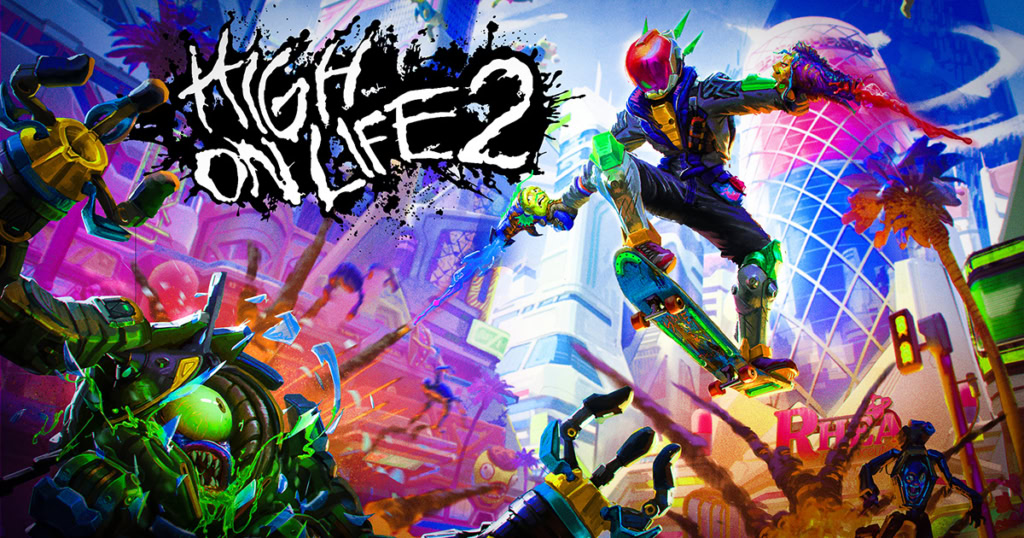
High on Life 2 was one of my most anticipated sequels from Squanch Games. It immediately steals the show by being a very confident sequel that knows exactly what kind of experience it gives the players. It was built directly on the foundation of the first High on Life game, but it clearly aims to be bigger and better in every way. But it has its own identity, which is used to push the game further into the craziness.
The tone of the game is highly exaggerated, self-aware, and constantly poking fun at itself and at you, the player. This is the iconic element of High on Life, which made the first game so popular.
Instead of dialing things back a notch, the developers decided to go all-in on absurd humor, strange alien designs, and various talking weapons that never stop commenting on what you are doing. The game feels almost like a playable animated series, except you are the one holding the controller and causing the chaos.
[Warning: Spoilers from High on Life 2 are below!]
High on Life 2 story
The story picks up some time after the events of the first game. You are no longer a nobody who accidentally becomes a part of the intergalactic bounty hunting fun. You have a reputation now, and everybody knows your name. The galaxy remembers what you did. But now, instead of another saving-the-Earth hero arc, you have to deal with the consequences of fame and the enemies that come with it.
The central part of the story starts when a powerful alien pharmaceutical corporation targets the main character’s family, specifically their sister Lizzie. She is kidnapped, and suddenly the entire galaxy feels like it’s about to become hostile again.
All of it leads to the beginning of a revenge-driven mission that sends you across multiple planets and areas, each filled with monsters, bizarre creatures, and morally questionable “employers.” One of the defining elements of the game is the presence of the talking weapons, each with its own unique personality.
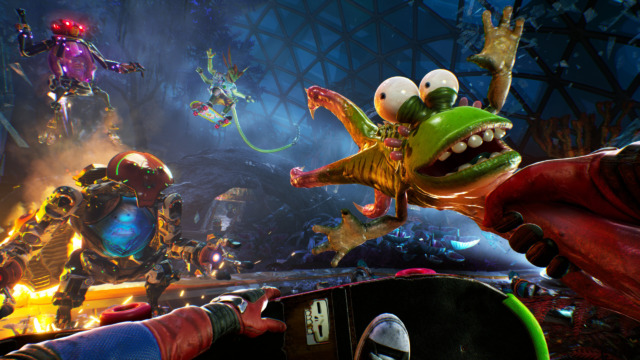
Each gun has its own vibe, its own insecurities, and its own way of reacting to your choices. They argue with you, with each other, and sometimes with random NPCs. In many ways, they are more developed than most of the characters you meet. Sometimes this weird dynamic works well, especially in moments where the emotional weight of certain scenes rests not on the kidnapped sister or the corporate villains but on how your weapons feel about what is happening.
Missions often feel like episodes that are built around a specific arc. One might focus on infiltrating a bizarre alien workplace, another on solving a strange murder, and another will just blow your brain away. These diversions help keep things fresh, but they also make the overall narrative feel dependent on the outcome. Because if all of it leads to somewhere, then if there’s no resolution by the end, then it was all for nothing.
That said, if you enjoyed the first game’s story and its crazy sci-fi parody moments, then you will likely appreciate the sequel. The writing is much better, dialogues are funnier, jokes land even better, and the entire story makes sense and is filled with weirdness all the same.
Gameplay, improvements, and changes over the first game
The story isn’t everything. What made the first High on Life game so iconic were its mechanics. The shooting felt responsive, but each weapon had a different use. Just like now with this game. They either fire quickly, reload in unique ways, or throw a joke or a snappy comment now and then. Each gun offers a primary attack and a secondary ability, often with some strange twist that matches its personality.
But things become more complicated when we get to the entire sense of the fight and mechanics. Fights often focus on clearing waves of enemies in open arenas or traveling through weird environments filled with platforms and one-way paths. You can double jump, dash, slide, and use grappling hooks to access new areas. This increased mobility is one of the biggest improvements over the first game. It makes combat feel more alive and less like you are simply standing in place, firing at enemies.
Exploration benefits from these new movement options. Areas are more complex, with hidden paths, bounties, and side activities to be found across rooftops, underground tunnels, and alien marketplaces. There is a sense of progression similar to a Metroidvania structure. It means that certain paths only become accessible once you unlock new abilities, which encourages you to revisit earlier zones and upgrade your gear.
With everything positive that was added or upgraded in this sequel, enemies are one of the elements that could have been done better. Many foes behave in predictable ways. They rush at you, they shoot randomly, they occasionally shield themselves, but very rarely do they make you feel like you’re in danger.
Boss fights try to be more of a spectacle, often featuring multi-phase battles with fancy and epic animations and loud dialogue exchanges. Some of these battles are genuinely memorable after you finish the game, all because of their presentation. But mechanically, they are working based on a certain pattern of recognition rather than a creative strategy.
Upgrades allow you to increase damage, unlock new weapon modifications, and improve your abilities. The progression system is pretty easy. Get a mission, complete bounties, earn currency, invest in upgrades, and get enough power to save your sister. That’s it. If you wonder if it works, then yes, it does. By the end of the game, you realize that you’ve seen a lot, and most of those things were crazier than you’d expected.
Despite some flaws, there is something undeniably funny and fantastic about the way the gameplay, humor, and story of this High on Life 2 connect and work.
Final thoughts on High on Life 2
High on Life 2 focuses and expands on important elements by adding more mechanics, more areas to explore, and even more jokes to laugh at. In some ways, it feels like a more confident version of the first game. It understands its audience and does not try to get more serious just to get away with offensive jokes or a false identity just to sell more copies.
At the same time, the game exposes its cons, but it does it in a very original and funny way. Comedy carries the flow of the game and uses it to give us an immersive experience. Enemies challenge you visually more than mechanically, but the story entertains, and that’s what matters. It relies on jokes and absurd scenarios more than a powerful story arc.
My rating for this game: 4.5/5
Some games are made to be fun and let you chill. High on Life 2 is one of those games. It is messy, funny, occasionally frustrating, but not boring.
High on Life 2 is now available to play on PC, PlayStation 5 and Xbox Series S/X.
Also check out: Skate Story Game Review: Skateboard Through Hell To Save Your Soul