‘Behemoth!’ Review: A Film That Finds Structure Through A Wondrous and Scattershot Symphony
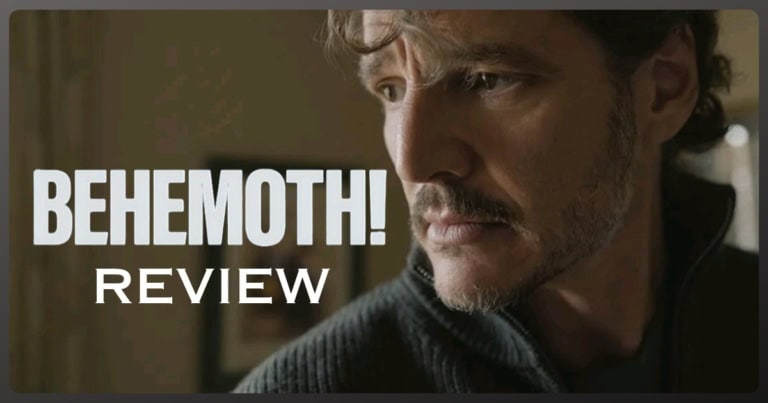
Some films are better in concept than the ultimate execution—where you can see potential squandered in real time while watching. Behemoth! fulfills much of what you’d want from delving into the psyche of a character who’s a passenger within the effervescent swaying of his life through the beauty of its diegetic film scoring. But eventually, Behemoth! becomes lost within its ambitiously unhinged tonal inflections, flying through the beauty and hardship of an aching melodrama and more than occasional comedic slants.
The result is an experience that’s slightly frustrating. Behemoth!’s director/writer Tony Gilroy is always just on the precipice of reaching something truly profound within how the basis of film narrative is structured and the magic of movie composition itself.
The experience is still one you can never take your eyes off. An ever wobbling Jenga tower that stays up thanks to the symphonies of tone, storytelling, and emotion found within weaving the fractured nature of music and memory into a consistently bizarre but always engrossing portrait. In a way, it acts as a piece of elongated music itself, with all the crescendos, false notes, and dynamics within it.
What is the movie Behemoth! about?
Behemoth! opens with Alex Sarian (Pedro Pascal), a man shrouded in questions personality-wise that the film tends to go back and forth on actually exploring. Alex is an expert cello player who has returned to his hometown of Los Angeles to assist in the scoring of Hollywood films after 20+ years of being away from home. He’d been on the road in musical performances and relationships that ranged from Dallas to Chicago in location.
Alex plays through the scores and sheet music he’s given. The confines of the diegetic music within the film start to bleed into the enveloping realities of both the past and present of his life, told through a non-linear structure of time.
We jump from escapes from his wildly persistent ex Carol (Olivia Wilde), one-night affairs with a fellow violinist Nadia (Eva Victor) (which will later define a significant aspect of Alex’s life later on), and how Alex’s past effects his actions throughout the present day. This is mainly through Alex’s relationship with his aloof podcasting brother (Will Arnett) and the inner trauma of his familial turmoil as a child prodigy. He reckons with his newfound placement in an industry that’s taken new shape through a wide variety of factors.
Behemoth! tackles such a wide array of emotions and wavelengths in a way that lives up to the title for (mostly) its benefit and occasionally its detriment.
The film ebbs and flows through the tune of sporadic tonal structure and inner emotion
It’s been widely lauded that Behemoth! features the work of a whopping nine film composers within its diegetic film score, including the accompaniments from James Newton Howard, Alan Silvestri, Michael Giacchino, and Michael Abels just to name a few. But the way the music of the fictional worlds Alex is playing for blends into the crevices of his mind is executed in such an enrapturing way.
As fiction pours into the images of Alex’s life, so do the mixture of different genres of film and the types of bombastic swells of score we tend to associate them with. One of the film’s first sequences involves Alex’s attempt at escape from Carol’s wrath after a performance; the tense music makes it play like a sequence out of a pulse-pounding thriller within the wide long takes and tension boiling over into a shocking car crash within the snow.

Other scenes revel in a bombastic jazziness that makes the moments where the movie shifts tones to that of an Oceans or Jason Bourne heist flick. This is ironic given Gilroy’s previous direction on The Bourne Legacy).
All these different tonal shifts of thrills, laidback comedic bits, or deeper emotional outbursts are always held together by Gilroy’s sharp eye for direction and editing, floating us through each verse of Alex’s life. It’s piecing together the fragments of his life in a way where the score carries almost every beat emotionally.
Where Behemoth! starts to wobble, however, is when the film leans in on a mundane melodrama that starts to make the non-linear storytelling more superficial than clever. Much of the film attempts to delve into the elitist world of the ultra-wealthy position Alex’s family has been in since his rise as a child prodigy. While it captures an interesting perspective, the issue is that Alex himself isn’t really defined much at all by the screenplay or the music at the heart of the film’s core.
We know that he’s been passive to the momentous events that have surrounded him, but Gilroy struggles to dig deeper into this psyche. This leads to a middle stretch of the film that can’t quite sell the broader drama elements within the justification of telling this story out chronological order.
Luckily, by the time the film reaches its end it still strikes a proper emotional chord, in large part thanks to a career-best performance from Pedro Pascal. Pascal plays Alex as mostly subdued but speaking volumes, through the softest of his expressions. He provides a much-needed heft to the film’s literal emotional crescendo at its big reveal.
Behemoth! final thoughts
Behemoth! always exists in a slightly frustrating space. It often miraculously balances its tonal inflections and swaths of monumentality within music conception but struggles to reach something greater within its themes. It can frequently get as lost as Alex does while he plays through his memories.
Still, the film exists as a mostly engrossing exercise in structural filmmaking. Gilroy provides more than enough stylish flare to make Behemoth! live up to its title within the scaling of a fragmented memory.

- Film Title: Behemoth!
- Director: Tony Gilroy
- Writer: Tony Gilroy
- Cast: Pedro Pascal, Olivia Wilde, Eva Victor, Will Arnett, Hank Azaria, Alexa Swinton, Kaya Ralls, Erik Griffin, JoBeth Williams
- Genre(s): Drama
- Rated: R
- Running Time: 104 minutes
- Theatrical Release Date: December 4, 2026 (U.S., U.K., & Canada)
- Reviewer’s Score: 3.5 out of 5 stars
Also check out: Eddington Review: Ari Aster Made A ‘South Park’ Movie