‘Football Manager 27’ Game Review: A Significant Improvement Over Previous Versions
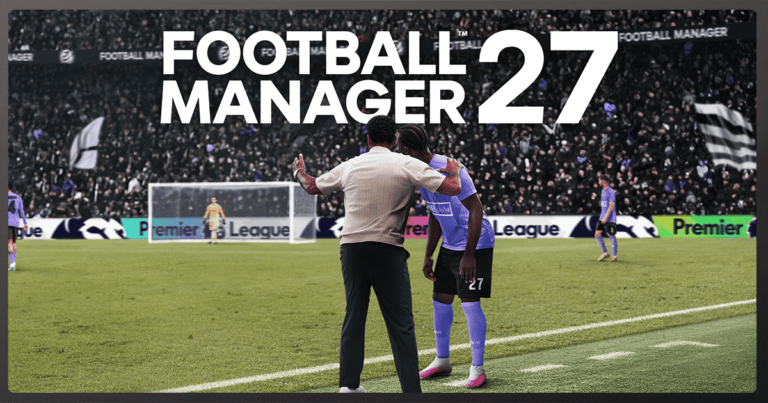
When playing Football Manager, a simple decision to take charge of a soccer club can quickly become a multi-season, hours-long obsession. Players can get involved with transfer negotiations, experimenting with tactics, youth development, carefully managing finances, and experiencing the never-ending pursuit of trophies. And all of that before you even play your first match. Developers for the latest version of the game, Football Manager 27, have focused on upgrading existing foundations for the game, rewriting behaviors and mechanics, and introducing improvements that make the managerial experience more accessible for newcomers.
Technical improvements to Football Manager 27 compared to previous editions
The most significant change in Football Manager 27 is the continued development of its new user interface. After the very negative reception of the FM26 User Interface, Sports Interactive clearly understood that simply introducing modern visuals was not enough.
A simulation requires all of its technical parts to be of the best quality. Menus, additional information, and the fluid gameplay are some parts of the game with which players can easily move between different responsibilities without stressing for 10 seconds because of lag.
The visually upgraded navigation system is one of the most important improvements. Primary and secondary navigation have been adjusted to make the wider data easier to explore, reducing unnecessary movement between screens and confusion. The interface also adapts more intelligently to different resolutions and monitor sizes, meaning that the experience is no longer dependent on a particular display configuration.
Personalization is another area that has improved in Football Manager 27. Secondary navigation, shortcut buttons, bookmarks, and tile swapping give us more freedom to organize our managerial workspace as we see fit. It might sound like a relatively minor adjustment, but considering how many hours we spend navigating the interface and analyzing various data, these changes have a meaningful impact over the course of hour-long sessions.
The matchday interface follows the same ideals. The between-highlights screen offers more adaptable layouts, while the return of heat maps and the improved presentation of action zones provide additional tactical information that we can use. These tools make it easier to understand where a team is succeeding, where it is struggling, and whether their overall approach is giving the intended results.
There are also improvements beyond the visual presentation. Cup draws, transfer deadline day, and the news feed events have received an update that creates a more engaging connection with the wider footballing world. They help to make any career less isolated.
Even the traditional 2D match presentation has got some upgrades in Football Manager 27, including smaller player and ball indicators, stronger ball shadows, and adjustments to the goal nets. As for the 3D, it still looks good for the engine that’s being used.
Gameplay, game engine, tactical development, skins, mods, databases, and community support
While the interface is important, the real reason people return to Football Manager every year is the gameplay, vibes, and experience. The ability to build any soccer team we want around a particular footballing philosophy, including our own, is a lot. We identify weaknesses in our team and in opponents; we slowly build and turn an average squad into a strong competitive force, and we try to do it in our own way, the way we are satisfied.
The newest addition to the mechanics is tactical effectiveness, a system connecting tactical instructions, recruitment, training, and player suitability. It builds upon the previous systems. Four new major elements determine how effectively a team can execute its manager’s ideas, and they are tactical understanding, player ability, player buy-in, and next match information.
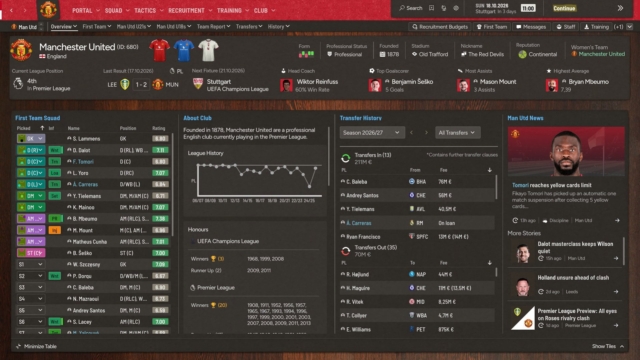
Instead of simply picking a formation and expecting the players to follow all of our instructions, we must analyze and think about whether our players actually possess the necessary qualities to use our approach.
One of Football Manager’s greatest advantages over many other sports simulations has always been its community. The official game provides the foundation of the “playground,” but the players themselves contribute enormous amounts of additional content that transforms any ordinary career into something more epic, crucial, or personalized.
Custom skins remain particularly important because, even with interface improvements, not everyone will appreciate the default graphics. Alternative skins let us reorganize information, change visual elements, use different graphical assets, and create an environment that says, “This is my career.”
The Football Manager 27 community has also continued developing alternative interface options and different skins. They are constantly releasing them. One could say that each one is better than the previous one. Graphics modifications are equally valuable. Face packs bring thousands of real player photographs into the game, while logo packs replace fake generic logos and club symbols with the real designs.
Kit packs introduce updated home, away, and third kits, while stadium backgrounds and additional graphical modifications make browsing through different clubs and competitions considerably more immersive and unique.
These additions might seem like they are only cosmetic upgrades that don’t change much, but that’s not true. Database modifications are arguably even more important. They allow players to explore alternative footballing worlds, update squads, check previous seasons, introduce historical scenarios, and expand the available game modes. They also help extend the lifespan of the game beyond its original release, particularly when the community begins introducing new players, competitions, and scenarios.
Also check out: Can the Blue Lock Philosophy Win at FIFA World Cup Soccer?
Football Manager 27 game score and final thoughts
Football Manager 27 is an interesting game because it demonstrates proof of a more in-depth understanding of what players expect from the franchise they love and how previous decisions created frustration that needed to be fixed.
The refreshed UI, more accessible navigation, and additional customization options in the form of skins and shortcuts make the experience considerably more comfortable and unique. The improved match engine, more intelligent player movements, and additional instructions also provide a greater sense of involvement and of being a manager.
However, FM27 still has moments where basic information requires more navigation than necessary, especially when newcomers experience the game for the first time. Some tactical systems can also feel overly complicated, even when players struggle to execute complicated instructions. But Football Manager 27 is a considerably more convincing and satisfying experience than Football Manager 26, which was commercialized as “a new and better version of the game we love”.
For returning fans, Football Manager 27 provides enough meaningful improvements to justify taking on another adventure in this version of the game. For newcomers, it is a great start if they want to experience this game with the newest databases and current squads. Most importantly, it reminds us why Football Manager remains so difficult to put down.

- Game Title: Football Manager 27
- Developer/Publisher: Sports Interactive/SEGA
- Genre(s): Simulation, Sports, Strategy. Soccer
- Version Being Reviewed: PC
- Also Available to Play on: PlayStation 5, Xbox Series S&X, iOS, Android
- Release Date/Year: November 10, 2026
- Reviewer’s Score: 4.5 out of 5 stars