Can the ‘Blue Lock’ Philosophy Win at FIFA World Cup Soccer?
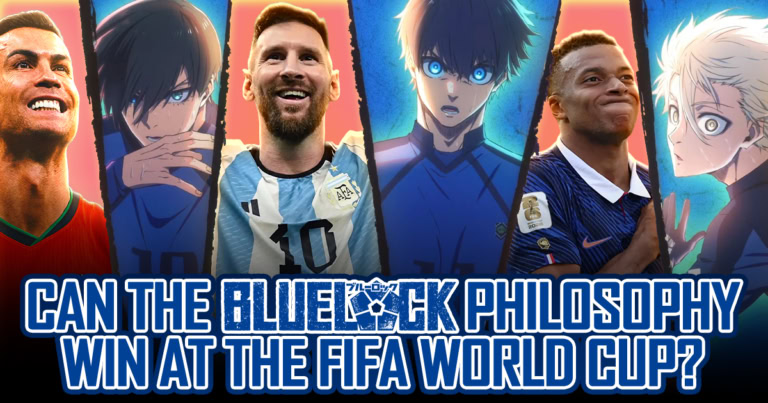
The FIFA World Cup is widely considered by far the largest and most-watched single sporting event on the planet. It is the single event that every four years brings together players from all four corners of the globe in a tournament that celebrates diversity, identity, and passion, united by a singular sport: football (or soccer if you’re American).
For four years, more than 200 countries train on the road to the competition qualifiers, only for 48 of them to qualify for the tournament. Those 48 are then divided into groups, with the top two from each group advancing to the Round of 32, and the tournament continues to narrow until only two teams remain, with one crowned the FIFA World Cup champion. But in the past few weeks, an unexpected pop-culture phenomenon entered the global football conversation as part of the expression of diversity and culture: anime.
Anime, an animation pop-culture medium from Japan that has become a part of Western culture and entertainment in the last few decades, has made its presence known during this FIFA World Cup. Several popular anime franchises have been used, not just by Japan, but by other countries to represent their favorite team. However, in the last few weeks, there has been a boost in popularity revolving around anime based on the popular sport, primarily Blue Lock.
When Japan’s national team started climbing the ranks early in the tournament, a trend of popularity for Blue Lock started to rise parallel to the rise of Samurai Blue, with the phrase “Blue Lock is real” gaining traction in social media with every win. The team went on to gain widespread appeal and support from fans all over the world before falling to Brazil in the Round of 32 in an exciting game which captured the hearts of millions, this author included.
Then some fans started to debate whether the national team’s performance would have needed to adapt Blue Lock’s philosophy to truly compete for the title. And what started as a popular trend on social media has quickly evolved into a broader debate between Blue Lock fans and soccer fans worldwide.
Could a fictional philosophy built around the idea of egoism to become the world’s best striker actually be implemented as a real-world strategy for success on football’s biggest stage? Or is it simply a compelling storytelling motif that thrives in the world of manga and anime but collapses under real-world conditions?
What is Blue Lock?
Blue Lock is a sports manga created by Muneyuki Kaneshiro and illustrated by Yusuke Nomura. The manga’s popularity led to an anime adaptation, which premiered in 2022. The story begins in the aftermath of Japan’s 2018 World Cup performance, in which they lost. Japan’s desire for World Cup glory led the Japanese Football Association to launch “Blue Lock”: a new, rigorous training program that invited 300 high school students, all of them forwards, and pitted them against each other in a brutal, elimination-style competition, all with the goal of narrowing it down to finding the world’s greatest striker.
At the head of this “experiment” is Jinpachi Ego, the creator of the Blue Lock project and the team’s coach. He believes Japan’s failure at the World Cup stage stems from the team’s overfocus on teamwork and humility, which comes from the country’s cultural thoughtfulness. To finally succeed, he proposes that Japan set aside its “loser football” and adopt “ego”: a ruthless, self-centered drive to set aside teamwork and score goals at the cost of everything else.
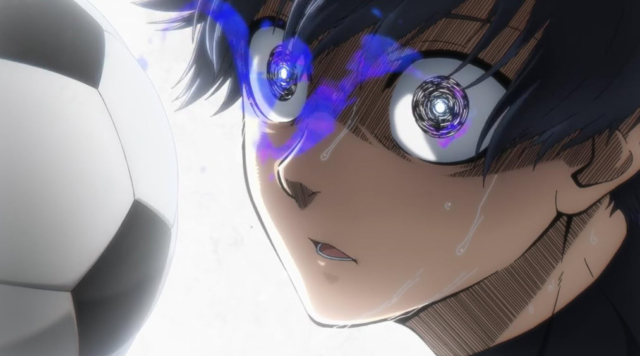
The philosophy of Ego
Blue Lock’s core philosophy is based on the idea that the best strikers in the world are not team players but, rather, egoists. According to Jinpachi Ego, “You can’t possibly become the world’s best striker unless you’re also the world’s biggest egoist.” Ego believes that soccer is about one thing: scoring more goals than your opponent does. Whoever scores the most is the best. End of story.
This concept from the manga challenges the traditional ideology of football, which often promotes teamwork, unity, and a cohesive flow to win. In Blue Lock, passing is typically portrayed as a compromise or a sign of hesitation, which, in turn, is considered a sign of weakness. Players are trained to prioritize their scoring instinct above all else, even if it means clashing with teammates.
Now, the concept itself isn’t entirely fictional. Some of the greatest players in football history—Cristiano Ronaldo, Kylian Mbappé, Pelé, and even Lionel Messi at times, just to name a few—have demonstrated a form of controlled ego. They demand the ball, make calculated movements to make clear shots, and often carry their teams during decisive moments in the middle of a game. However, Blue Lock seems to amplify this idea to an extreme degree.
Why Blue Lock is trending during the FIFA World Cup
The surge in Blue Lock’s popularity during the World Cup is not accidental. International tournaments naturally invite narratives, and Blue Lock gave fans a perspective through which they could interpret Japan’s performance. It is true that Japan’s national team is known for its discipline and teamwork, which are deeply ingrained in its cultural DNA. Even their fans are among the most respectful and disciplined fans in the soccer world. We’ve all seen the videos of Japanese fans staying after the games to clean up after themselves and the stadium.
But commentators regularly point out a perceived lack of players capable of dominating individually against teams from countries where soccer is ingrained in their DNA from childhood; like Brazil, a team consistently defined by both flair and skill on the field. And in the recent game against Brazil, while Japan gave Brazil a run for their money for a good chunk of the match, the team ultimately fell.
Casual fans turned to Blue Lock as both a commentary and a fantasy solution. Many quoted Ego again, saying that, “When things don’t go the way they’re planned, your average Joe will start to panic and find comfort in their source of failure; such is the mindset of a loser. But a winner sees a “challenge.” The sentiment being that once Japan scored against Brazil and Brazil picked up the pace in the 2nd half of the match, Japan started to panic instead of finding a solution.
Social media amplified this sentiment, turning it into a debate in which the real world and fiction began to blur, with concepts used as storytelling devices or motifs in anime applied to real-world events. Additionally, the World Cup’s international reach introduced Blue Lock to casual viewers who may not regularly follow anime, allowing it to sit perfectly at the overlap between football fandom and anime.
Could this work in real football?
In theory, certain aspects of Blue Lock’s philosophy of Ego have merit. Football matches are often decided in split-second moments that can turn the tide of a game in an instant.
We’ve all witnessed some form of miracle shot on the field, where it’s the final minutes of overtime and a miracle goal seals the victory for a team after 90+ minutes of anticipation and stress. Having a striker with absolute confidence, a killer instinct, and the ability to convert opportunities into goals is, without a doubt, invaluable to any team.
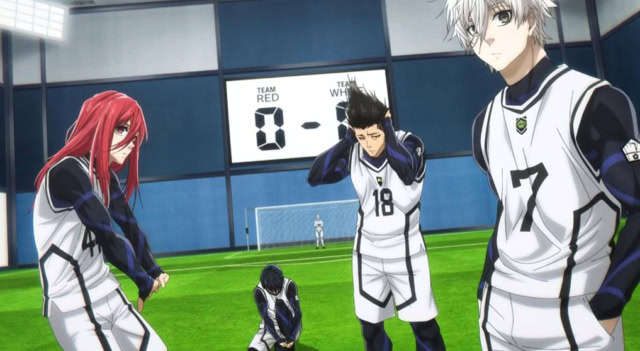
As someone who has been a part of junior varsity, varsity soccer, and futsal teams as a goalkeeper, I’ve had my fair share of coaches who have encouraged many forwards (and some midfielders) to take risks and trust their instincts. This can elevate a player’s performance on the field and encourages an active mindset where intuition, creativity, and decisiveness are key to winning a match and tournaments.
Teams, on average, can benefit from players who are mentally strong, decisive, and unafraid to take point in high-pressure moments. Cultivating confidence in key moments (which is what Blue Lock frames as “ego”) can help players overcome hesitation and perform at their peak.
Unfortunately, I can say from my experience as a player and a viewer of both anime and real-world sports that the Blue Lock system of Ego is fundamentally flawed and completely incompatible with real-world football. I speak from firsthand experience that an unchecked ego can quickly become a liability during a match, and that’s just with one player. More than one player with unchecked egos is a recipe for disaster.
Football inspires collaboration. It’s an 11-player sport, not a solo effort. It requires coordination across all positions, chemistry, tactical discipline, and trust among teammates. Even the most iconic strikers rely on midfielders, defenders, and system structure to succeed.
A striker who refuses to pass or cooperate with the rest of his team would disrupt the team’s dynamics and make it infinitely harder for the team to win. The balance, then, lies in controlled ego: fostering individual brilliance without sacrificing collective cohesion. This is something the best teams in the world already understand, blending star power with tactical unity.
Final thoughts on Blue Lock and FIFA World Cup soccer
Blue Lock thrives because it taps into a real tension within football—the balance between individual character and teamwork. During the World Cup, when emotions run high and narratives take center stage, that tension becomes even more visible. Blue Lock offers an exciting, exaggerated solution to a complex problem, one that strikes a chord with fans looking for answers to cope with the loss at a stage as grand as the FIFA World Cup.
In the end, Blue Lock is less a blueprint for success and more a reflection of what fans want to believe: that one player, driven by pure ego, can change everything. While that idea makes for riveting storytelling, the FIFA World Cup continues to prove that even the greatest stars cannot win alone, and the strength of a team is what captures the gold.
The anime of Blue Lock is available to watch on Crunchyroll and Netflix and other streaming platforms. Be sure to give the series a watch or read the manga if you haven’t already. Season 3 of Blue Lock, subtitled NEO EGOIST LEAGUE, is expected to premiere later this year.
Also check out: 5 Years of The Cosmic Circus: A Personal Message from the Editor-in-Chief