‘Death Howl’ Game Review: Unique Combination Gameplay Awaits
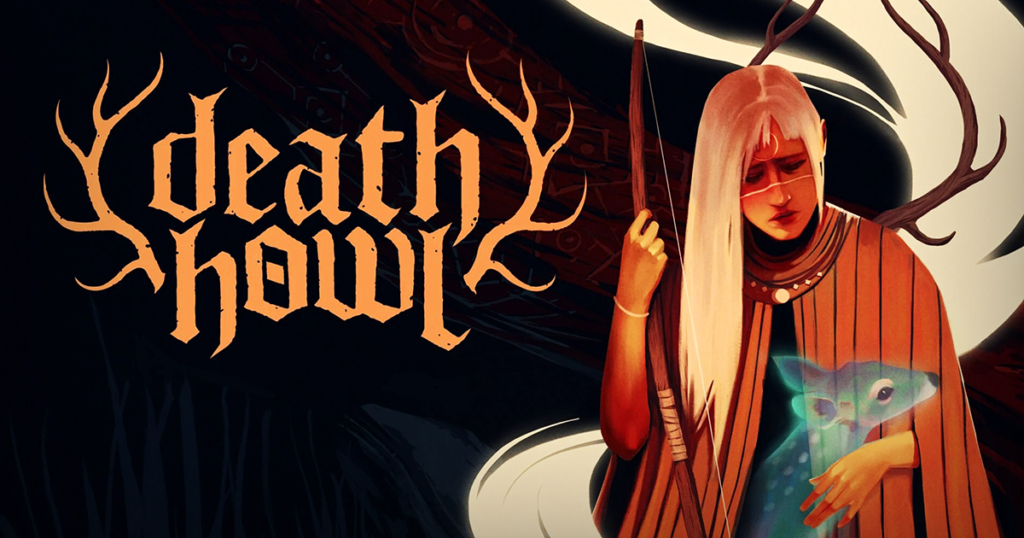
The library of good Polish games is getting bigger each year. Whether they are big titles or smaller ones, the quality and focus on giving the best experience are always the top priorities while making them. And the case is the same with the newest game from The Outer Zone Studios and published by the iconic 11 Bit Studios. Death Howl is a deck-builder rogue-like game that borrows many ideas and game mechanics from other games and soulslike titles. Whether it’s design, grid combat, or a card-collection loop, it all makes sense.
[Note: While I am reviewing this game independently and honestly, it should be noted that it has been provided to me by The Outer Zone & 11 Bit Studios for the purpose of this review.]
The story in Death Howl
The best parts of the game are pretty straightforward. You play Ro, a mother walking through area spaces to pull her child back from death, while building, creating, and using card decks. There are more than a hundred cards, each one being used or upgraded with totems that change how you fight and move across a gridded battlefield where positioning matters as much as what cards you have in your hand.
The narrative and the overall story are the main points of the entire Death Howl project. They are very deliberately focused on personal and emotional elements. They don’t want to be a part of an epic worldbuilding so much because their main point is to be centered around the emotional and serious parts of the game.
Ro’s quest is simple. She is a mother whose son has been claimed by Death, and she steps into a spirit world where everything reflects her memory, regret, and the missing parts of the missing love. Each region has a different aspect of grief. Some areas are cold and sad; others are filled with the small, intimate objects of a life that Ro has lived.
The best moments of the story are quiet ones, where the game pulls back from combat and lets the player move through moments that let you experience her loss through art direction and ambient sound rather than through serious and tense dialogues or explosive action.
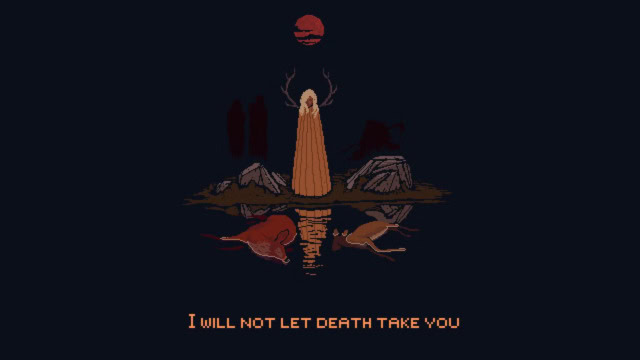
Characters you meet are more a depiction of archetype beings rather than aspiring to be developed characters with aspirations to become companions for the rest of the game, but they’re written with enough details and soul to feel like they are really living in this world. It’s either a fisherman, a child-looking specter who repeats the same phrase (until you realize what it means), a weeping totem that offers a card in exchange for some piece of your past, or others. It’s all part of this world and has meaning behind it.
The writing never presses melodrama or anything like that. Instead, it trusts the player to discover the emotional meaning from recurring motives and scenarios, as well as weird songs that repeat at strange moments. Death Howl earns its part amongst those important smaller games because it treats grief as something iterative, messy, and present in each person’s life. It’s not just another one-time story thing to be checked off a list. It treats each emotion with respect and the necessary focus to be noticed.
Gameplay presents a mix of different kinds of games
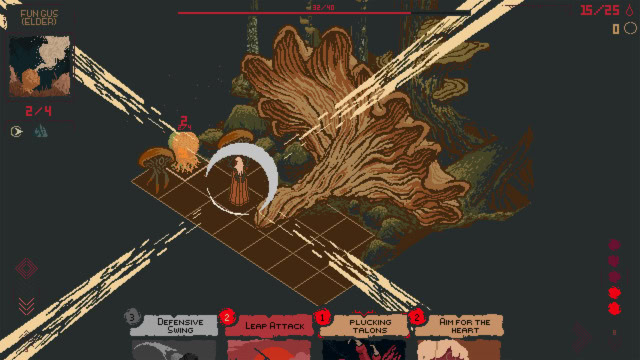
Mechanically, Death Howl is best understood as a mix of a tactical grid game, roguelike, and a collectible card game, with soulslike vibes tying progression together. Each encounter plays out on a tiled battlefield. You make a move, avoid the attacks, and manage a range suitable for using and playing cards from your deck, which consume resources or trigger specific abilities.
There are attack cards, defensive cards, movement-augmenting cards, and situational tools that change the outcome of a fight. The game leans heavily on synergies. Certain totems you claim act like modifiers for your deck, changing how card sets work together and slowly letting you assemble a deck that begins to feel powerful, tested, and personal.
The pacing of a game mixes methodical exploration with tense, punishing, and rewarding fights. Dying is not just an obstacle. It changes what options are available for you next and forces you to adapt your deck-building priorities.
If you like to improve and be a part of a difficult encounter, the game will be rewarding. If you prefer linear, constant slow progression, Death Howl’s repeat attempts and occasional RNG spikes may seem a little weird. Combat feels different each time. Attacks land with a satisfying feeling, defensive cards provide you with a small amount of calm, and movement choices can save a run or completely doom it.
The mechanics of upgrades and card acquisition are closer to being slow, meaningful, and letting you be the one responsible for the growth, rather than giving you explosive power spikes, abilities, and all the things that fit the game’s tone.
If you enjoy the satisfaction of pattern recognition, finding a perfect combo, exploiting a totem synergy, and clearing a previously impossible fight with new cards, then the systems in Death Howl are for you and will reward you even more. If you demand instant clarity about what the game is about and want to get instant amazing rewards, then you may find yourself grinding through a few dozen hours of frustrating deaths and failures before the game gives you satisfaction.
Final thoughts on Death Howl
Death Howl is not trying to be another card-building roguelike game that’s meant to get every single player to check it out. Its ambition is more focused on making it more significant, meaningful, and targeted at a more specific group of players. It’s a game about repetition with a purpose, where the loop of dying and rebuilding your card decks ties directly into the protagonist’s desperate quest to bring back from the dead someone she loved and lost.
The mechanics are a little complicated but smart. They are basically grid-based positioning, which gives you plenty of opportunities to try different tactics depending on each card in your set or totems. Thanks to this, after some time, you can easily create and adjust the card sets to the style that’s best suited to you.
The game’s deliberate pacing, tempo, and occasional need to grind exp and upgrade your card set can sometimes be overwhelming. If I had to say what’s most important, is that the first few hours require a lot of patience, as you have to be focused and know your limits.
Death Howl is a game that expects you to put in the time to get your attention, connect with you emotionally, and add meaning to each scene. And once you do, its emotional weight and mechanical payoff line up in a way that few card-building roguelikes manage to achieve.
For players who want a deck-builder that asks you to be careful with your choices and who appreciate games that are slow in storytelling and more focused on sad and dramatic moments, Death Howl may be a satisfying project. For everyone else, it’s still worth trying for a couple of hours.
Once you understand how the system works, the urge to test new decks and totems becomes quietly addictive. Either way, Death Howl is the kind of game that reminds you why smaller studios, no matter what, are as capable of creating good games as big studios. They have emotional and design, precise moments in mechanics, and clear emotional parts of the story that still matter in games nowadays.
My rating for this game: 3.5/5
Death Howl is currently available to play on PC, Steam, XBox, and Playstation 5.
Also check out My Most Anticipated Games of 202