Game Review: ‘Metroid Prime 4: Beyond’
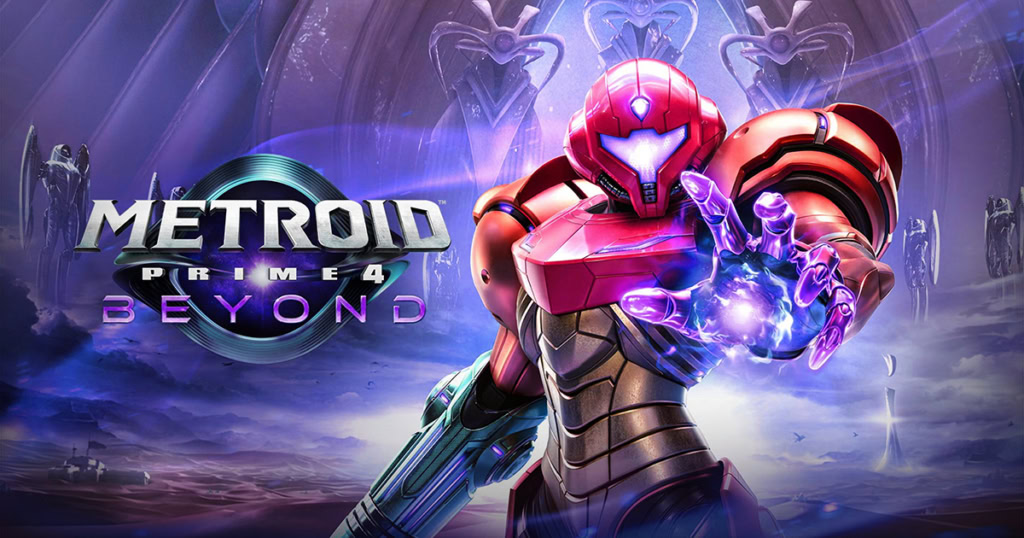
Metroid Prime 4: Beyond is a nostalgic return to the beloved series of space action adventures. It is the culmination of more than 20 years of stories set in this universe, with this character, exploring strange worlds and discovering mysterious lore. What immediately stands out about Metroid Prime 4: Beyond is its confidence. It does not rush to reassure players with nostalgia alone, nor does it chase trends blindly. Instead, it presents itself as a careful evolution of the Prime formula, rooted deeply in atmosphere, isolation, and discovery.
This is still a game about being alone on an alien world, piecing together its history through quiet observation and discovering hidden secrets. But it is also a game that is not afraid of upgrading and remaking some of Samus’ moves, fights, and gameplay interactions with the surrounding environment.
The subtitle “Beyond” is not decorative. It immediately, from the first minutes, reflects the game’s intent to move past the shadow of the original trilogy and into unfamiliar territory, giving the players something new. And with the new ideas and bright future, there’s nothing that can stop them from giving us brand new stories.
When Nintendo first revealed the project in 2017 at E3, fans immediately decided to await the return of Samus Aran with plenty of expectations. But does it exceed the expectations? Is it a friendly game for newcomers who want to discover the world of Metroid Prime? Let’s check it out.
[Warning: Spoilers from Metroid Prime 4: Beyond are below!]
Metroid Prime‘s new story, same old Samus
The story of Metroid Prime 4: Beyond places Samus Aran far from the familiar battlefields of the Galactic Federation. She arrives on the planet Viewros under circumstances that are deliberately unclear at first, which forces the traditional mechanics of developing mysteries and going into the unknown from the beginning. From the start, the game reveals that this new, unknown world is ancient, facing extinction, and filled with secrets that predate Samus’s arrival by millennia.
Viewros is home to the Lamorn, an advanced civilization whose ruins dominate much of the landscape. Their technology mixes and connects with organic forms and mysterious machinery, helping to create environments that feel alien and human-like at the same time.
As Samus explores these remnants, she uncovers fragments of their history through scans, clues, and partially intact systems that still respond to human presence. The story starts to be explained slowly, encouraging players to remain patient and curious.
A key narrative thread involves the return of Sylux, one of the more enigmatic antagonists in the Metroid universe. Unlike Dark Samus or Mother Brain, Sylux is defined by personal resentment and ideological conflict rather than pure destruction. His presence adds the required tension to the story. And it’s not because he dominates the story spotlight, but because he operates in the shadows, reacting to Samus’s progress and challenging her role as the Federation’s most powerful enforcer. Their rivalry gives this story more of a human edge, which helps to ground the cosmic mystery of Viewros a little.
What’s also important is that Beyond somewhat treats this narrative as a new beginning or a soft reboot. The previous saga that defined the original Prime games is long behind us. While parts of that history remain in the form of Samus herself and her memories and experiences, the game avoids going back to it for a lot of nostalgia. This makes the story approachable for newcomers while still rewarding long-time fans who understand the emotional weight Samus carries from past conflicts.

Prime 4: Beyond’s gameplay, world design, and mechanical evolution
Metroid Prime 4: Beyond still feels like a game from the Metroid Prime series, that is certain. First-person exploration, unique combat, and familiar level design are a part of the Metroid Prime experience. However, the refreshed gameplay introduces several significant changes that subtly change how players approach both combat and traversal.
The newest addition is Samus’ new psychic abilities. These powers allow her to manipulate the environment directly, influence objects, mechanisms, and even her own weapons. In combat, this creates opportunities to redirect beams, control enemy positioning, have better crowd control, or interact with the battlefield rather than relying solely on raw firepower. Psychic abilities do not replace traditional upgrades like missiles or beam types.
Viewros is not a fully open world in the traditional sense, but it features large, open regions that contrast with the tighter interiors of Lamorn structures. Think of it as going into different regions, having their own levels, but you can’t explore the whole planet and every inch of it. You can ride across deserts, plains, and ruined places, and it gives a lot of satisfaction.
Despite these changes, Beyond never loses sight of pacing. Progression remains its main focus. New abilities unlock previously inaccessible paths, encouraging backtracking that feels purposeful for the sake of upgrading. Environmental puzzles are still present and often complicated. But all of it is just a part of the gameplay that is unique and familiar.
Connections to previous games and Easter eggs
While Metroid Prime 4: Beyond is designed to act as a soft reboot and a fresh starting point, it never forgets where it comes from. Its connections to earlier Metroid Prime games are noticeable but don’t require you to check out previous games.
Sylux’s role as one of the antagonists further strengthens the game’s connection to the wider Metroid lore, but it isn’t overwhelming. His ideology and resentment toward the Galactic Federation stem from events established in the previous games. Samus is not portrayed as a flawless hero. She is a weapon, a protector, and an outsider all at once, and Beyond leans into the story to explore that complexity without spelling it out explicitly or at once.
Final thoughts on Metroid Prime 4: Beyond
This is a game that understands the responsibility of upholding the legacy that it carries. It knows that it represents the return of a legendary series, but it refuses to be trapped by nostalgia. Which is a good thing, especially in the era of the modern remakes of sequels to games from the last decade or so.
By introducing new mechanics, expanding world design, and starting a new narrative arc, Metroid Prime 4 positions itself as both a continuation of Samus’ story as well as a new, fresh, perfect for newcomers, story chapter in this world.
Samus Aran is not just a familiar protagonist but a character who is constantly evolving alongside the world and the story. Her tools are more compatible and versatile, the surrounding environment is more detailed and expanded, and her story is more introspective and richer in details.
The sense of isolation that defines Metroid is still there, but it is filled by moments of importance, beauty, and tension that feel distinctly modern but nostalgic in a way. There are risks in this approach, of course. But each tries to expand this world and introduce the refreshed psychic mechanics to once again bring back the good stuff from previous games.
My rating for this game: 4/5
Beyond allows players more space to get their own style of playing while preserving the deliberate, atmospheric pacing that defines Metroid Prime. After years of waiting, Metroid Prime 4: Beyond feels like a game that took its time to become what it needed to be.
Metroid Prime 4: Beyond is now available on Nintendo Switch & Nintendo Switch 2.
Also check out My Most Anticipated Games of 2026