‘Moonlighter 2: The Endless Vault’ Game Review: A Sequel Worth Exploring
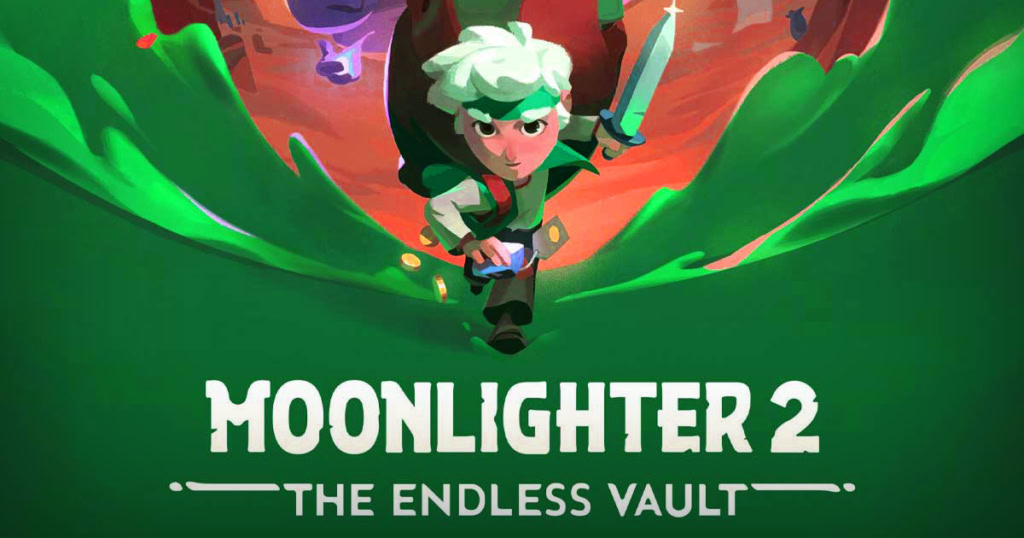
Moonlighter 2: The Endless Vault arrives as a sequel that knows exactly which pieces of the original formula to keep and which to push harder. Developed by Digital Sun and published by 11 Bit Studios, the game is coming back with dungeon exploration runs and day-to-day shopkeeping. If you loved the first Moonlighter for its charming pixel-art aesthetic and the tension between risk and reward, you’ll find familiar motives and themes here in the sequel. Each time, you’ll have to prepare by upgrading your kit, dive into a dangerous otherworld, scavenge for treasures, return to town, and get the money from customers.
But Moonlighter 2 deliberately changes the mechanical basics. It changes the original’s two-dimensional pixel look for a 2.5D/3D world and goes towards being an action-RPG sensibility and roguelike game. That transition is not purely cosmetic. It changes the way all of it feels.
[Note: While I am reviewing this game independently and honestly, it should be noted that it has been provided to me by 11 Bit Studios for the purpose of this review.]
The story in Moonlighter 2: The Endless Vault
Story-wise, Moonlighter 2 keeps things simple and straight to the point. You return to the role of Will, the enterprising shopkeeper-adventurer. But the sequel opens new doors in the story of the game.
Will and a handful of his companions find themselves stranded in a fractured dimension and must do everything in their power to stay alive among a community of castaways. This is something that immediately replaces the first game’s straightforward village-and-dungeon placement with a slightly broader society and a feeling that you are rebuilding something.
The story never aspires to be an epic fantasy tale. From the beginning, it focuses on being a small story, with purely human moments, conversations about survival, and showing the subtle ways in which people change when their world falls apart. That intimate approach suits the game really well, especially with the story progressing slightly further between runs, as each dialogue, short quests, or notes provide you with knowledge and lore.
Because the narrative is modest and calm, it gives the more advanced gameplay mechanisms a place to shine. The emotional reward for progressing through the story is not a single dramatic twist in the end, but the sense of progress as the camp grows, as new faces arrive, and as the town’s economy develops under your stewardship.
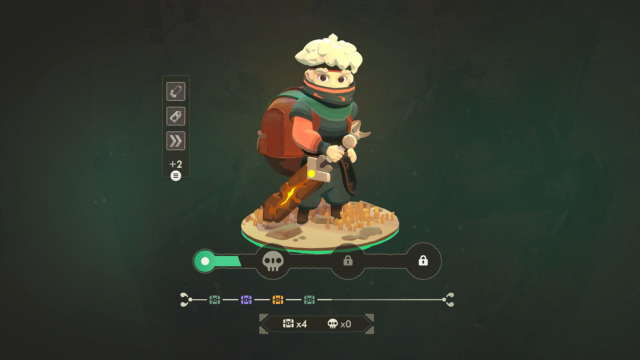
The sequel leans into the idea that a shop you run is a social hub as much as a place to make money. Customers arrive, barter opportunities appear, and the flow of goods creates a living backdrop for the combat-focused missions. If you cared about the cozy charm of the original, expect that vibe here. The story itself rarely interrupts the gameplay, which is a good thing for a game whose pleasure derives from repeated loops and constantly upgrading everything.
Gameplay switches things up a bit from the original
I really love the gameplay of Moonlighter 2. It’s the heart of the game. The core of the mechanics remains the same. Prepare for a run by managing your inventory and equipment, going into the Endless Vault or other dimensional arenas, fighting enemies, collecting loot, and then returning to your shop to sell, craft, and upgrade the inventory. But, in terms of being the sequel, it adds layers and changes priorities in ways that change the feeling of almost every minute you play in it.
One of the most visible changes is the move to 2.5/3D graphics. The environment already feels richer, enemy silhouettes look different, and combat feels more immediate because hits and movement take place in a volumetric space rather than a flat plane like in the 2D case.
That shift creates room for new enemy combat, dodge and parry windows, and environmental hazards that interact with the player. It also makes the presentation more pleasing to the eye. Items now have a physical presence, and examining rare finds carries more weight because the models can be rotated, inspected, and put under an “investigation.”
The decision to go 3D is courageous because it changes the series’ identity. It’s a trade-off that will make players who prefer modern action-RPG aesthetics happy.
Mechanically, the developers have taken notes from other roguelikes as well as from the first Moonlighter game. Combat goes into quick, satisfying duels and combos, and weapon feels are prioritized so each encounter can be thrilling and unique in its own way.
Certain combat elements are similar to Hades, but it’s not because Moonlighter 2 copies Hades’ structure, but because it borrows what worked there, changes it to fit the game, and makes its own. That influence is visible in faster pacing, clearer hit reactions, and a focus on players’ influence and micro reactions during fights.
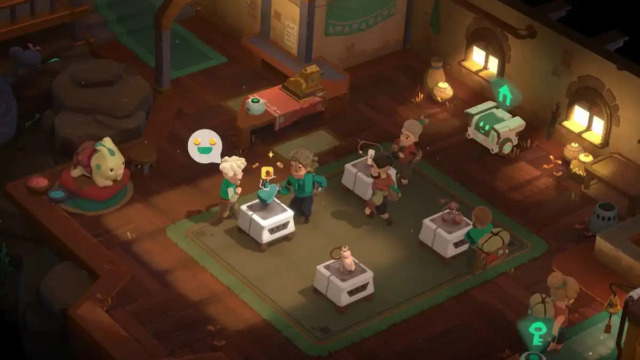
Loot and inventory have been reworked. There’s more emphasis on crafting systems, on backpack upgrades that affect resale value, and on relic-style character upgrades that stay between runs.
These additions make the economy deeper, but it’s all because of your choices of which items to extract, which to refine or craft, and which to sell or hold. Later, they may lead to you making strategic decisions that influence your story and the characters. The backpack upgrades in particular change the situation when calculating risk versus reward.
Shopkeeping has also been rebalanced. The sequel’s shop arc is less about micro-managing ridiculous price changes and more about steady growth and player-driven focus.
Bargaining with customers is less central in the early game, and it was slightly changed by replacing it with a cleaner perk system and new customer interactions that reward attention to inventory placement, timing of sales, and crafting choices. That makes the shop feel less like a minigame and more like a living business you constantly get money from. You design the catalog, set sensible prices, upgrade inventory, and watch how the town’s needs evolve with your help.
Progression choices and meta-progression are where Moonlighter 2 starts to show real ambition. Relics and permanent upgrades let you change runs to achieve specific goals and be rewarded.
Of course, sometimes there are pacing and balance issues, places where the new game systems and mechanics overshadow the charm of the game rather than enhance it. But those are the kinds of problems that won’t change the overall experience you will have while playing.
Final thoughts on Moonlighter 2: The Endless Vault
Moonlighter 2 is a sequel that remembers why the first game resonated, and it embraces it to be even bolder and interesting enough to reuse many of its foundational elements. The move to 2.5/3D and the tighter action-RPG focus make the combat fresher in ways that are bringing success immediately. It’s purely satisfying and brings a deeper tone change.
My rating for this game: 4.5/5
If you’re looking for the same mood and tone as the first Moonlighter, this isn’t merely a remaster or just another sequel. If you’re open to a sequel that redefines the loop, pushes combat forward, and rewards careful economic thinking, Moonlighter 2 is a great option.
If you want a great player experience, satisfying fights, rewarding loot management, and a shop that slowly becomes the heart of a rebuilt community, pick Moonlighter 2 as your next game to play.
Also check out Dispatch Game Review: Your Choices Shape the Superhero Journey