‘1666: Amsterdam’ Game Review (Early Access): Potential May Not Be Enough
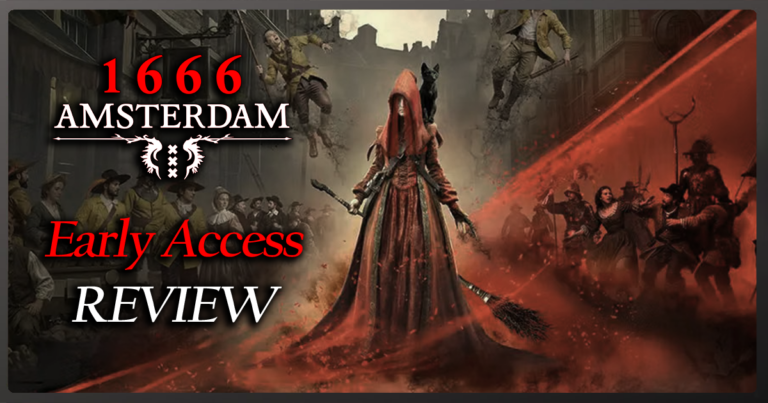
1666: Amsterdam is one of those few gaming projects in the modern era that has a fascinating story hidden deep within it. This game has been in development for a long time. It was finally released because Patrice Désilets, the creative person responsible for the early Assassin’s Creed games, regained the creative rights after a legal battle.
As for the players and the game itself, this history inevitably affects the way the game is experienced. It is difficult to look at 1666: Amsterdam without thinking about what it represents and where it’s from. Yet the game cannot survive on its backstory alone. What matters most is whether this strange combination of XVII-century adventure, witchcraft, investigation, and supernatural horror works as a video game.
1666: Amsterdam has an extraordinary backstory and a fascinating foundation, but it also feels unmistakably lacking in terms of story and character development. Its best ideas are often exciting, while its weaker parts make it clear why it was released in Early Access and won’t be released as a full game for quite some time.
The first impression is undoubtedly the strongest one. Seventeenth-century Amsterdam is beautifully reconstructed, with canals, narrow streets, brick buildings, and interiors that are filled with Dutch Golden Age paintings. The problem is that the quality of this world sometimes exposes the weaknesses of everything happening inside it. 1666: Amsterdam can look exceptional before suddenly becoming a game that is lacking, even for Early Access.
[Warning: Light spoilers from the Early Access version of 1666: Amsterdam are below. It is also worth noting that I played this game on PC.]
The story in 1666: Amsterdam
1666: Amsterdam’s premise is probably the game’s most ambitious element. It is not a typical straightforward historical fantasy adventure. At its center is Noa, a young witch known as the Collector, who lives in Amsterdam during the seventeenth century. Her task is to identify and hunt the mysterious Originals, supernatural beings who hide among ordinary people after making pacts that grant them extraordinary power.
The main story decides that instead of searching for obvious clues and typical monsters, Noa has to determine which seemingly normal citizens are hiding something demonic in addition to their regular human identities.
As part of the lore, the game is not simply using witchcraft as the main part of the story. The world is built around the idea that hidden identities, ancient rituals, and supernatural bargains have consequences that stretch across centuries, but the magic itself is only in addition to the bigger moral.
Noa’s role as a Collector also gives the story a detective quality. Discovering an Original’s identity matters just as much as defeating them. Unfortunately, the writing does not always live up to the strength of the initial premise.
The dialogue can sometimes be heavy and not in a good way. Characters sometimes deliver information because they want to make sure the audience gets something, rather than letting them figure things out on their own.
The prologue also created a misleading first impression. It focused heavily on narrative setup and ended before I could properly experience the central investigation-and-combat parts of the game. All of it makes me wonder whether the game was actually an action-adventure at all or if it is something else entirely.
Adventurous gameplay has promise, but lackluster fighting mechanics
The gameplay mechanics of 1666: Amsterdam revolve around a simple but effective idea of investigating by day and confronting your discoveries at night. During the daytime, Noa explores Amsterdam, observes citizens, searches for clues, and investigates. The objective is not simply to locate a target but to understand who or what that target really is.
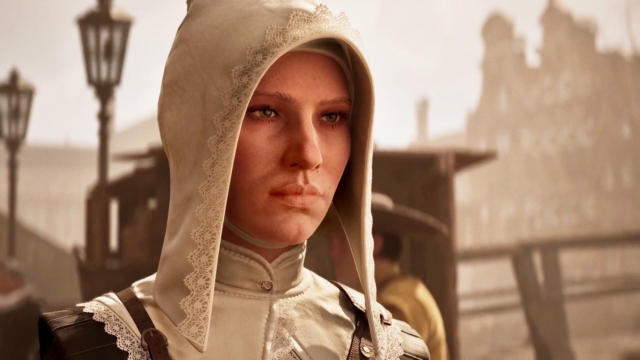
This is where the game occasionally feels like the spiritual successor to the early Assassin’s Creed philosophy. Amsterdam is treated as a playground, which we use to gather the needed information. Buildings, streets, rooftops, interiors, and crowds all have potential uses. But we must know how to use them in our interest.
The biggest problem is that the mechanics are not as smooth as the initial concept suggests. Combat is functional but lacks the weight and playability expected of a modern third-person action game. Noa attacks with her staff, dodges incoming attacks, and can perform finishing attacks after enemies are sufficiently weakened, but it’s all slow and sometimes really poorly executed.
These fighting mechanics become particularly noticeable during boss encounters. The idea of fighting supernatural Originals should be one of the highlights of the game, yet the current combat system can make these encounters feel surprisingly ordinary. Some battles are more about repeatedly attacking and dodging than understanding an enemy’s unique behavior, lore, mechanics, powers, and identity.
The magic system is more promising than it was initially teased. 1666: Amsterdam introduces randomized spells and abilities that can change the way Noa approaches situations and bosses. The idea is closely tied to the game’s roguelite traits. Losing a useful ability can be frustrating, but discovering something more powerful on another attempt creates a risk-and-reward mechanic that could become one of the game’s strongest systems if it receives enough balancing and variety.
There are moments when this system captures exactly what 1666: Amsterdam should be. You see a location that appears inaccessible, so you use all your unlocked abilities to access it, and you discover a way to approach the situation from another direction. It feels clever because the solution comes from understanding the situations and characters around you rather than simply unlocking another generic ability that is overpowered.
What makes it frustrating is that 1666: Amsterdam does not need shortcuts to establish an identity. Its strongest qualities come from the gameplay mechanics, which are not 100% finished but have a lot of potential to fit the narrative and make it worth your time.
Even though it’s Early Access, there is still a lot to fix and upgrade. I’m concerned that it may be one of those problems that won’t be entirely resolved by the time the game officially releases.
1666: Amsterdam (Early Access) final thoughts
1666: Amsterdam is one of the strangest games of 2026, but also one of the easiest to understand as a work in progress. There is a genuinely fascinating game buried inside it. The historical Amsterdam is excellent, the supernatural premise is fitting, the day-and-night investigation structure has real potential to be something more, and the gameplay is fresh in this genre. At the same time, the current version does not consistently deliver on those ideas.
Combat is repetitive, enemy AI is underdeveloped even for this version, stealth lacks tension, dialogue needs refinement, and several systems still feel as though they were built separately instead of functioning as one.
What’s good is that 1666: Amsterdam is more interesting this way. That might sound weird, but in this case it is actually encouraging to work on it. A difficult aspect of making original games is creating a unique identity for each, but it already has one. It’s all about a supernatural investigation set in seventeenth-century Amsterdam, built around witchcraft, demonic identities, time travel, and a playable cat.
It should not work, but when the pieces come together, they create something weird but good. If the developer can fix combat, improve enemy AI, punch up the writing of some scenes, and turn the investigation systems into something fitting the game better, 1666: Amsterdam could become much more impressive.
1666: Amsterdam Early Access is now available on PC.