‘Star Wars: Zero Company’ Game Review: Clone Wars Era Play Focused on Strategy and Tactics
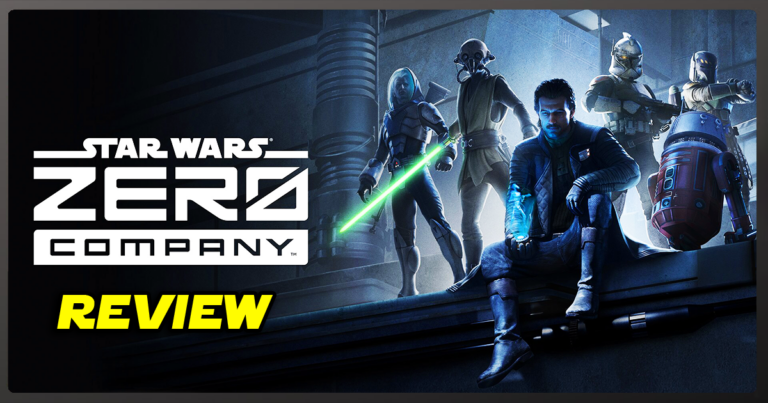
Since the day it was announced, Star Wars Zero Company was a gaming experiment that many had doubts about. For decades, Star Wars games have explored the galaxy through the eyes of various characters and stories and through the windows of many vehicles. Players have flown X-wings, fought through massive multiplayer battles, hunted Sith Lords or Jedi with a lightsaber, and even commanded armies on a galactic scale. Yet there has always been one genre in which Star Wars should be made on a bigger scale. Star Wars Zero Company is this type of game, and even though it has issues, it does not disappoint.
What makes this game particularly interesting is that it doesn’t simply copy and paste from famous tactical turn-based games like XCOM and replace soldiers with clone troopers. Zero Company understands that Star Wars offers a variety of battlefields and opportunities. The game uses those differences to create a tactical experience that doesn’t feel too difficult for novices, but it also satisfies veterans of the genre.
[Warning: Spoilers from this game are below! It is also worth noting that I played this game on PC.]
Star Wars Zero Company’s story explores a different type of war in the era of the Clone Wars
Zero Company takes place during the era of the Clone Wars, a period that gives the game a huge amount of narrative freedom. The Republic and the Separatists are in a war that has consumed numerous worlds across the galaxy. Jedi are being sent into worlds that are farther than they anticipated, and clone soldiers are dying in battles they were literally created to fight. The political system in Coruscant is slowly collapsing beneath the surface, leading to the creation of the first Galactic Empire.
Zero Company wisely avoids retelling the story of well-known characters or the major events that were already established in the films and television series. Instead, it focuses more on the stories that were happening far from the center of the main conflict.
The protagonist is Hawks, a former Republic officer from the 100th Battalion who becomes the leader of an unconventional group of specialists and professionals for hire. This squad is called Zero Company, aka a unit made up of individuals who would not necessarily work together under normal circumstances.
The Clone Wars were always much bigger than was shown. There were thousands of battles, secret operations, intelligence missions, mercenary contracts, criminal interests, and local conflicts taking place away from the Jedi Council and the Republic’s official propaganda. Hawks and the squad operate in precisely that space. They are important enough to become involved in something much larger than themselves, but they are not presented as a team who will be as important as characters we know.
The main threat in the story is Infinite Coil, a mysterious and dangerous faction whose activities became a threat to the galaxy. They are a cult that tries to recruit as many people as they can. Their story is one of the darker and more mysterious than in previous games.
Making them villains, and not someone we already know, makes sense and shows that even when powerful people are in the center of a battle, someone will try to conquer places no one takes interest in. This approach also creates some of the game’s best connections to the larger universe. The war is everywhere, but Zero Company is not a team that will be significant or will be a part of the most decisive battles.
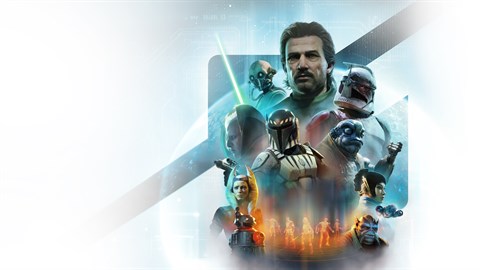
The problem with all that is that the squad has strong concepts, good personalities, and plenty of potential, but some of their relationships and individual arcs can feel more lightly developed than the game initially promises. There are moments when Zero Company seems capable of reaching the squad chemistry and emotional investment through being part of the same missions, but it doesn’t always explore those relationships deeply enough. However, that does not make the story weak.
The main campaign remains interesting, and Zero Company adds another crucial and needed perspective to the Clone Wars era. It is ultimately more valuable than simply creating another adventure where the player follows a familiar hero, and it makes it more special in the end.
The gameplay and mechanics are full of XCOM DNA
The most obvious game comparison for Zero Company is the XCOM series, and this game does not try to hide the similarities. Combat is turn-based; positioning of the characters matters enormously; good cover can determine whether a character survives, and every turn becomes important.
Each character has action points, which allow them to perform movement, attacks, and other actions to be managed within a limit of 3 points per turn. Moving into a better position may cost you a valuable point that you will regret losing later on. Spending everything on an attack can leave a character unable to react during the enemy turn. Saving points for Overwatch skill can protect you for a while, but it’s all risky.
The three-action-point structure is particularly effective because it gives us room to experiment. Some of the actions may not always feel completely thought-out, but thanks to it, players can move cautiously, reposition, combine attacks, or hold back to see how all of it will pan out.
Squad bonds are another area where the game tries to make us care about characters. After 3 injuries total, a character dies permanently unless they are cured in time at the base. Characters who fight together can develop stronger relationships and unlock combat synergies, but when they’re gone, you can feel that it is either your fault or the game’s, but you can’t turn it back. You have to use this sacrifice to make your team even better and stronger.
All in all, the gameplay is dynamic enough to keep you focused. A difficult mission can make you frustrated at times. But it will become genuinely memorable when a character is injured, getting to the extraction zone takes you a long time, or when you suddenly have to abandon the original plan, improvise, and pray for the best.
Star Wars Zero Company game rating and final thoughts

Star Wars Zero Company is not a revolutionary project in the turn-based tactics genre. Even though it proves that the Star Wars universe needs more games like this, you can feel there are things that could be upgraded to improve it.
The game’s story uses the Clone Wars era in a very clever way, choosing to explore the war’s darker corners instead of re-experiencing stories we are familiar with. Hawks, Zero Company, Republic military structures, and the growing threat surrounding the Infinite Coil are all part of a larger narrative in the unknown corners of the galaxy.
The tactical gameplay and mechanics are the real reason to play. Bit Reactor clearly understood the mechanics of the genre. The action point system, advantage mechanics, backup attacks, bonds, squad building, customization, and mission structure give us plenty of reasons to think carefully before acting. Even though a lot of it takes time to learn and develop your own strategic vision for how to play this game and which team to use, it’s all worth it in the end.
As part of the Star Wars gaming genre, this is one of the most fascinating games recently in this universe. As a whole, it feels like the beginning of something bigger rather than a one-time story. It offers us a nice addition to the Clone Wars era and delivers an enjoyable squad strategy game with a feeling that it was made by fans for fans.
Star Wars Zero Company is now available to play on PC, PlayStation 5, and Xbox Series S/X.
Also check out: Star Wars Outlaws: Low Red Moon by Mike Chen Book Review