Hadrosaurus Software’s Clarissa Toney Discusses ‘Enigma Heart’ Game
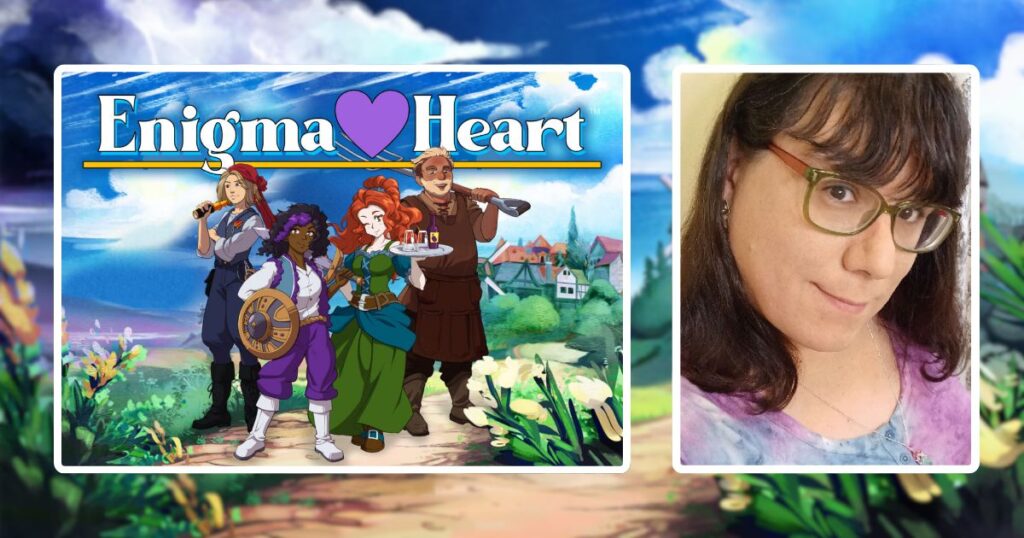
Three times a year, the company behind Steam, Valve Software, holds an event to showcase a plethora of upcoming games that are coming to the platform. These events, each of them being called Steam Next Fest, are there to exhibit these games with playable demos. The developers behind these demos use this event to show off either their first demo or an updated one that features substantial changes from their last. It is through this most recent Next Fest that I was able to spend a significant amount of time with the demo of Hadrosaurus Software’s Enigma Heart.
Even now, I still feel the impact that the demo of Enigma Heart has left on me. It’s not just because Enigma Heart reminds me of one of my favorite games from my childhood, Nintendo’s Zelda II: The Adventure of Link, but because this new game includes powerful themes of queer romance and experiences of emotional trauma.
These themes resonate with so many people, and it is through these shared experiences that we can have strong emotional connections with something so beautifully created. All of these decisions are conscious decisions by the game’s creative lead, Clarissa Toney.
A conversation with game developer Clarissa Toney and the importance of inclusion
Clarissa Toney is not alone in this world because, just like me, she is a transgender lesbian and has enough insight and nuance to handle sensitive matters. While Clarissa’s identity is important and should be acknowledged, she made the decision to focus on very deeply specific themes to reach a more broad, queer audience.
It is a fact that queer youth experience higher trauma symptoms compared to their heteronormative counterparts, more specifically those being straight and cisgender individuals. What Toney and the rest of the team are doing by speaking directly to queer players is letting them know that this is a game that respects them for their time while staying on message.
I was privileged enough to speak with Clarissa Toney about some of her history with games, what inspires her, a bit about the creation of her team’s upcoming game, and other interesting things regarding game development.
Even though there is no direct personal significance between Clarissa and Zalia, Enigma Heart’s main character’s name, she still pulled some influences from her own background into the general motifs of this project.
When you add in queer or traumatic topics into your creation, there also needs to be a careful balance as to not alienate players. I have a life that involves these very personal issues, so I take no issue with their inclusion, but because these are delicate topics, it is important to tackle them with empathy for those who have not experienced them.
My life has always been difficult. I’ve been a part of the queer community for what feels like my entire life, and I’ve always struggled with connecting with other like-minded individuals. It doesn’t matter if I try to connect with strangers, friends, or my family; I have always worried that being my true self is going to lead to isolation and hardships.
Specifically in the case of my family, when I came out as a transgender woman in 2011, it caused a rift in my relationship with my ex-spouse. She once said she’d love and care about me no matter what, but in the end that was revealed to be untrue.
Humanity is flawed, and while we cannot always forgive people for their fundamental flaws, it is important to understand that some people’s negative biases cannot be changed no matter how much we hope and try. We don’t need to have a defeatist attitude about it, but it’s important to acknowledge when we must let go of those relationships and try to build a newer, happier life for ourselves. It is this approach that we can begin to recover and start to thrive as our true selves.
The genesis of Enigma Heart
Establishing the game development studio Hadrosaurus Software in 2022, Clarissa Toney writes, directs, designs, and programs as the lead for Enigma Heart. Originally intended to be a hobby, Toney started production on Enigma Heart in March 2024 until November of that year, when she unfortunately lost her day job. After losing her job, the game became a full-time endeavor.
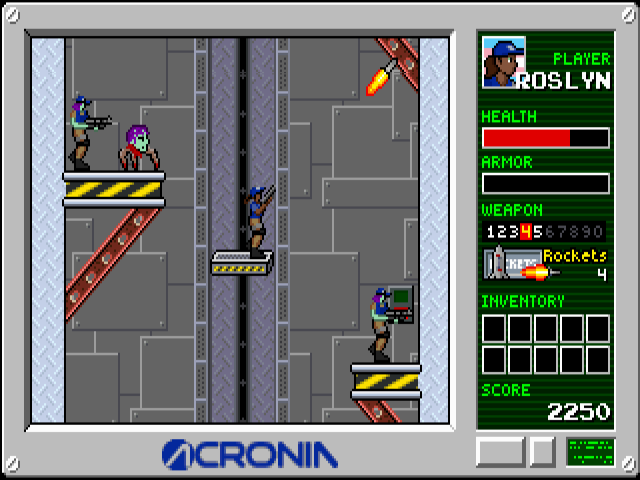
This was not the first attempt by her studio. Before the development of Enigma Heart, Toney started to create a sidescrolling run’n’gun game named Acronia, which was intended to run on older PCs running DOS. Inspired by the likes of Rise of the Triad, Bio Menace, and Commander Keen, this was an ambitious project. In Clarissa’s own words, she coded herself into a corner, and Acronia experienced slowdowns and crashes and was nigh unplayable.
Following this failed prototype, a friend issued a simple challenge to Toney: make a prototype of a Zelda II clone in two weeks. Over the course of that period, she was shocked at how well it turned out and decided to keep working on it for at least three months.
Nevertheless, three years have passed since the beginning of that challenge, and it has now become a full-time project. It is through tenacity and patience that this team has been able to put it together during this period.
Earlier this year, the development team did a call for a playtest on Steam, and since then, the game has been polished enough that they felt comfortable releasing a demo during Steam’s Next Fest celebration.
Game inspirations and searching for a unique identity
During this most recent Next Fest, I was able to squeeze in time to play over 30 demos this time around, and there was no other demo that stood out more as much as the one for Enigma Heart. Those in the queer community that I could speak to regarding Enigma Heart are excited to play more of this game.
While I am eager for what is being developed, after spending nearly five hours with the demo, I am completely blown away. My original expectations for this game were that it was simply going to be a modern take on Zelda II with modern quality of life adjustments. But with the addition of themes that I can relate to, all of these changes make a difference.
For a moment, let’s put aside the inclusion of the meaningful messaging that is planned for the game. At its core, Enigma Heart takes a strong foundation of what was established in Zelda II, an infamously difficult game, and modernizes it for today’s audience.
At first glance, it may seem that this title is a copy of Zelda II, but by taking a closer look, I found out this was not the case. Not only does the game update many aspects of the formula from Zelda II, it offers enhanced gameplay mechanics, a swath of character dialogue, and a story full of adventure and many heartwarming moments. Enigma Heart may be the first original game that could inspire a new sub-genre of “Zelda II-likes.”
What makes Enigma Heart work so well?
While it is impossible to deny that this game takes a lot of inspiration from an iconic action-adventure RPG such as Zelda II, there is a lot of hard work that is going into Enigma Heart.
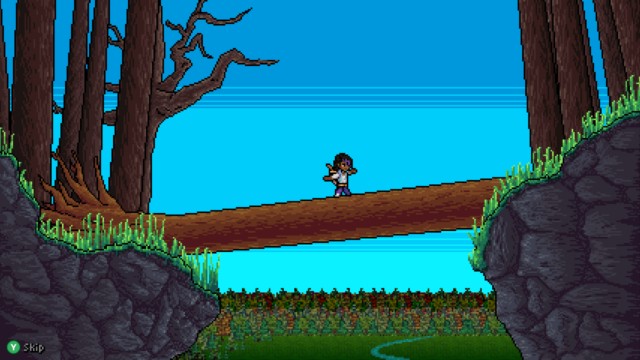
First and foremost, let’s start off with the stuff that feels or looks the same that appears in the retro title. All battles and dungeon areas take place in a two-dimensional space where you will need to swing your sword to defeat enemies while trying to block their attacks with your shield. There is an assortment of enemies that are similar to what players may recognize, but don’t get complacent because these foes do have tweaks to their behavior.
Hadrosaurus Software’s design approach with their game was to look at a problem, and copy Zelda II’s implementation as closely as possible through playing and observation. Once this was better understood, it was important what and how to change it to make the gameplay mechanics have their own identity and to avoid making the game feel like a simple re-skin.
Clarissa Toney wants fans of action-adventure RPGs to see the clear influences but doesn’t want it to feel like a shameless clone. When you break it down, the goal is to avoid sticking too closely to the source material while trying to keep the design lineage clear.
With Enigma Heart being so closely linked to Zelda II, it is easy for players and critics to accuse this game of being too similar to the source material. This can have consequences since it is one of the first to accurately recreate the feeling of playing Nintendo’s classic title.
Through my experience of sharing recommendations of the demo with others, I received many enthusiastic responses. Even if players accuse the game of being too much of a reflection of Zelda II, there are enough gameplay changes in Enigma Heart to distinguish the two from one another. Mantling and sliding are a couple of the new maneuvers that are available in the demo, with newer moves that will be available once the game releases into 1.0.
Hadrosaurus Software and the team making everything come together
Clarissa Toney is not the only one doing wonders behind the scenes on Enigma Heart. In charge of art direction and leading the pixel art is Szabó Emily. Chosen to do the illustrations for the game is Cial. For Emily and Cial, Toney reached out to both of these artists via social media posts as they were both on the hunt for commissioned work. They were looking to be hired for doing art projects, and once establishing a good rapport, they quickly clicked together.
Rounding out those credited on the company’s website is Martijn Frazer, who is responsible for creating the game’s soundtrack. Frazer and Toney knew each other when they both formerly worked on the Acronia, the failed DOS game, and it just felt natural to work together once again.
Currently, the biggest hurdle for this team is trying to secure a publisher because, at this time, Hadrosaurus Software is left with trying to self-publish. This is not an ideal situation because, without a publisher, things such as QA testing, marketing, and financing are extremely difficult.
Toney explained to me that throughout production she sent out game pitches to over 30 different publishers. One responded but stated that they could not offer help with funding, which now leaves her to deal with the complexity and occasional headache of self-publishing. Without a dedicated publisher for a project of this scale, it is much more difficult to grow audience awareness while simultaneously developing a game.
Do these publishing woes mean it is the end for Enigma Heart? Absolutely not. There is still a strong potential audience that wants more games with strong queer themes.
Even if they are unable to secure funding from a publishing or PR company, there is another option. During our discussion, Toney explained that she was going to consult Emily and the rest of the team to work on a plan to look into doing a crowdfunding campaign. It ultimately may not happen, but it is a strong consideration, especially if they cannot land a publisher to help finance the game.
Clarissa Toney on looking at the past towards a successful future
While Clarissa Toney has spent a considerable amount of time over the past decade learning how to make games, she hasn’t been able to spend a lot of time playing them. When she does play games, she ends up playing her old favorites.
As we spoke more about her own personal history of gaming, she mentioned two classic RPGs that she still plays to this day: Wild Arms and Final Fantasy VII, both released for the original PlayStation. She tries to play both of these games every couple of years, and even though she has played other RPGs, such as some Dragon Quest games and the Lufia series, she always gravitates back to her mainstays. Final Fantasy VII and Wild Arms, in particular, each hold a special place in her heart.
When going into more detail regarding Final Fantasy VII, Toney told me about how much she truly enjoys how the characters are written and the way the world is built up and portrayed. She and I mutually agree that for 20+ years, there has been unfairly negative discourse online from fans who still believe that the characters in Final Fantasy VII are blank slates.
This applies to building their abilities and how every character feels like a blank slate with no defined role in and outside of combat. However, Clarissa is a fan of systems, and by having the characters interchangeable with their skills and spells, it changes their utilities and roles. This makes her more interested in how the characters are written rather than the gameplay mechanics.
One of the more recent games with queer themes that she has played was Kitsune Tails, available on PC, led by creative director Eniko Fox. Kitsune Tails is a 2D platformer with gameplay elements based on older Nintendo 8-bit classics, particularly being an homage to Super Mario Bros. 3. It combines elements of inspiration from Japanese mythology with an intertwining love triangle between three female characters.
By Toney’s own admission, she hasn’t had much time to seek out and play newer games, but she was anticipating Kitsune Tails so much that when it went live on Steam, she purchased it in a heartbeat. Even though it was much harder than expected, she ended up loving the game dearly. She adored the story and characters because of how joyfully queer it is.
Clarissa Toney and Eniko Fox spoke to each other, with Fox being helpful with design insights and to better help Toney better understand what Enigma Heart would ultimately be. Taking a classic formula, modernizing it, adding queer characters, and creating an identity of its own.
Sure, accusations might fly claiming that Enigma Heart is too reliant on Zelda II’s core, but what about games like Kitsune Tails and the many others that take inspiration from retro titles? They are all their own thing, but no one accuses them of being too similar. Enigma Heart is truly a beautiful game with its own unique personality and traits. No one can take that away from Toney and her team.
Final thoughts on Enigma Heart’s demo
Since the end of this latest Steam Next Fest, the awareness for Enigma Heart has grown, but there is still a lot of work ahead for this small team. It takes time to analyze how many people have downloaded and played this demo, see how many of those added the game to their wishlist, and convert them to sales. A crowdfunding campaign through a platform such as Kickstarter is a good way to grow exposure, especially with how much quality has been built into the demo.
The endeavor that this team has been working on for years still has a lot of progress to be made before we know for certain it’s going to be a success or not. Enigma Heart is an ambitious project with so much passion and love put into it. Its validity is not just important for the world of gaming but for the wider world of queer fiction.
I believe that if players dedicate some time, even for just one hour, to play this demo of this marvelous game, they’ll enjoy it. If you are interested in learning more about Clarissa Toney, Hadrosaurus Software, and Enigma Heart, go check out the demo while you still can on their Steam store page. You can also locate them on their respective social media platforms.
Also check out: Game Review: Coffee Talk: Tokyo Is A Warm Cup of Comfort and Friendship