‘Avatar: The Last Airbender’ Season 2 Review
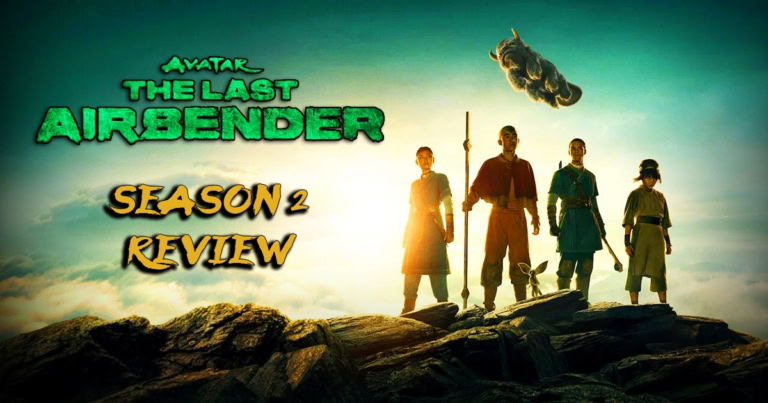
The original animated series of Avatar: The Last Airbender is considered one of the greatest fantasy television shows ever created. This is not only because of its world-building and action but also because of the emotional depth hidden beneath its seemingly simple premise. The first season of Netflix’s adaptation managed to attract a large audience yet was also not what the fans expected. The more mature tone and a larger scale were appreciated, but it was something entirely different. Season 2 of Avatar: The Last Airbender adapts source material from Book Two: Earth, a chapter of the original story that is considered to be the best alongside Book Three.
From the start of the second season, the stakes are larger, the political themes are more complex, and the characters begin evolving in ways that permanently change them. Every new city feels different. Every culture has a different personality. The world feels more lived-in than before.
What immediately stands out is the confidence in this season. Season 1 occasionally felt trapped between honoring the source material and trying to reinvent it to be original. Season 2 feels far more comfortable making creative choices. The writers are no longer afraid to restructure events, combine storylines in a new way, or develop unseen character motivations when necessary.
Most importantly, the heart of Avatar: The Last Airbender remains intact. Beneath the visual effects, political intrigue, and spectacular battles lies a story about growth, friendship, responsibility, and identity. Those themes have always been the foundation of the franchise, and season 2 preserves them. That is far more important than recreating every scene exactly as it appeared in animation.
[Warning: Spoilers from Avatar: The Last Airbender season 2 are below!]
The story in Avatar: The Last Airbender season 2
Season 2 picks up some time after the events of the first season. Aang (Gordon Cormier), Katara (Kiawentiio), and Sokka (Ian Ousley) continue their journey through the Earth Kingdom as they search for Aang’s earthbending teacher. On paper, this sounds like a relatively straightforward objective. In reality, it becomes the spark of a flame that dramatically changes the world and future danger.
One of the greatest strengths of the season is how it expands the scope of the conflict. In the first season, the Fire Nation largely served as an obvious enemy. The heroes knew who they were fighting and why. Season 2 introduces a much more complicated reality. The Earth Kingdom itself is deeply flawed. Corruption exists at every level. Citizens are often manipulated through misinformation and fear. Suddenly, the war feels far more realistic and far more complicated.
The crown jewel of the season is undoubtedly Ba Sing Se. The legendary Earth Kingdom capital has always been one of the most fascinating locations in the Avatar universe, and the live-action adaptation brings it to life with remarkable effectiveness.
At first glance, the city appears to be magnificent. Massive walls surround a thriving civilization that seems untouched by war. Streets are crowded with merchants, officials, and ordinary citizens. Everything appears peaceful. Yet the deeper the story ventures into Ba Sing Se, the more unsettling it becomes.
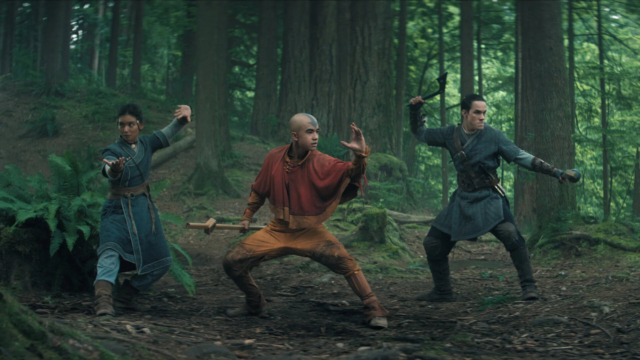
The story in the city gradually transforms into something resembling a political thriller. Secrets hide beneath every conversation. Information is carefully controlled. Citizens are encouraged to ignore reality in favor of comforting illusions. The atmosphere becomes increasingly tense as the Gaang realizes that some of the most dangerous threats they face are not soldiers carrying weapons but systems designed to suppress truth itself.
This season does an excellent job of balancing this political storyline with the personal journeys of its characters. The plot never becomes so focused on world events that it forgets the individuals at its center. Every major conflict serves a purpose in the development of the protagonists. This tension creates some of the season’s strongest dramatic moments. Aang wants to save everyone, but the world keeps reminding him that such goals are often impossible.
At the same time, the season never relies solely on action. The most memorable scenes are frequently the quietest ones. Conversations between friends, moments of doubt, and difficult choices frequently carry more emotional impact than the biggest action sequences. This balance between character and spectacle has always been one of Avatar’s greatest strengths, and the adaptation largely preserves it.
By the time the final episodes arrive, the story has evolved into something larger than a simple quest to learn a new bending style. It becomes a meditation on power, responsibility, leadership, the future, and personal identity.
Evolution of the characters in the second season
If the story provides the foundation of season 2, the characters provide its soul. Aang experiences some of the most meaningful growth in the entire series. During the first season, he often appeared overwhelmed by the expectations placed upon him. He was a child trying to survive a conflict he never asked to be a part of. Season 2 begins transforming him into someone capable of accepting those responsibilities.
What makes Aang’s development so real is that it never abandons his core personality. He remains optimistic, compassionate, and hopeful. However, those qualities are increasingly challenged by the harsh realities surrounding him. Every difficult decision forces him to confront the gap between who he wants to be and who the world needs him to become.
Katara continues to be one of the series’ most important characters. While she has always been a source of emotional support for the group, season 2 allows her to become a leader in her own right. Her confidence grows with each challenge she overcomes.
The writing for the series also does an excellent job of highlighting Katara’s empathy without reducing her to a purely nurturing role. She is compassionate, but she is also determined, intelligent, and capable of confronting difficult situations directly.
Sokka receives some of the strongest material of his live-action portrayal so far. One of the recurring themes of Avatar has always been the value of ordinary people in a world dominated by extraordinary powers. Sokka embodies that idea perfectly. He cannot bend elements. He does not possess mystical abilities. Yet his intelligence, creativity, and courage repeatedly prove just as important as any bending technique.
Then there is Toph (Miya Cech).
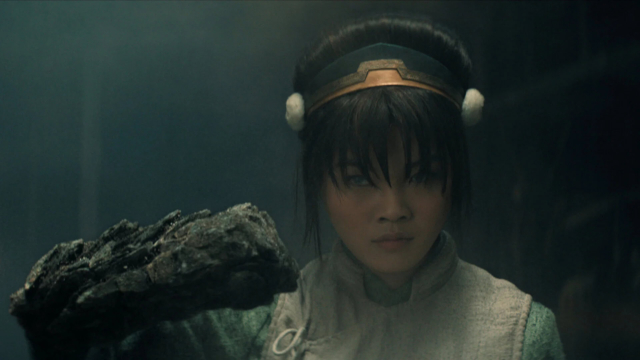
Introducing Toph was always going to be one of the greatest challenges facing the adaptation because she is arguably one of the most beloved characters in the entire franchise. Fortunately, the live-action series largely succeeds in that matter.
From the moment she appears, she injects fresh and intriguing energy into the story. She is stubborn, blunt, confident, and completely uninterested in meeting anyone else’s expectations. Yet beneath that tough exterior lies a character struggling with her frustrations and limitations. The show wisely avoids treating her blindness as a weakness that defines her. Instead, it becomes one aspect of a much larger and more fascinating individual.
Her relationship with Aang becomes one of the season’s highlights. Their personalities constantly clash. Aang prefers flexibility and avoidance. Toph believes obstacles should be confronted directly. This difference creates both entertaining conflicts and meaningful lessons.
Zuko (Dallas Liu) once again steals many of the scenes in which he appears. His character arc remains one of the greatest achievements in modern fantasy storytelling, and the adaptation continues treating it with the care it deserves.
Season 2 finds Zuko at a crossroads. Stripped of many of the goals that previously defined him, he begins questioning everything he once believed. Every scene reflects the tension between who Zuko was raised to be and who he might become. The conflict is visible in his expressions, decisions, and relationships.
The emotional center of Zuko’s storyline remains Uncle Iroh (Paul Sun-Hyung Lee). Their relationship continues to be one of the strongest elements of the series. Iroh provides guidance, offers wisdom without judgment, and supports his nephew no matter what. Their conversations are often simple on the surface, yet they carry tremendous emotional weight because they represent a form of unconditional support rarely seen elsewhere in the story.
Final thoughts on Avatar: The Last Airbender season 2

Season 2 represents a major step forward for Netflix’s Avatar: The Last Airbender. It is more ambitious, more emotionally mature, and far more confident than its predecessor. It’s not perfect, but while it does not replicate every aspect of the animated series, it demonstrates a growing understanding of what truly matters about this world and its characters.
What ultimately makes the second season successful is its understanding of growth. Every major character changes in meaningful ways. Every storyline contributes to a larger exploration of identity, responsibility, and destiny. The world becomes more alive, the conflicts become more complex, and the emotional stakes become significantly higher.
Perhaps the greatest compliment that I can give to this season is that it leaves us desperately wanting to see what comes next. By the final scene, the stage is set for the climactic conclusion of the story in season 3.
The original animated series became legendary because it balanced spectacle with humanity. It delivered breathtaking action while never losing sight of the people at the center of the conflict.
Season 2 of Netflix’s adaptation comes closer than ever to capturing that same balance. It may not be perfect, but it is engaging, emotionally connecting, visually impressive, and frequently amazing. More than anything else, it feels like the moment this live-action Avatar finally found its voice.
Also check out: Top 10 Episodes from the Animated Series