‘Destiny 2’ Review: Exploring the Game’s Final State after The Monument of Triumph Update
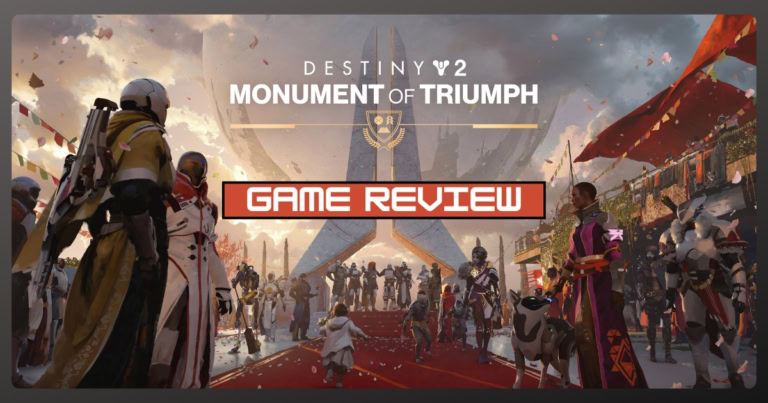
In 2014, Bungie’s Destiny burst onto the scene with what I’d call “turbulent but abundant joy.” Following Halo, a game that laid the groundwork for practically all popular FPS games that followed, Bungie tore up all preconceptions of limitation and gave gamers an entire universe to explore. Naturally, that ambition was met with a flurry of obstacles to overcome, but fans embraced the chaos nevertheless. 12 years later, the sequel to Destiny has concluded development with the release of the Monument of Triumph update. Today, I wanted to take a moment to review the final state of Destiny 2 after that update.
The narrative campaigns in Destiny 2 since the Monument of Triumph update
Something so perfect about Destiny 2‘s final form with Monument of Triumph is the distribution of narrative campaigns. Loading into the game and opening up the director as a new character shows you a system of planets, nearly all of which have an associated story to experience.
Parsing the campaigns in this way makes exploring the Sol System truly exciting. It’s as if the moment you decide to finally step foot on the snowscapes of Europa, you are also accepting the responsibility of ridding the planet of its stasis-wielding Fallen tyrants.
The quality of campaigns can vary, and the investment put in at the time of their development is often immediately apparent. Shadowkeep, the Moon’s associated campaign, can be completed in a single sitting, and you might not even realize it’s over when it is.
Meanwhile, The Final Shape in The Traveler’s Pale Heart is Destiny 2‘s undeniable magnum opus, complete with nearly a decade of narrative momentum and high-quality cutscenes (and a killer boss fight alongside 11 fellow guardians).
One of the things I love about the narrative campaigns is the way they take you through each open world. One of the magic moments of immersive FPS games is when you start losing track of what you’re doing, and exploring these open worlds is where it happens most. It’s so easy to lose yourself taking down orders (or bounties), finding secret regional loot chests, and emptying Lost Sectors.
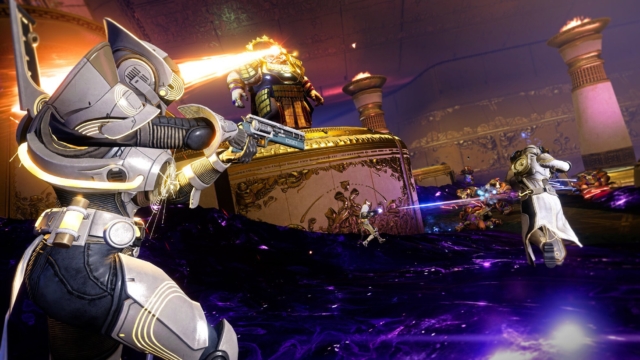
While on each open world, I most often find myself getting lost taking down public events. Seeing a team of several random guardians just coincidentally in the right place at the right time fighting in public events always instills me with the biggest feeling of FOMO. Better yet, the Monument of Triumph added a rotating “Distortion” effect to most public events throughout the game that take things to a new level of difficulty and unlock a whole new pool of loot to grind through.
Changes since the game’s beginnings
An unfortunate reality of the present day state of Destiny 2 is that a significant portion of content available throughout the life of the game is no longer playable (several open worlds to explore, strikes that take place on those open worlds, associated questlines, several raids, public events from those open worlds, loot pools, entire narrative campaigns).
A large chunk of the game, if not the entirety of the original version of Destiny 2 sold to gamers in 2017, is simply no longer available to access or experience. It feels particularly egregious considering how disorienting the onboarding experience can be for new players, that they excised the original beginning of the game from the game itself.
I’m certain that the developers of Destiny 2 have a laundry list of reasons why the Destiny Content Vault (or the DCV) was created and why large parts of the game disappeared forever. But I do think this became something the game couldn’t outpace. New players instantly feel left behind, knowing they won’t experience something veteran players love or won’t have access to classic loot that older players use incessantly. The Destiny Content Vault effectively buried Destiny 2 forever, and the Destiny 2 available to play now is more like a sequel to that sequel.
The tiered gear and portal systems
During the penultimate expansion, “Edge of Fate,” Bungie added a few new systems to the game, the most dramatic of which being the tiered gear system and the portal system. To sum up these overcomplicated systems into a (likely reductive) few words, the portal took attention away from the most immersive elements of Destiny, and the tiered gear system tore the loot pool in half between useful tiered gear and everything else.
The good news about the current state of Destiny 2 is that the loot pool has never felt more exciting. Now, nearly every single piece of loot in the game is tiered. Tiered gear now means two different things for weapons and armor. Armor is straightforward: based on how high your tier is on a scale of 5, your armor will have more inherent armor points applied to the various armor stats.
Weapons are a bit more complicated: if you have a tier 1 weapon, it will have set perks and origin traits you cannot change. But at tier 5, a weapon can have up to three perks/origin trait in each slot to choose from, and each perk and origin trait will have an inherent boost to the way it works.
In addition, if you get a tier 1 weapon you love, you can use resources earned from playing to boost it to tier 5 and get the boosts as your perks (upgrading a tier 1 to tier 5 does not add more perks to choose from).
Final thoughts on Destiny 2

For new players, starting Destiny 2 can seem a bit overwhelming. I’ve dragged multiple friends onto the game just to hear them groan at the sight of their “Quests” tab, filled to the brim with banners and checkboxes scaling from 3 to sometimes 40 steps per quest. Where do you go? What do you do?
Bungie tried to streamline this with the introduction of the New Light questline as the game went free-to-play in October of 2019. The reality is that this is only an issue because the universe they’ve created and the content there is to explore is so incredibly vast.
If anything about playing an MMO RPG FPS and opening yourself up to a whole universe to explore and a universe’s worth of loot to gather sounds interesting, you should give Destiny 2 a shot. The game has never been cheaper, and the stories have never been more accessible. With development halting, there’s no telling how much longer Destiny 2 will be available to experience. And there’s truly nothing else like it.
Destiny 2 and its available DLCs are on Steam, Epic Games, PlayStation, and XBOX storefronts now.
Also check out: Star Fox Game Review: A Remake Worthy Of Your Time