‘Gambonanza’ Game Review: Offers A Unique Twist on Classic Chess
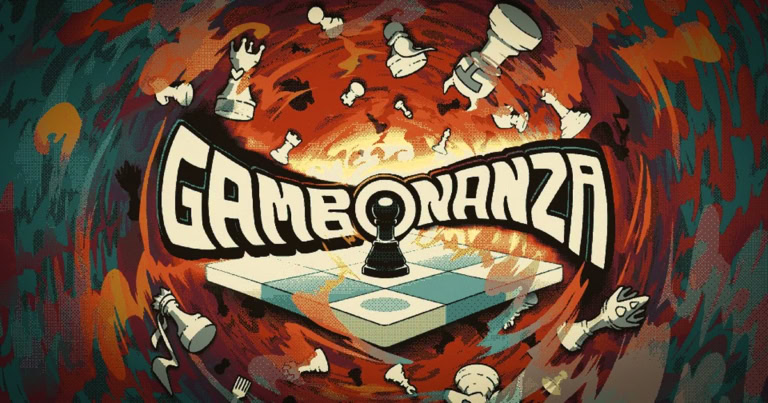
The game Gambonanza uses the chess system and rules uniquely. Not by simplifying it or changing the décor to flashy visuals, but by slowly pulling apart the foundations of chess and rebuilding them into something unpredictable. Gambonanza respects the core idea of chess just enough to keep it recognizable and understandable, but everything around it feels new, weird, and unexpected, like the rules could shift at any moment.
You begin with something that looks like a small chessboard; you have classic pieces and turn-based movement. But it doesn’t take long before you realize that the game is introducing elements that don’t match your expectations. Suddenly, you’re not just thinking about moves of your pawns in the traditional sense. You’re thinking about modifiers, positioning under pressure, and how to survive situations that wouldn’t even exist in standard chess.
The developers, Blukulélé, clearly approached the concept with a willingness to experiment with the idea of Balatro, but with chess instead of cards. Instead of asking how to modernize chess, they asked what happens when you treat it like a system that can evolve mid-game.
[Note: While I am reviewing this game independently and honestly, it should be noted that it has been provided to me by Blukulélé for the purpose of this review.]
The story and overall concept of Gambonanza
Unlike traditional games that guide you through a clear narrative path, Gambonanza takes a different approach. There’s no structured storyline with characters explaining the stakes or cutscenes building emotional weight. Instead, the game builds its identity through atmosphere and repetition, creating a sense that you’re participating in something strange rather than following a defined plot. Each second you spend on this game gives you a new, previously unseen experience.
The world it presents feels almost abstract. It resembles a distorted version of chess, where logic still exists but is constantly being bent in unusual ways. Visuals and sound design help to sell this feeling, giving the game a slightly surreal tone that makes every run feel like visiting a different variation of the same idea. You’re not progressing through a story in the traditional sense. You’re diving deeper into a system that keeps reshaping itself. It’s just like with Balatro. Each seed, each decision, and each second matters.
What replaces the traditional narrative is structure. Each run functions like its own journey, with a beginning, a buildup, and an end marked by increasingly difficult final encounters. The further you go, the more the game starts to push back. Enemies and obstacles become less predictable, mechanics become more aggressive, and the rules you’ve relied on begin to shift in impactful ways.
Boss encounters are where this concept becomes the most visible. They don’t just present stronger opponents. Some limit your vision, others change the rules of movement, and a few introduce mechanics that force you to abandon habits you’ve already developed. These moments feel less like traditional battles and more like sudden rewrites of the game’s logic. Which makes it even more unique in the end.
For that reason, the “story” of Gambonanza becomes something personal. It’s about the run you’re currently in, the decisions you’ve made, and how you react when things stop going your way. One attempt might feel controlled and strategic, while another spirals into chaos where survival becomes your only goal. That unpredictability gives the game a sense of identity without needing a scripted narrative to support it. One wrong move, one mistake, one bad habit, and you’re done for the run.
Gameplay in this unique chess game
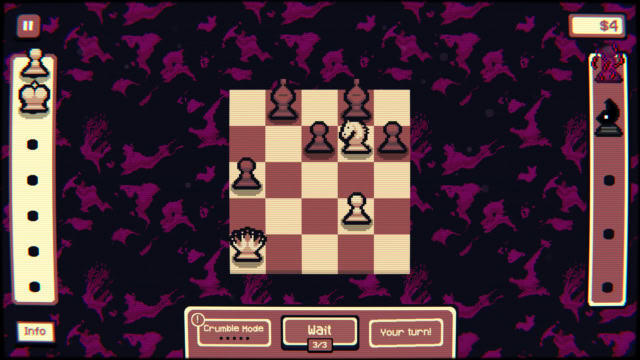
The gameplay style of Gambonanza is immediately recognizable. The familiar movement patterns of chess pieces are still there, which gives you something to hold onto in the beginning, but the twists are what get you in the beginning. Pawns advance, knights jump, bishops cut across diagonals. That baseline understanding is what allows the game to introduce more complex ideas without completely overwhelming you from the start. It works because even though chess is complicated, they are being simplified not to scare casual players who don’t know all the openings, moves, etc.
Because the game follows a roguelike structure, you don’t get to choose your setup in advance. Each run gives you a different set of options, forcing you to adapt instead of relying on a fixed strategy. This randomness isn’t just there for variety or for fun. It actively shapes how you approach the game. You might start a run planning to play cautiously, only to receive upgrades that push you toward aggressive tactics. In another run, you might be forced into a defensive style simply because that’s what your seed randomized and gave you.
The size and layout of the board also play a major role. Unlike standard chess, where space allows for long-term planning and careful positioning, Gambonanza compresses everything into a tighter environment. That smaller scale increases the importance of every move. There’s less room to recover from mistakes, fewer safe positions, and a constant sense that you’re one bad decision away from losing control and from losing your run.
Between battles, you’re provided opportunities to adjust your setup or to learn new things. You can invest in new pieces, improve your current ones, or reshape your strategy based on what you’ve experienced so far. At the same time, the game doesn’t shy away from difficulty. It can feel unforgiving, especially in the early stages when you’re still learning how everything works. Mistakes are punished quickly, and some situations can seem impossible until you understand the mechanics behind them.
What keeps the experience engaging is the sense of discovery. Every run has the potential to teach you something new, whether it’s a combination of Gambits that works particularly well or a strategy you hadn’t considered before. Over time, you start to see patterns and possibilities that weren’t obvious at first, which makes each success feel earned rather than accidental.
Final thoughts on Gambonanza

What Gambonanza ultimately achieves is something that doesn’t happen often. It takes a concept of a simple game and makes it feel uncertain and mysterious again. The game’s strength lies in its willingness to challenge the player. It doesn’t offer comfort or predictability. Every run is different, every decision carries weight, and every mistake has consequences that can follow you for the rest of the session. That kind of design isn’t always easy to appreciate at first, especially if you’re used to more forgiving experiences.
At the same time, that challenge is what gives the game its identity. It rewards patience, experimentation, and the ability to adapt under pressure. When things finally start to click, there’s a strong sense of progression, and not just in terms of in-game success, but in how you approach problems and think about the mechanics and the way you use them to win.
It’s also worth noting that this isn’t a game for everyone. Players looking for a relaxed or purely strategic experience might find the randomness and complexity of some rules or mechanics frustrating. The unpredictability that makes the game exciting can also make it feel unfair at times, especially during unlucky runs. But for those willing to engage with its systems, Gambonanza offers something genuinely different.
And that idea of something familiar but in a new style carries through everything the game does, from its structure to its moment-to-moment decisions.
Gambonanza is now available to play on PC, Linux, Mac and Android.
Also check out: Game Review: Key Fairy Is Full of Fantasy and Wonderment