‘How to Rob a Bank’ Review: David Leitch’s Latest Robs Your Precious Time
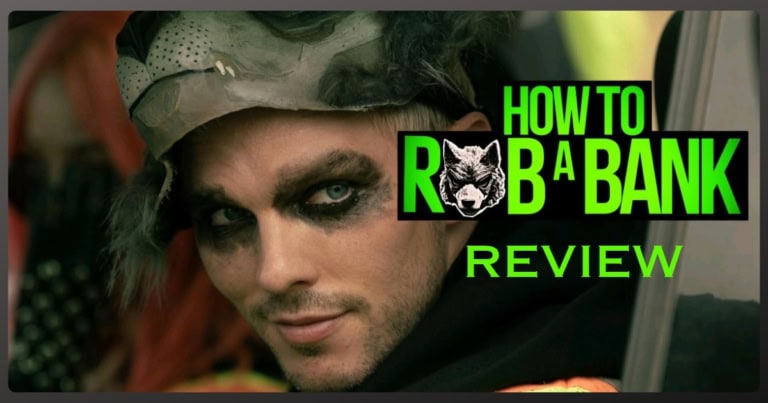
David Leitch has a pacing problem. That much is clear if you watch all of his solo directorial efforts, no matter how great they look or how well-mounted his conception of action choreography is. His latest, How to Rob a Bank, might be his dullest film, even if it contains his most hyperstimulating images yet.
How to Rob a Bank is, coining a term from a peer of mine, the perfect distillation of ADD cinema. That’s a movie that isn’t so much concerned with creating something tangible but instead attempts to distract you with endless flashes of second screens without a thought about what you’re actually looking at.
The plot of How to Rob a Bank
David Leitch’s frequent collaborator, cinematographer Jonathan Sela, can’t salvage this movie that tries to do far too much by focusing on elements that matter less. Leitch has always had an eye for spectacle and practical action. There’s very little of it in a movie that nauseatingly tries to cross-cut between endless YouTube videos from a popular criminal group, dubbed the Wolfpack, that teach viewers how to rob banks and the FBI agent trying to catch them.
The story of agent John West (John C. Reilly) teaming up with hacker Reagan Gardner (Zoë Kravitz) is far more interesting than the glimmers of texture Leitch and screenwriter Mark Bianculli give us about the central group of bank robbers.
In fact, we barely know anything about leader Ryan (Nicholas Hoult) and the other members who accompany him: getaway driver Emi (Anna Sawai), tech specialist Hugo (Rhenzy Feliz), and war veteran Vince (Pete Davidson). There’s very little development, if any, given to them in a movie that runs for two hours and two minutes.
To bloat your story without focusing on what matters most is unacceptable. By the end of the film, all we know about Ryan is his disdain for the capitalist system. That could be understandable, but Bianculli’s screenplay gives Hoult nothing tangible to work with and actively develop the character beyond what’s on the page.
A hyperactive movie too busy focusing on the wrong elements
Everything the gang does has a justification. Each of them, one way or another, was screwed over by the system. Ryan and Emi lost their child because of unpaid debts; Vince came back from Afghanistan diseased and with little to provide for his wife (Tati Gabrielle) and child. Hugo also has difficulty supporting his community, and the quartet believes they can give back by stealing from the most powerful forces.
It’s an admirable Robin Hood-esque conquest, but Leitch’s direction gives the audience very little to actively care about. The film moves far too fast in places that don’t matter and never takes time to sit with the people who could make this crime thriller semi-interesting.
Of course, there’s a desire for the FBI to catch these people, because no matter how popular they are on social media, the Wolfpack are committing crimes. However, since we never fully gel with any character, it’s difficult to form an active connection to them, even when Leitch moves away from a style that actively alienates any goodwill he might have had during the film’s opening moments.
How to Rob a Bank is so busy trying to distract and overwhelm the spectator that it ultimately forgets how to make a compelling actioner. Leitch has always been a great aesthete, no matter how weak his screenplays and his sense of pacing may be. Deadpool 2 features the best action scenes and perhaps the most exciting photography of his career.
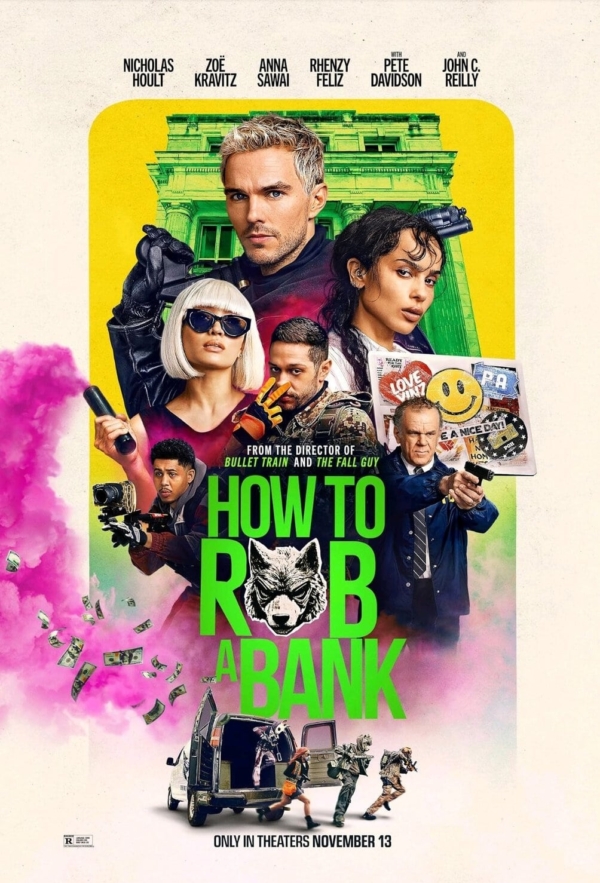
There are instances in How to Rob a Bank where one can perceive his sense of spectacle and scale. The textured, grainy cinematography of Sela’s first non-anamorphic project since Michael Bay’s Transformers: The Last Knight frequently recalls Paul Thomas Anderson’s One Battle After Another. It doesn’t seem like a coincidence that, during a superbly mounted climax, it delivers thrills by not cutting away from the action and trying to show a chase scene through a thousand different formats.
This is what mostly kills Leitch’s aesthetic approach. He has always let the action (and fight choreography) speak for itself. He doesn’t need fast cuts or hyperactive camerawork when what he stages is so incredible on its own. So why does he insist on always showing the first-person point-of-view or subjective YouTube video of the action scene instead of staying within the film’s diegesis?
It’s a choice that hampers almost every possible aspect of the overall experience, no matter how solid Sela’s cinematography outside the digital world may be. The audience is never given room to breathe or appreciate Leitch’s stuntwork because he always cuts away and shows us a perspective that’s far too dizzying to even look at.
It’s the perfect representation of cinematic overstimulation, and none of it actively brings any real kinesis to the action. There’s too much going on at once. We fail to meaningfully connect with images that have no real weight or power. Characters have little to no three-dimensionality beyond the one-note traits given to them in a movie that refuses to expand any of them in its already bloated runtime.
The performances in How to Rob a Bank aren’t terrible. The ensemble is comprised of seasoned actors who have all proven themselves in both film and television, but none of their talents are actively cherished. Hoult and Sawai, in particular, have grown into two of the most exciting burgeoning stars working today, and they’re pitifully wasted in shells of characters that want to fight the shackles of capitalism without an active connection to their plight.
Only John C. Reilly’s agent, West, shows any three-dimensionality, but that’s only because we spend the most time with him and Reagan. It’s a movie that gives us the illusion of a fully fleshed-out character, but he’s as vacuous as the rest of the Wolfpack.
How to Rob a Bank (2026) final thoughts
It’s a true shame that Leitch has never been able to get his filmmaking career on the same pedestal as Chad Stahelski, who seems to have a better understanding of the cinematic language (and film structure) than he does. Leitch knows how to create an image and seriously good action, but he has never mastered pacing and structure, which has unfortunately killed some of his highest ambitions.
Here’s hoping what looks to be a more boots-on-the-ground film with Jason Statham Stole My Bike (the title is already brilliant) will finally give him the flowers he’s been desperately chasing after the success of John Wick. Meanwhile, How to Rob a Bank might seriously rank at the bottom of a highly inconsistent filmography.

- Film Title: How to Rob a Bank
- Director: David Leitch
- Writer: Mark Bianculli
- Cast: Nicholas Hoult, Zoë Kravitz, Christian Slater, Anna Sawai, John C. Reilly, Pete Davidson, Rhenzy Feliz
- Genre(s): Action, Comedy, Crime, Drama
- Rated: R
- Running Time: 122 minutes
- Theatrical Release Date: November 13, 2026 (US, Canada, UK)
- Reviewer’s Score: 1.5 out of 5 stars
Also check out: A Talent for Murder Movie Review