‘Kirby Air Riders’ Game Review: A Fun and Chaotic Time
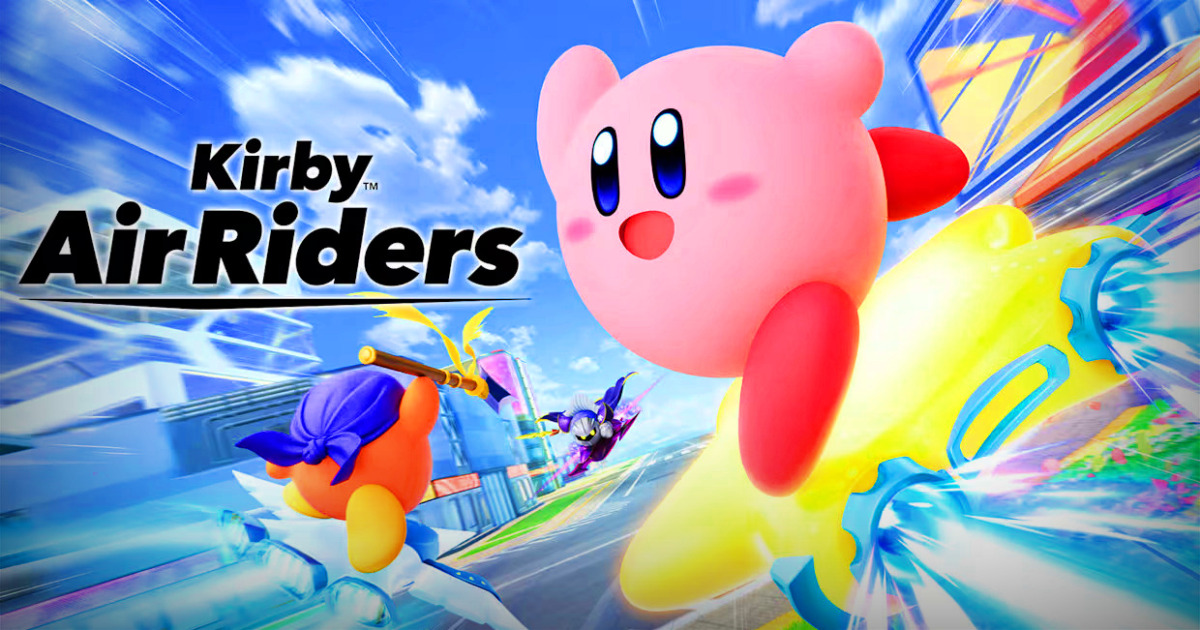
Kirby Air Riders is another Nintendo game that becomes a shining, sugar-like comet of colorful, loud, and somehow sweet silliness in the Kirby world. It’s a full-on return to the airborne racing concept that Nintendo started to develop in the early 2000s but has now been rebuilt for modern hardware and audiences.
Nintendo decided to invest in better visuals, more customization, and a heavier focus on multiplayer spectacle. The game puts Kirby and a small roster of familiar friends from the universe and also others into unique flying machines and asks you to do three things well: boost, drift, and mess up your opponent’s day.
Behind that simple premise is a game that’s deliberately uneven and sometimes really inventive. Sometimes it is oddly weird, but it wears its charm proudly and often wins you over by sheer joy of motion. It has a story mode, and it’s not all. This is a title that knows how to be small, extraordinary, rich, and satisfying at once, even while it occasionally shows the small missing things. Especially where design choices were made for spectacle rather than a balance between gameplay and multiplayer experience.
The story in Kirby Air Riders
If you’re expecting a deep narrative and explosive, intensive racing, like the Need for Speed franchise, then hold your expectations. Kirby Air Riders doesn’t pretend to be anything more than a playful backdrop to the era of enjoyable Nintendo races, although it does deliver a surprising amount of character and context in short form.
The single-player campaign is branded as Road Trip, which often tries to connect iconic elements together with each one introducing a new localization, a themed boss, or a race with a twist. Cutscenes are brief and animated with the kind of goofy, expressive flair the franchise does best.
This world never asks you to care about politics, motivations, or anything serious. Instead, it gives the kind of episodic scenarios that let the designers experiment with track hazards, stage gimmicks, and boss fights that feel like short mini-games. That approach keeps the pace smooth and makes the story mode a pleasant warm-up rather than a long campaign. When you get context and motivations so they can justify the next ridiculous race, you’re good and will have fun, that’s for sure.
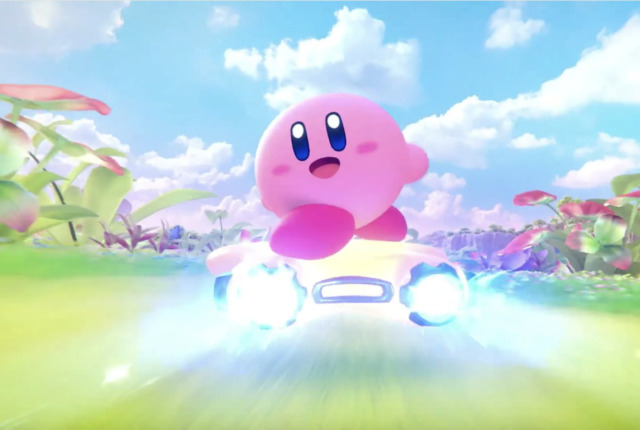
For players who want narrative or story arc payoffs, the emotional stakes are low, but there’s almost none. But when you think about it, the story mode functions as a great training ground before you decide to go experience the multiplayer mayhem, vehicle control and the game’s creative set pieces. When you pass a story mode, you’ll have enough skill to at least try to compete with other players, which justifies the need for a story mode to be included in the game.
Gameplay is a combination of arcade racing and combat
Gameplay is where Kirby Air Riders either will hook you and make you desperate to be the best, or will discourage you from even trying. At its mechanical core, the game mixes arcade racing with combat and the experience of flowing through the race tracks.
Your main job as a player is steering, timing boosts, and controlling drifting to carry momentum through tracks. The auto-acceleration choice simplifies the mechanics and lets the player focus on finding rhythm, but it also reduces control creativity, because you can’t trick your opponents anymore with handbrakes or taking rough turns in a much easier way.
Top Ride races are the straightforward expression: circular tracks, frantic slamming of boost and drift, and item chaos. Road Trip (the campaign) is structurally a sequence of bespoke races with objectives and boss fights, often breaking the mechanics open to create memorable punchlines.
The most controversial and arguably the most interesting mode, in my opinion, is City Trials. It brings that old, comfy old sandbox feeling full of “tasks,” collecting parts or collectibles, and customizing machines before racing. City Trials doesn’t always work, although it’s a brilliant connection between single races and a larger part of the game.
You can explore that map, discover secrets, and emerge into a multiplayer match with a vehicle you customized that fits your playstyle and character. Items and boss attacks can change your momentum while driving, and collecting the boosts keeps things unpredictable and fun in casual play. It sometimes undermines itself in competitive mode.
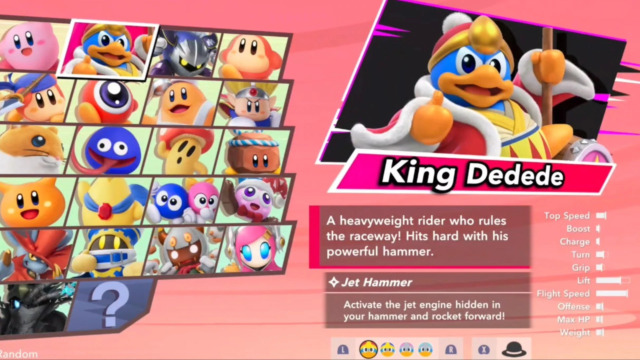
The sound design and music in Kirby Air Riders fit the movement and flow of the game intact. Music tracks are energetic and suited to the franchise’s model, and the music steals the background vibes.
Multiplayer is unquestionably the title’s strongest selling point. Local and online lobbies support fast matchmaking and a surprising amount of social play. Including cross-region lobbies and options for private rooms so you can face your friends or maybe even some celebrities in disguise.
Yet the online community has also rapidly demonstrated how creative and unpredictable users can be. The in-game marketplace and customization tools have flooded the place in player-made designs, with some being cute and creative, and with others not so much.
Final thoughts on Kirby Air Riders
Kirby Air Riders is best understood as a game that trades serious stakes, deep narrative, and extraordinary story for a light, relaxing, and joyous experience. You can explore it as a single player or enjoy playing multiplayer with your friends or other players. It is an experience built around funny, smooth movement and the mayhem of car racing.
It doesn’t attempt to be another racing simulator, nor does it hide its arcade roots. Instead, it invites players to enjoy the cartoonish racing in velocity, improvisation, and the kind of goofy competitive moments that make for great clips and racing matches that will make you or your friends you compete against angry. The single-player content is compact and clever enough to keep you engaged while teaching the mechanics, and the customization and sandbox elements add genuine joy and personal expression, which works.
Where the game stumbles is in balance. Some parts and interactions feel a little rough or dumb. City Trials’ structure will leave you wanting a clearer progression loop so you know “how close” you are to finally stopping.
The post-launch custom designs also add a lot to the game because they underline both the creativity the game unleashes and the responsibility of modern platforms to curate content. You may spend hours creating your own Rider, which includes not only Kirby or Mario designs but also Pokémon and other major Nintendo franchises as part of the game.
My rating for this game: 3.5/5
If you’re looking for a non-competitive, enjoyable racing game with plenty of technicalities, you may be a bit disappointed. If you want a game that makes you smile mid-race, rewards your risky driving, and gives you tools to personalize your Rider until it looks like a rolling meme, Kirby Air Riders is for you.
For fans of the Kirby brand or just Nintendo itself, and for anyone who enjoys arcade combat racing with a modern touch, it’s a great, relaxing game. But remember, whenever you lose, don’t blame the game.
Also check out Game Review: SpongeBob SquarePants: Titans of the Tide is a Fun Supernatural Adventure