‘Sleep Awake’ Game Review: Blumhouse’s Journey Through Dystopian Horror
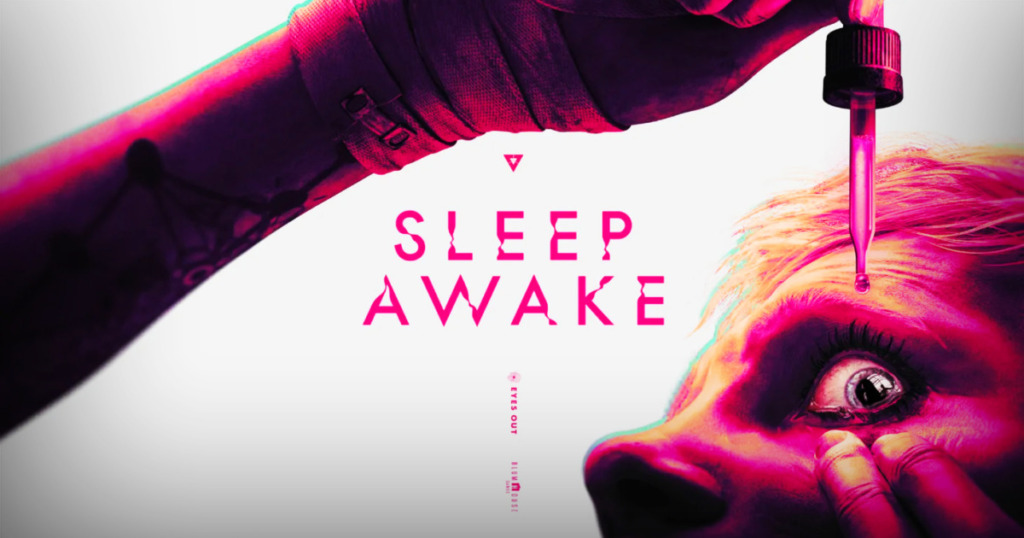
When I first heard about Sleep Awake, I didn’t quite know what to expect. The pitch sounded wild. Players take the part of a woman in a collapsing, dystopian city where sleep is what kills you as soon as you drift away to slumber. That alone was enough to grab my attention from the start.
Another reason was that it’s a game published by Blumhouse Games, the horror brand and studio from the famous horror producer Jason Blum. His studio has been expanding into games as much as movies, and the whole idea to create a horror genre that will not be corny or cheesy promises something that offers a lot.
Sleep Awake, the game itself, in its story, mixes the lines of psychological drama, surreal horror, and experimental narrative gaming. It’s a bold, hardcore vision, but it’s also one that doesn’t quite fit neatly into any specific part of the horror genre because it belongs to multiple ones.
[Warning: Spoilers from Sleep Awake are below!]
The story of Sleep Awake is unique in its own way
What’s interesting about Sleep Awake and its story is that as soon as you start to play, it throws you into a world where you have to survive without sleeping. The world you explore is the last known city on Earth, a place where people have discovered that when someone falls asleep, they vanish into an unexplained phenomenon called The Hush, a force that takes them into who knows what.
This isn’t a world with a single evil monster or a plot where you have to defeat a monster the size of a skyscraper. It’s a story showing society trying to survive by preserving the most basic human need, and that concept is what drives the narrative forward.
We get to play through the story as Katja, a resident of this city whose family has already been taken by The Hush. She’s not just fighting for survival. She’s battling with her own grief, desperation, and a fear of the unknown.
The game doesn’t hold your hand through its story. Instead, it lays the world’s lore through clues, environmental storytelling, and encounters that leave you in awe and wondering how to piece all of it together to uncover the true nature of The Hush and Katja’s place in the story.
Part of what makes the story stick with you is how the game uses reality and hallucinations in the most unexpected moments. There are times when a memory, a strange cult song, pops up almost unexpectedly, and you’re left wondering what was “real” within the game’s world and what was a projection of Katja’s broken mind.
It’s a dreamlike structure that works in the service of psychological horror but doesn’t always land technically or narratively cleanly. If I had to compare it to something, it reminds me a lot of the Dark Place from Alan Wake & Alan Wake II, where you never knew what was real.
Gameplay really fits the entire narrative of sleep deprivation
Experiencing the deprivation of sleep and fighting the urge to go to bed is the biggest advantage of Sleep Awake. The entire experience is beautiful in its own way and creates clever ways to operate between reality and dream.
This is a first-person narrative horror adventure. There are no guns, no complex combat systems, and very few complicated mechanics to get used to. Stealth plays a big role, but it’s not demanding in the way games like Alien: Isolation, The Forest, or other classic survival horrors.
Enemies can feel like they are inconsistent, and some patrols feel predictable. Even hiding under a bench or behind a door often feels like a chore you have to do to progress further and not like a tense moment. That doesn’t mean there aren’t moments that get your heart rate up. There are chase sequences or moments where the very environment seems alive and hunts you.
Puzzles in Sleep Awake are not very complicated. They are part of the gameplay, but they’re pretty straightforward. You won’t find complex logistic challenges or riddles that only a few can solve in a short matter of time. Most of them require only a basic level of observation to align symbols, power up a generator, pull a lever, or interact with other elements of the environment. Sound design is also one of the better parts of Sleep Awake’s gameplay.
The soundtrack and audio design try to immediately make you feel like this world is terrifying, alive, and crazy. It’s all intentional. There are moments where sound itself becomes the threat. Whether there’s a whisper in a quiet room, a distant vibration, or a suspicious sound, many of those will send a chill down your spine. Music and ambient sound don’t just improve the gameplay. They create a special atmosphere in a way that sticks with you even after finishing the game.
A big part of how the game feels overall comes from its pacing and length. This is not a long, epic game that you have to replay a few times to unlock everything. The playthrough takes around 5 to 6 hours total. That’s fine if you want a horror experience that is not long and won’t scare you every 10 minutes.
As part of the story and gameplay, we get to see glimpses of Katja’s past, get hints about what The Hush really is, and experience the worldbuilding firsthand. But by the time we reach the end, the story feels like it’s only just heating up.
The idea of making it an open-ended, interpretive, closed story arc is both good and bad. In a way, it feels like the entire story was meant to be longer or more complicated and revealed way later, but some cuts had to be made. But if there’s a DLC later to add some things or explore more ideas, then why not play in it too? Maybe there will be something that will entirely change everything that we’ve learned during this playthrough.
Final thoughts on the game Sleep Awake
As the game itself, Sleep Awake really risen above my expectations. In many ways, it’s precisely what it promises. A climactic and atmospheric surreal psychological horror game. It cares about mood as much as it cares about the experience. The world-building is strange, unsettling, and full of ideas that stay with you. But questions about consciousness, fear, memory, and survival are what fuel the story each time.
At the same time, the game’s mechanics leave something to be desired. Stealth feels a little bit shallow sometimes; puzzles lack tension and complexity, and the short runtime of around 5-6 hours means it’s too short to explore this world further and learn more. The story works, but sometimes I wish it would explore more story arcs and character development. But it is still good overall.
My rating for this game: 4/5
In the end, Sleep Awake might be one of those games you don’t just play but experience. Whether that experience feels compelling or unfinished depends on what you’re looking for from this game.
Definitely, it is a unique project full of interactive horror elements worth checking out. But sometimes, even though it’s good, it feels like a slightly unfinished project with great ideas on paper, which keeps it from reaching its full potential.
Either way, it’s a game that you won’t forget for a long time. Although keep in mind that going to sleep may also become more difficult after experiencing this game firsthand.
Sleep Awake is now available to play on Steam, Playstation, and Xbox.
Also check out Death Howl Game Review