‘The Legend of Zelda: Ocarina of Time’ Game Review: A Remake Done Right
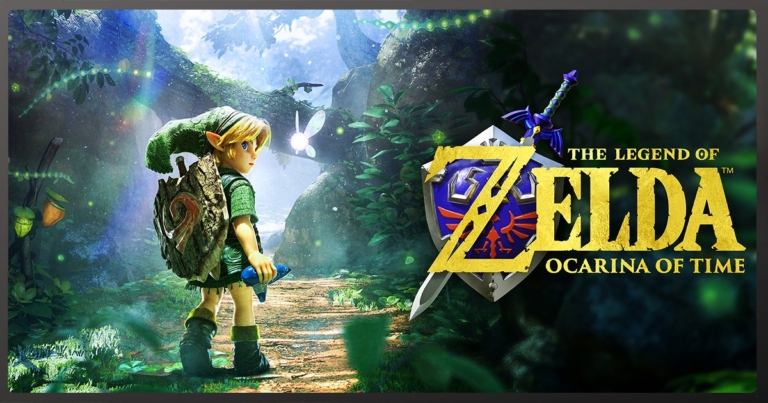
The Legend of Zelda: Ocarina of Time is an all-time classic and a game many consider one of the best. It was a defining project for three-dimensional adventure games that proved to be a very ambitious journey through an enormous world. It’s a story about courage, the meaning of responsibility, friendship, and the passage of time. Now, we’ve got a full remake of the original game, reminding gamers why it’s one of the most important gaming franchises.
It’s no coincidence that this remake was released this year, as 2026 marks the 40th anniversary of the Zelda franchise. Ocarina of Time was a risky game to be remade, but Nintendo didn’t decide to just refresh the graphics of the game. They updated the gameplay, adjusted the map, balanced enemies, made the game challenging, and found the balance between gameplay and the story.
The Legend of Zelda: Ocarina of Time‘s story is still a timeless journey
Behind the fabulous story of Ocarina of Time lies a surprisingly mature fantasy narrative. The story introduces us to Link (as in many Legend of Zelda games), a young boy living among the Kokiri, a forest people who never grow older and are protected by the Great Deku Tree.
Unlike the other children, Link has no fairy companion, leaving him isolated from the surrounding community. That changes when Navi arrives with an important message from the Great Deku Tree, creating a path for Link that becomes a journey that will eventually determine the fate of the entire kingdom of Hyrule.
Link’s journey begins with a simple mission, but the consequences of his actions become difficult to comprehend. The introduction of time travel changes the direction of the adventure, allowing Link to move between his childhood and adult years. Seven years separate these two periods, and the transformation of Hyrule during his absence is one of the story’s most memorable elements.
Nintendo has also expanded character dialogue and introduced fully voiced cutscenes, allowing significant interactions to have an emotional weight that adds a lot of soul to the game. The additional conversations provide more room for characters to express their personalities, motivations, and relationships.
Zelda benefits particularly from this approach, as her relationship with Link and her involvement in the events surrounding Ganondorf receive a lot of dramatic emphasis.
The story also benefits from its memorable supporting cast, including Saria, Darunia, Ruto, Impa, and the various inhabitants of Hyrule whose lives are affected by the kingdom’s transformation. Not every character receives extensive development, but their individual contributions help make the world feel like a place worth protecting.
The remake of The Legend of Zelda: Ocarina of Time doesn’t lose the original’s sense of mystery. Its greatest achievement is perhaps the way it uses the passage of time as more than a convenient mechanic. Time becomes a symbol of lost innocence, changing relationships, and the uncomfortable realization that even a hero can’t stop the world around him from changing and evolving.
Reworked and redesigned gameplay mechanics are a huge improvement
The original Ocarina of Time is often mentioned as a blueprint for 3D action-adventure games, because it introduced mechanics and gameplay philosophies that would influence countless games over the following decades.
The most important improvement is the introduction of a fully controllable camera using the right analog stick. Something that feels completely mandatory in modern gaming makes a huge difference when exploring Hyrule, allowing us to appreciate redesigned and improved environments, examine their surroundings, and approach encounters with more freedom.
Link’s movement has also been modernized, with additional running and jumping mechanics that give us more direct control over his actions and fights. Essential equipment can be assigned to match the inputs, making it easier to switch between weapons and tools without constantly wondering where everything is.
Gyro aiming is another addition that helps the game, particularly when using the bow or other projectile-based equipment, because it lets us do what we want and not pray that the game will do it for us.
Another key part of the mechanics is the fact that there was no removal of the classic Ocarina of Time combat. Targeting enemies remains a part of the encounters, allowing Link to lock onto opponents, defend himself, and do parries to create opportunities to attack.
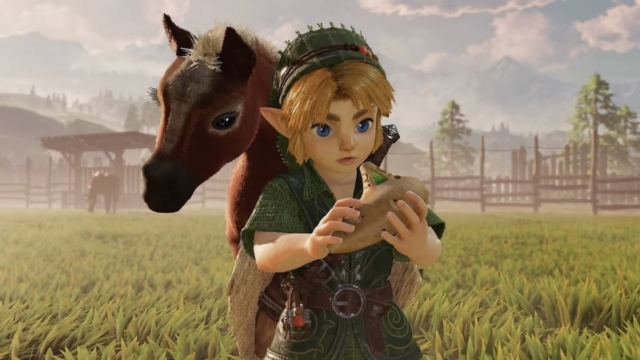
Sword combat is still relatively simple compared with modern action games, but its effectiveness comes from understanding enemy behavior and choosing the appropriate equipment.
Each item serves a purpose beyond dealing damage, often becoming essential for discovering hidden passages, overcoming obstacles, or solving dungeon puzzles. This is particularly important because dungeon design remains an important part of the entire adventure.
From the Great Deku Tree to the Forest Temple, Fire Temple, Water Temple, and Shadow Temple, each location introduces a unique atmosphere and a collection of challenges that force us to think carefully about our surroundings.
Nintendo has also made adjustments and improvements to certain puzzles, enemies, and dungeon layouts, ensuring that familiar locations contain surprises and new content even for players who played in the original games for countless hours.
These changes are generally thoughtful, although they don’t change the game into an entirely new experience. Exploration and curiosity remain rewarding because Hyrule is filled with secrets, optional objectives, collectibles, and characters who offer additional reasons to leave the main story for later.
The ocarina itself deserves particular attention because music remains deeply connected to the identity of the adventure and gameplay. Learning melodies and using them to influence the world around us is still one of the most distinctive and unique mechanics in the series. Songs can change the time of day, summon Epona, open access to certain locations, and influence events throughout the kingdom.
The remake introduces an additional microphone feature that allows us to hum melodies ourselves, offering an alternative to traditional button inputs. It is a relatively small addition, but one that reinforces the importance of music within the experience. We can hum and play on an ocarina microphone and turn the immersion to a wholly new level.
Another new feature is Threads of Time, which provides a clearer overview of story progression and current objectives. Meanwhile, the Hall of Fallen Foes provides an opportunity to revisit previously encountered enemies and test the equipment acquired throughout the adventure.
Also check out: Star Fox Game Review: A Remake Worthy Of Your Time
The Legend of Zelda: Ocarina of Time final thoughts
The Legend of Zelda: Ocarina of Time remake on Nintendo Switch 2 is an impressive reminder of why certain games deserve to be preserved, revisited, and introduced to new generations. Nintendo could have approached this project as a simple remake where you only upgrade the visuals. Instead, they delivered a reliable remake that recognizes the importance of Zelda and the importance of remaking older games in a way that would satisfy the fans.
The perfect balance between exploration, puzzle-solving, combat, and storytelling gives us a very sensible amount of progression in optimized time of playing. Every new dungeon introduces something worth discovering, every acquired item does something unexpected, and every major development in the story gives us another reason to continue the journey.
Certain gameplay adjustments also make the adventure somewhat more accessible than challenging. The adventure is expanded with new regions, additional dungeons, and an entirely different interpretation of the original story.
For newcomers, The Legend of Zelda: Ocarina of Time remake is an excellent introduction to one of gaming’s most influential franchises. The Hero of Time has returned, and although the world around him has changed considerably, his adventure remains just as meaningful. Some classics don’t need a new identity to prove their worth. They simply need another opportunity to shine.

- Game Title: The Legend of Zelda: Ocarina of Time Remake
- Developer/Publisher: Nintendo EPD/Nintendo
- Genre(s): Action-Adventure
- Version Being Reviewed: Nintendo Switch 2
- Also Available to Play on: Nintendo Switch 2 only
- Release Date/Year: November 5, 2026
- Reviewer’s Score: 5 out of 5 Stars