’28 Years Later: The Bone Temple’ Is A Quieter, Gnarlier Second Chapter
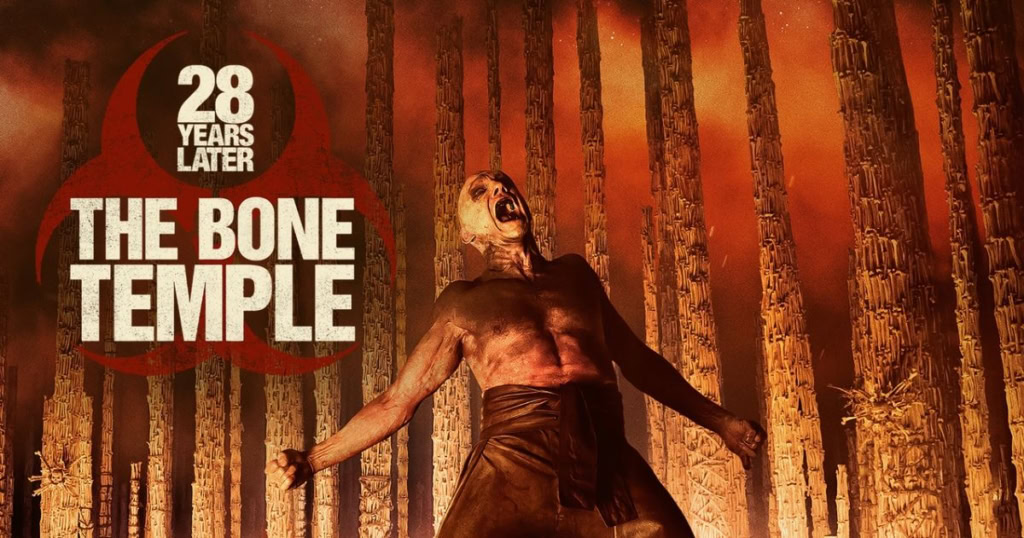
Continuing the story of its predecessor’s release from only a couple of months ago, 28 Years Later: The Bone Temple marks the most fascinating point in the franchise’s history creatively. 2025’s 28 Years Later represented a refreshing shift from the rut of the modern legacy sequel, offering one of the most thematically rich studio films in recent times, with cinematography that was a welcome evolution from what is present in 28 Days Later.
In that way, The Bone Temple represents big shoes to fill as director Nia DaCosta must bring back the subtext of what works so well about these films while also bringing something entirely new to the table, and she knocks it out of the park. The Bone Temple isn’t just worthy to stand with the highs of its predecessor, but it offers so much more to these films than ever before.
From further delving into the psyche of the infected to pushing the bounds of the film’s themes on religion and faith amidst what acts as an apocalypse, it represents yet another wholly unique experience within a landscape of so much that plays it safe.
With another outstanding performance from Ralph Fiennes and an equally hilarious and terrifying role from Jack O’Connell, The Bone Temple is another winner for the franchise, acting as the most meditative and grotesque entry in equal measure.
What is 28 Years Later: The Bone Temple about?
The Bone Temple picks up immediately after the end of the first 28 Years Later, mainly following two plot threads throughout its runtime. Following his encounter with Sir Lord Jimmy Crystal (O’Connell) at the end of the first film, Spike (Alfie Williams) has now entered a nightmare he can’t escape: the cult of Jimmies. The Jimmies act as a satanist cult of sorts who worship at the altar of Old Nick, aka Satan, traveling across the mainland doing what Jimmy Crystal sees as Old Nick’s command.
Mirroring these same events is Dr. Ian Kelson (Fiennes), who plays a much larger role compared to the first film. Kelson is still alone at work with his memorial to the dead, being the titular bone temple, until he starts forming a new relationship with the alpha infected introduced in the previous entry, Samson (Chi Lewis-Parry). Kelson discovers that the morphine darts he uses to calm Samson whenever he starts to attack him have slowly been changing him, making him more sentient in a way that could change the infected forever.
These two stories inevitably converge, and the secrets within what lies between Kelson’s continued theories and Jimmy’s hellish terror emerge excitingly.
DaCosta’s direction and Alex Garland’s screenplay changes
Right from its opening moments, The Bone Temple will be just as, if not more brutally bloody than its predecessors, but it’s worth noting how the more subdued direction DaCosta takes compared to Danny Boyle. The frantic editing and manic camera movements of Anthony Dod Mantle’s cinematography are replaced with more meditative camera pans and a range of low and high camera angles of the mainland.
The different decisions of visual flair aren’t quite as impactful as 28 Years Later’s visual language. Still, DaCosta’s melancholic visuals fit incredibly well with Alex Garland’s most thematically rich screenplay in the series to date. Even with the infected being less present, the world of these movies is richer thanks to this pair-up.
Diving into the psyche of the infected and tones of religion and atheism have been in smaller doses in past entries, but they’re placed front and center here. It was always going to be fascinating to see two ideals of religious thinking in opposite directions, with Jimmy Crystal’s extreme methods and Kelson’s heavy science background, but what I love even more is how separate Garland made it all as a second chapter.
Many middle chapters in trilogies are often less complete, and their fate can be largely left up to the fate of the third film, but the film does a great job at highlighting past hallmarks and unearthing new ones that continue to make these films some of the most unique not only in the zombie sub-genre, but in horror in general.
The film culminates in a bombastic finish where all hell breaks loose (literally!) in a chaotic finale where everyone is at the top of their game, especially Fiennes. It’s a spectacular finish that pushes the film into truly great territory, and where Nia DaCosta shows off some more unwieldy imagery, but the film has some great pitch-black humor that it plays with throughout, especially in the climax, bringing the weird type of blend we’ve come to know and love, but in a fresh new setting.
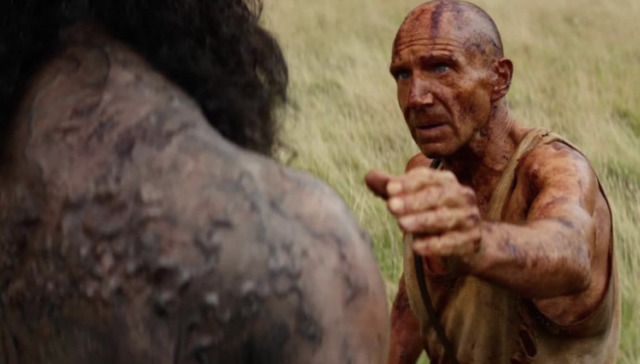
New character developments for Fiennes’ Kelson and others
In 28 Years Later, the story was centered on Spike’s development first and foremost, but a large focus of The Bone Temple centers on our character development of Kelson, who was a great supporting player in the previous film. Kelson’s section of the film is where things tend to be a lot more casual and meditative, both in presentation and mood, compared to scenes with the Jimmies.
As Kelson becomes more acquainted with Samson, we see them both further evolve and learn from one another, even when they’re far different in the way they currently think. I love how beautiful Kelson’s arc, in particular, is when it comes to him recalling what he knows from before the infection began, leading to a complete arc for the character that covers how his warmth feels within the current chaos of this world.
Of course, there’s much to be said about another incredible villain role for Jack O’Connell, where, yes, just like in Sinners, he brings plenty of pitch-black comedy to the table. What I love most about his performance and the Jimmies, however, is the subtleties behind why Jimmy Crystal is the way he is and how equally terrifying it is to watch what he does.
From the opening scene of the first 28 Years Later, we know the outbreak took place when he was a child, and when he lost his family to the infected, all he had was the cartoons and the religion of the church. Jimmy’s extremism within his religious pursuits and childish actions have a deep scariness to them; he’s a byproduct of a ravaged world, and it creates a scene of eeriness where seeing the disgusting actions of the Jimmies makes them much more terrifying than the infected.
Final thoughts on 28 Years Later: The Bone Temple
The Bone Temple may not be quite as strong on the whole as its predecessor due to some less impactful filmmaking choices, but it cements itself as a worthy middle chapter, deepening the lore of these characters and the world they live in while also building a new visual identity that gives it its own distinct nature in the series.
Nia DaCosta proved to be an excellent choice to helm this second film, balancing the somber beauty and satisfying brutality that have become synonymous with these films but in new, exciting ways.
Also check out 28 Years Later is a Challenging and Bold Sequel