‘Avatar Aang: The Last Airbender’ Review: Continuing A Legacy of Animation Excellence
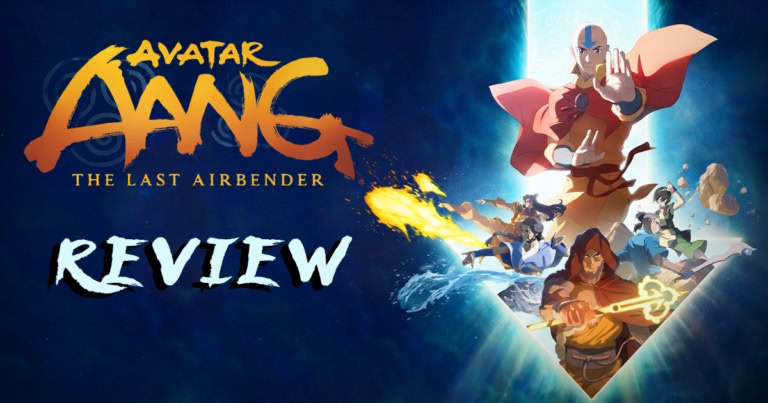
Nearly two decades after the original show concluded, Avatar: The Last Airbender influence can still be felt across comic books, so far two animated spin-offs, fan-fic storytelling, games, and television as a whole. From the beginning, it wasn’t simply the beautifully written world or the stunning element bending that gathered audiences in front of the TV. It was the emotionally mature honesty, the iconic characters, and a coming-of-age story that connected with viewers of every age. Avatar Aang: The Last Airbender serves as the first major animated feature from Avatar Studios, finally connecting the dots between the original show and The Legend of Korra spin-off.
The film answers some of the biggest questions fans have asked since The Legend of Korra ended. There were many questions, like what happened to Team Avatar during the years between both series, how they built the Republic City, and whether there was constant peace since Aang stopped the Fire Lord.
Instead of revisiting familiar adventures with teenage heroes, the film jumps forward more than a decade, showing Aang and his friends as young adults trying to maintain the fragile peace they fought so hard to achieve. Avatar Studios has spared no effort in making this world feel alive again. Every landscape has its own personality, bending sequences are animated with amazing details, and the visuals are simply stunning. This is easily one of the most visually striking projects ever produced within the franchise.
The story of Avatar Aang: The Last Airbender
Avatar Aang: The Last Airbender is set roughly a decade after the end of the Hundred-Year War. The story introduces us to an older Aang (Eric Nam) who has embraced the responsibilities of rebuilding a world destroyed by generations of conflict. Peace may have returned, but maintaining it is considerably more difficult than achieving it in the first place. Nations continue rebuilding, political tensions remain visible beneath the surface, and Aang himself still carries the burden of being the last Airbender.
Another conflict begins when The Denied are looking for an ancient artifact missing from the cycle of Avatar Sonam (Freida Pinto). It is rumored to possess the power to restore what Aang believed had been lost forever and, by connecting with the Spirit World, to restore the Air Nomads.
Rather than functioning as a simple magical object, it represents something far more personal. For Aang, it’s hope, and for others, just a means to an end. For someone who has spent years accepting the extinction of his people while attempting to preserve their traditions alone, the possibility of reclaiming even a fragment of Air Nomad history becomes almost impossible to ignore.
It is an emotional part of the story with an enormous take on asking yourself whether the past should be restored or whether true healing comes from accepting irreversible loss. This forces Team Avatar back together for another saving-the-world adventure, taking them across familiar places while introducing new locations that expand the world’s mythology.
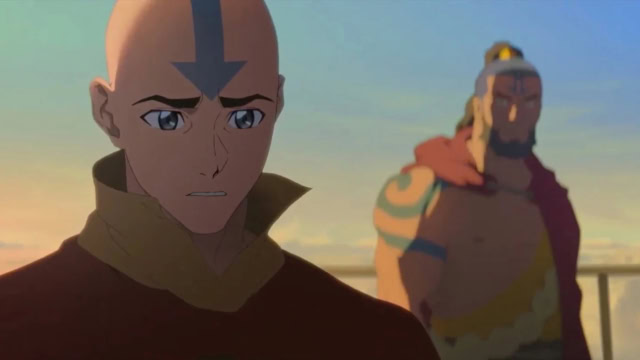
One of the film’s more interesting parts is the introduction of Tagah (Dave Bautista), a mysterious Airbender whose existence raises immediate questions about everything Aang believed he knew regarding Air Nomad history. His relationship with Aang quickly becomes one of the emotional parts of the narrative, challenging Aang’s understanding of legacy, identity, hope, and responsibility. Rather than simply being another companion, Tagah forces Aang to reconsider whether preserving a culture means protecting its traditions or allowing it to evolve into something entirely different that is not 100% part of their culture.
When it comes to fights, every bending element receives its moments to shine, with choreography that is still creative and fresh. Earthbending battles feel appropriately heavy and grounded, firebending retains its explosive aggression, waterbending continues demonstrating elegant variety, and Aang’s airbending remains as graceful and unpredictable as ever.
The film never loses sight of its emotional core. Beneath every battle lies a simple question that has always defined Aang’s journey: “How does someone preserve hope without becoming trapped by the past?” That question gives the story a sincerity and hope that ultimately leads to the very satisfying ending.
The evolution of Team Avatar is natural and believable
Seeing Team Avatar reunited after so many years is undeniably satisfying, not because the film relies on nostalgia alone, but because it understands that these characters should feel like people who have continued living long after the television series ended.
Aang naturally is the emotional center of the film, but this version of the Avatar is different from the optimistic thirteen-year-old who once believed every problem could be solved with compassion and determination. Those qualities remain, yet adulthood has forced him to confront responsibilities that cannot simply be wished away.
He is no longer trying to end a war. Instead, he is trying to preserve peace, rebuild a civilization, and carry the impossible burden of representing an entire people whose culture disappeared while he was frozen for 100 years. That internal conflict becomes the defining element of his journey. The possibility of restoring the Air Nomads is not presented merely as another heroic objective. It becomes deeply personal, forcing Aang to question whether his lifelong grief has prevented him from fully embracing the future.
Katara (Jessica Matten) also benefits from this more mature perspective. She still is Aang’s emotional anchor, but she has evolved beyond the nurturing older sister figure that frequently defined her role in the first two seasons. Here she is confident and emotionally intelligent, often serving as the person who recognizes Aang’s struggles before he is willing to admit them himself.
Rather than turning their romance into the narrative’s primary focus, the film treats them as an established partnership built upon years of shared experiences and trust. Small conversations, subtle gestures, and moments of mutual understanding are more than grand verbal declarations could ever be. It feels believable that these two people have grown together and are now inseparable parts of each other.
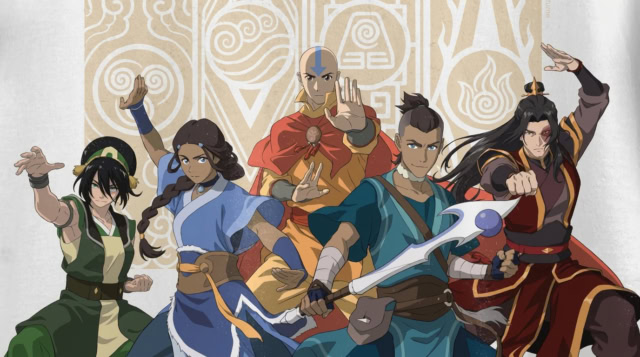
Sokka (Román Zaragoza) continues to be the person who brings jokes and humor to the table, although his comedy has naturally evolved alongside his age. He still has moments of immaturity, but they blend with his more mature age and preserve the Sokka fans love without the need to make him a more serious character. His jokes are said naturally from his observations rather than dominating every interaction.
Toph (Dionne Quan) perhaps experiences the most entertaining transition into adulthood. Her sharp tongue, relentless confidence, and refusal to acknowledge anyone’s authority remain entirely intact. Yet beneath her trademark sarcasm lies evidence of someone who has grown into one of the world’s most formidable figures. She commands respect without ever asking for it, and every earthbending sequence involving her serves as another reminder of why she became one of the franchise’s most beloved characters and the most powerful Earthbender in the world.
Fire Lord Zuko (Steven Yeun) faces a different challenge altogether. His struggle now revolves around leadership rather than identity. Governing the Fire Nation demands compromises that swordsmanship or fighting his sister alone cannot solve, and the film subtly explores the loneliness accompanying political responsibility. He still is the same Zuko from season 3, but there is more to him now. No matter what happens, he will stop doing anything, no matter how important, just to help Aang. He evolved into a more strategic thinking hero, who learned from his mistakes and now makes his uncle prouder every single day.
The new character, Tagah, represents both ambition and missed opportunity. His presence challenges Aang’s identity in ways few previous characters could. Tagah emerges as an intriguing addition to this world as a character who overshadows and overpowers our favorite characters without receiving enough development himself. Still, whenever Team Avatar finally shares the screen, the magic returns and you don’t care about anything else. You even forget that there was a show about the next Avatar, which is something that I didn’t expect to feel once again.
Final thoughts on Avatar Aang: The Last Airbender

Avatar Aang: The Last Airbender succeeds in what it wanted to do. It was a heartfelt reunion of the characters we all love. The emotional significance of returning to these characters is treated with genuine respect, avoiding the temptation to radically rewrite them for the sake of surprise or making something new.
What elevates the experience is the extraordinary focus on art and story. The animation is consistently breathtaking, scenes switch flawlessly between various render techniques, the bending choreography feels fresh, the soundtrack reignites nostalgia, and all of it feels like the return we wanted to see.
Perhaps the greatest compliment I can give this project is that it leaves us wanting more. Even though we know how this story comes to an end through The Legend of Korra, it still doesn’t matter, because there are plenty of gaps to fill.
If this movie serves as the foundation for Avatar Studios’ future projects, it establishes a promising direction, even if that foundation occasionally feels uneven. The original creators of Avatar, Bryan Konietzko and Michael Dante DiMartino, are the main core of the studio and this movie, as well as of all upcoming projects from Avatar Studios. If I’d have to pick one reason why you should watch this movie, it would be because of them.
It may never surpass the original television series, and perhaps no sequel realistically could. But that movie captured the essence of the original show and retold one of the finest coming-of-age stories in a refreshed way. Watching Aang, Katara, Sokka, Toph, and Zuko stand together once again stirs up feelings of nostalgia from the original series. They have grown older, wiser, and more burdened by the responsibilities of adulthood, yet they remain unmistakably the heroes viewers remember with the same humor or unique behaviors.
For me, Avatar Aang: The Last Airbender is the perfect continuation of the show I loved as a kid and the one that still has a special place in my heart. It never loses sight of the humanity at the heart of its world, and that is ultimately what allows this long-awaited return to feel worthwhile.
Also check out: Top 10 Episodes from the Animated Series