‘Control Resonant’ Game Review: An Impressive Addition to the Remedyverse
Control Resonant has been highly anticipated by many fans of the Remedyverse. For years, fans have hoped to see a return of Jesse Faden and that Control was not just a one-and-done game. Instead, Remedy has taken one of its strangest worlds and surprised fans by deciding to push forward, change the protagonist, change the setting, the structure, and even the fundamental mechanics of combat.
Remedy’s Control Resonant is a proper sequel that respects both its precursor and the idea of the world. It can feel familiar sometimes, but it all makes sense in the end by properly anticipating what awaits us in the story, how hard the combat will be, and how much time we’ll have to spend with the game.
But its greatest strength remains in the studio. Remedy understands how to make impossible areas in games feel like places you genuinely would like to explore. Manhattan is not simply a larger playground for paranormal powers or exploration. It is a respectable sequel to the Control universe’s fascination with bureaucracy, trauma, altered reality, and the idea that ordinary things can become terrifying when the rules change.
[Warning: Spoilers from the game are below! It is also worth noting that I played this game on PC.]
Control Resonant is a sequel to Jesse Faden’s story but from a different perspective
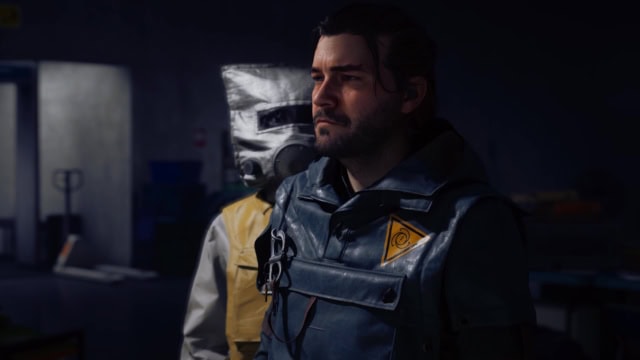
Seven years after the events of the first Control game, the story moves away from Jesse Faden and places her brother Dylan at the center of the plot. After years of confinement inside the Oldest House, his awakening immediately throws him into a situation that connects his troubled history with the supernatural disaster consuming Manhattan. Jesse has disappeared, the Federal Bureau of Control has been pushed into a desperate position, and the Hiss has escaped beyond the Oldest House.
Dylan’s mission becomes both practical and deeply personal. He has to survive a broken reality, help the remaining FBC personnel stay alive, understand the new threat, and find his sister.
Dylan is not a charming hero or anything like that. He carries years of anger, guilt, isolation, and uncertainty, and the game is more interested in watching him deal with those things than in making him some secret overpowered superhero who was too powerful to be kept alive. That makes his relationship with Jesse real because the two characters are connected by years of shared trauma and being siblings.
The story also benefits from the return of Remedy’s strange mixture of horror, science fiction, weird comedy, government bureaucracy, and deliberately confusing paranormal mythology. The FBC files, conversations, environmental details, strange recordings, and live-action material are everything that brings this world to life. All thanks to Remedy and their belief that every world in the game deserves to be detailed and be a part of the story.
Dylan’s search for Jesse gives the sequel stronger emotional vibes, all because Resonant is more openly character-driven and more conventionally structured, which makes Dylan’s journey easier to follow. But easier doesn’t mean simple.
Dylan’s search for Jesse gives the sequel a stronger emotional center and goes deeper into the lore, and it’s all worth it. Mystery keeps the campaign moving without turning every question into an obvious setup for another easy-to-predict plot twist. It is a story about family, responsibility, and identity.
Remedy has expanded the gameplay yet made it different from the first game
The biggest gameplay change compared to previous games is also what makes Resonant stand out. Dylan’s weapon, the Aberrant, is a shape-shifting supernatural tool that can switch between different forms, including blades, axes, scythes, hammers, drills, and other variations depending on the build you want to use. Instead of simply choosing one weapon and upgrading it, you can combine different forms for standard attacks, secondary attacks, and finishing moves.
Dylan also develops supernatural abilities that expand the mechanics further, abandoning the idea that ranged attacks are the only use of weapons and turning them into defensive powers and movement-based abilities.
Resonant focuses on this by creating better skill trees, weapon-specific upgrades, passive abilities, artifacts, and choices tied to the powerful Resonant entities that serve as major bosses and give you special upgrades. You can create a weapon build that lets you play in a more aggressive approach to melee damage, crowd control, defensive tools, supernatural summons, or combinations of these approaches.
Combat itself is fast and deliberately aggressive. Enemies surround Dylan from multiple directions, while his mobility allows him to dash, double-jump, glide, levitate, and eventually manipulate gravity itself. Healing is also tied to aggression, encouraging you to keep moving and attacking instead of hiding behind cover. This creates some fantastic encounters where combat becomes almost choreographed, with Dylan moving across rooftops, walls, and impossible surfaces while switching weapons and powers in the middle of a fight.
Once Dylan’s movement abilities become much more available, exploration becomes an enjoyable form of controlled free-roam chaos. Manhattan is divided into large interconnected zones filled with secrets, side stories, combat encounters, collectibles, and strange environmental events.
Side quests are particularly important because some of the most memorable ideas appear away from the critical path, and exploration often rewards curiosity instead of simply giving the player another reward.
Control Resonant game rating and final thoughts

Control Resonant is an unusual sequel because it succeeds partly by refusing to preserve the exact things that made its predecessor popular. The original Control was defined by its telekinetic play with guns, the beautifully weird architecture of the Oldest House, and Jesse Faden’s transformation into a supernatural, almost god-like person.
Resonant takes those foundations and mechanics and rebuilds them to fit Dylan’s melee combat, a fractured Manhattan, a deeper RPG system, and movement that eventually makes the entire environment feel like a playground. Especially now, even with all of its weirdness, Remedy proves that they can create interesting worlds without the need to make all areas accessible.
More importantly, the game’s developers understands the scale and importance of players’ expectations. They know it should not come at the expense of personality, poor gameplay, a boring world, or too much money spent for nothing.
Manhattan may be much larger than the Oldest House, but the game still feels weird, strange, and full of small Easter egg details. Dylan is a more difficult protagonist to immediately embrace the powers than Jesse, but his story gives the sequel an emotional direction that works surprisingly well alongside the bizarre lore.
We can anticipate that, as with all Remedyverse games like Alan Wake and previous Control games, we will receive DLC that will expand the story even further and confirm connections between those games. They may even tease something about the third Alan Wake game, which we know that Remedy is thinking about.
The strongest impression I have from playing Control Resonant is not that Remedy has created a bigger or better Control, but that it has made something different from it. And for a sequel to a game built around the idea that reality never stays the same, that feels like exactly the right decision to have been made.
Control Resonant is now available to play on PC, PlayStation 5, Xbox Series S/X, and macOS.