‘Gentle Monster’ Review: A Thought-Provoking Drama Held Together by Léa Seydoux’s Performance
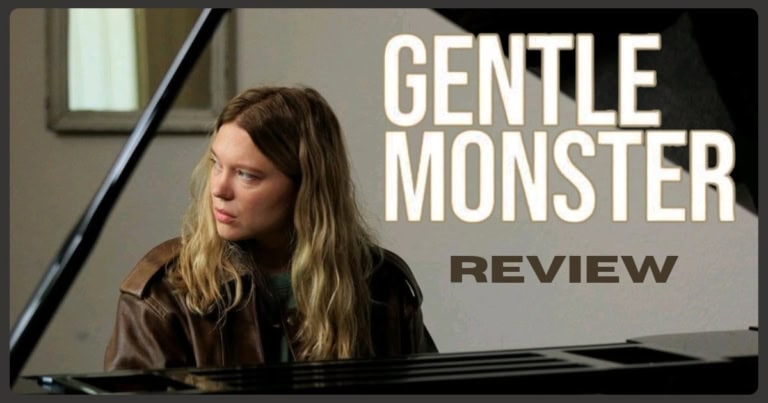
To make a movie like Gentle Monster requires a great deal of sensitivity to the material you’re treating on screen. The subject writer/director Marie Kreutzer is dealing with is incredibly heavy and could easily veer into exploitative territory if you don’t know how to handle such a story.
Once the elephant in the room is revealed, Kreutzer can easily go one way or another and derail her project. Some have found her approach “distasteful”; others have praised how she solidly handles the shift. For me personally, nothing feels particularly distasteful, but nothing is remotely jaw-dropping about Kreutzer’s mechanics.
The plot of Gentle Monster (2026)
That said, Gentle Monster remains an effective drama, thanks in no small part to Léa Seydoux’s incredible performance as Lucy Weiss, a successful pianist who lives a quaint life with her husband, Philip (Laurence Rupp), and son Johnny (Malo Blanchet). At first, there doesn’t seem to be anything special or unusual about the way they live in the German countryside. Then police detective Elsa Kühn (Jella Haase) knocks at their door with a search warrant to seize Philip’s computers and electronic devices on the suspicion that he is owning and distributing child sexual abuse material.
Lucy had no idea. Philip maintains that he was simply “doing research” for a documentary and didn’t think it was illegal, which the former struggles to believe. Her marriage and life with her son immediately fall apart, knowing that something could’ve happened to her son, which Philip denies. No matter, Lucy quickly wants him out of her life and moves back to her mother’s (Catherine Deneuve) house as she awaits the investigation to develop.
At that point, Kreutzer makes the daring decision to cut away from her story and showcase Kühn’s perspective. She is also grappling with a truth that shatters the perception she has of her ailing father, suffering from dementia, who attempted to sexually assault his nurse.
On paper, this might have drawn some interesting contrasts. Here’s a workaholic cop that seems to purposefully avoid what’s going on in her household to chase down other perpetrators of sexual crimes, whilst her father is among those people. The things she says to the assaulted nurse as an attempt to get her to continue working for them are sickening, but they’re never actively contrasted with how Lucy reacts to the news that her husband might be a pedophile.
There’s no moment of self-introspection in Gentle Monster beyond the routine Elsa gives herself to avoid the problems with her father. Jella Haase’s performance is genuinely intriguing, but there’s little material to chew on. It’s perhaps Kreutzer’s most underdeveloped aspect in a screenplay filled with dense ideas that lets its actors’ silences speak louder than words. However, in the case of the police, these aspects don’t amount to much.

Léa Seydoux gives one of the best performances of her career
Léa Seydoux saves Gentle Monster from becoming another forgettable drama, like Kreutzer’s Corsage. But the harsh visual language, shot in both 16 mm and 35 mm by cinematographer Judith Kaufmann, gives a real sense of texture and brings us much closer to Lucy’s plight than what was probably on the page.
When we sit with Lucy’s silences, as she reckons with the possibility that Philip might have produced illicit material involving children, perhaps her own, and begins to play back memories that might have shown a pattern, Gentle Monster takes a profoundly affecting form. Seydoux doesn’t need to say or do much for Lucy’s anguish to be felt. We instantly see a shift in her demeanor as soon as she learns the side of Philip she never knew about.
The film carries enough visual weight to deliver a devastating final sequence when Lucy stumbles upon a hard drive Philip left hidden. Without revealing the contents of the material, such a sequence could’ve easily gone in a different direction if Kreutzer hadn’t lingered in the character’s emotions.
The movie never asks us to sympathize with Philip as soon as his computer is seized and constantly treats him as the horrible person he is. The character’s layers get progressively muddled as Lucy makes difficult decisions to keep her child safe. After all, Philip is still his father, and this horrible revelation will never change this fact.
Through Seydoux’s heartbreaking performance, Gentle Monster asks us to grapple with a harsh reality that, unfortunately, many families face. Four out of five instances of child sexual abuse are committed inside households by someone directly in contact with them.
Like Cristian Mungiu’s Fjord, Kreutzer never shows any act of abuse or exploitation, though there’s no ambiguity, especially when she flashes back to two years earlier and (slightly) shows us how Philip operated the material with his computer. He was doing it right under his wife’s nose all along, for years.
This didn’t happen out of the blue, but each explanation he gives to justify it worsens our perception of him. He’s clearly lying. Lucy wants to believe him for Johnny’s sake, but when the truth hits harder as she plays back pivotal moments from their marriage, the film grows much heavier than its opening sequences.
Gentle Monster film rating and final thoughts

Seydoux’s incredible control (eventually matched by acerbic line readings from the always-legendary Catherine Deneuve) and Kreutzer’s perceptive and raw aesthetic help Gentle Monster overcome some glaring screenplay trappings. Only Oscar-winner Camille’s terrible songs (the rendition of “Would I Lie to You” is, however, well executed) dampen an otherwise effective drama. The often thought-provoking film asks difficult questions of viewers and doesn’t leave them to draw their own conclusions. The message is clearer than clear. Will people listen?
Gentle Monster begins streaming on Netflix on November 18, 2026.