Game Review: ‘Dogpile’ Is A Relaxing Doglike Deckbuilder
Whenever I find a title that pairs fun with soothing gameplay into a creatively wholesome package, I am always going to end up a happy customer. Dogpile is developed by Foot, which is a joint effort by both Studio Folly and Toot Games, and published by WINGS. From the moment I noticed the game’s listing on Steam, I knew I had to immediately dig my teeth into it. Dogpile is only available for PC, and you can play it today by purchasing it on Steam.
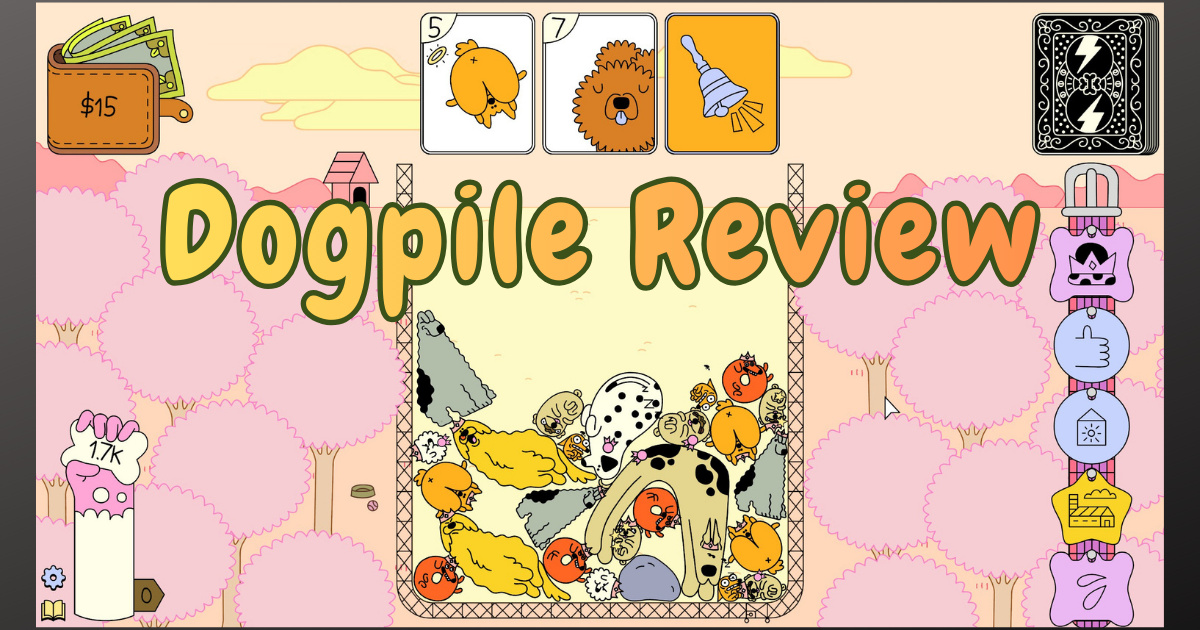
Dogpile is my new favorite relaxing roguelike deckbuilder that I’ve played in recent memory, only rivaling localthunk’s Balatro in terms of simplicity, replayability, and design. You’ll be managing a whole deck of dogs of different sizes represented by the ranks of cards ranging from Ace to King.
Dogpile shows that you don’t always need to reinvent the wheel because, even though this game is similar to the other deckbuilders out there, there is enough originality to this game that it still feels like a fresh experience.
There are 14 different decks, or game modes, you’ll be able to encounter in Dogpile, with only one to start off with. Each time you clear a deck, you’ll be granted two modifiers that will make that deck harder and unlock the next deck, offering up more ways to play.
A deck of doggies to play with
The gameplay in Dogpile is simple: play your cards with the associated dogs and drop them into the yard while trying to merge with other dogs and win the game by creating a King-ranked dog. While making a King is the goal to win the game, you’ll still need to earn enough cash and bones per each five hands.
If you earn enough bones, you’ll be rewarded by entering the Dog Wash, which allows you to make sweeping changes to three random cards in your deck. Not only will you be able to improve your cards with new traits, but if you’re lucky enough, you’ll have the option to rank up or cut cards from your deck. Ranking up will move three cards to the next highest rank, and cutting cards will streamline the deck by removing unwanted cards.
You’ll need to be very strategic with how you place cards to earn as many bones as possible. If you don’t reach the bone goal after five hands, you’ll be punished with the Dog House. The Dog House is Dogpile’s way of adding “disciplines” to your gameplay. These disciplines can involve adding negative traits to your cards, negative traits to the yard, and changing other properties to your game.
When prompted with the Dog House, you will have some control over which of the two options you’d rather go with. Some of the Dog House options will be worse than others, so it’s important to choose the lesser of the two evils. Some of the options I have chosen will involve adding rocks to the yard or making it impossible for the dogs in the yard to merge; these two options don’t cause too many negative effects for my overall enjoyment of the game.
The dogs in both your deck and yard can be affected by a gameplay mechanic called “traits.” Traits can directly impact how your deck plays, both with good and bad effects. For example, there are good traits that can shrink your dogs, cause your dogs to have magnetic attraction to others, and even make dogs generate more bones so you can reach your goal faster.
Some of the bad traits include making dogs larger, restricting when you can merge dogs, and making dogs avoidant of others of the same rank, making it harder to merge. Out of all the traits, I found miniature to be the positive trait I would seek out the most, while I found the trait to add fleas to be the most annoying one as it can stop other traits from applying.
While most of the bad traits are intended to make the game harder, I found the cool dog and sleepy traits to be a net positive, as they both improved my gameplay adventure. That might be something you want to keep an eye out for when you play this game.
Digging deeper into Dogpile
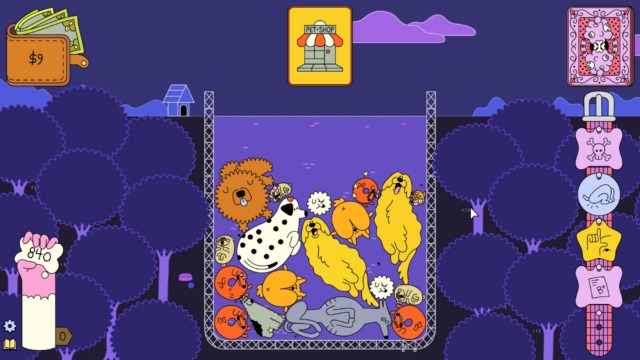
As you play through your hands, you’ll eventually have access to the Pet Shop. The Pet Shop is the place that lets you buy additional cards for your deck, some with good or bad traits, and purchase dog tags that can be applied to your dog collar. These tags provide passive effects that can add modifiers to your game. Some of the passive effects can alter how cards will react with other dogs, add extra bones, more cash, and can affect how the Dog Wash works.
Some of the dog tags you want to purchase can cost upwards of $40, so it’s important to be mindful of your spending. You don’t want to be too mindful though. You can only have a max of five dog tags in use at a time, and you may need to purchase tags early even if they can’t carry you all the way through to the late game shenanigans.
Managing your cards is a critical duty that will help you get out of any sticky situation you come across. If a dog crosses the line at the top, you’ll have ten seconds to get the yard under control; otherwise, it’ll be the end of your run and you’ll need to start all over.
Thankfully, with trainer cards such as leashes, bells, and cheese, you will be able to better handle the yard and get closer to success. If the trainer cards aren’t something you want to utilize, it’s still essential to purchase new cards in the Pet Store while also cutting out cards from your deck using the Dog Wash if they are a disadvantage.
Silliness in game design
Now that I’ve detailed what exactly to expect in the gameplay aspect of Dogpile, there are some great moments that I was able to experience while playing. This is a very goofy game, so it’s important to set your expectations for just that. I had so many moments where I had uncontrollable laughter and genuine bits of joy while dropping dogs in the yard.
Looking at the faces of the Ace dogs as they fell into the yard and suddenly merging with another to make a Two is incredibly satisfying. The constant chains of merging is a sight to behold, especially when things happen without any active thought put into placement. Occasionally you will need to plan on where you are dropping your dogs to nudge other dogs in the yard ever so slightly that they’ll merge.
I love the designs of the dogs so much in Dogpile, and I am so glad that the development team put in the option where you can pet the dogs. Petting the dogs in the yard is a good way of telling them what good dogs they are, and you know they appreciate it. Out of all the dog designs in this game, I’d have to say that Fours are my favorite. The Four dog is this little cute round girl that is biting on its own behind with a big smile on her face, and as I am describing this dog, I have a huge smile on my face.
Final thoughts on Dogpile, available to play on Steam
The great time that I’ve had with Dogpile makes it incredibly easy for me to recommend. Every time I start up a new run, I get excited about what cards and tags are available for me in the Pet Shop. Every choice you make can either carry you through the rest of your run or sink your chances, so being selective is a tactic I highly encourage everyone to try out.
Of course, the great thing about the mechanics in Dogpile is that there is a lot of variety you can play and experiment with. Play around with your cards, play around with the different traits you can apply, and most certainly don’t be afraid to buy and sell dog tags because what might work for one challenge deck may not work for another.
My rating for this game: 5/5
Dogpile is out right now for PC via the Steam store, and I highly recommend this game for anyone who enjoys charming roguelike deckbuilders that give players so many different approaches on how to tackle the gameplay. I’ve unlocked so many different decks to play with, and I still feel like I’ve barely scratched the surface of what this game has available.
With so many dog tags and disciplines from the Dog House, no run is the same as a previous run. Dogpile is so easily accessible for players of all skill levels, and I highly encourage you to check out this “doglike” deckbuilder if you get a chance!
Also check out: Curiosity: A Cat Climbing Game Brings High Risks and Even Higher Rewards