Game Review: ‘Styx: Blades of Greed’
Styx: Blades of Greed was first announced as a game that was meant to become a cinematic spectacle. From the first minutes, it felt like the quiet return of a genre that rarely gets the spotlight anymore. Big publishers and developers often aim to create a game that attracts players by showing them epic, interesting, or even funny moments from the game. All of it, to show them it’s worth their time.
Blades of Greed doesn’t try to rebuild mechanics or the entire world from scratch, but it tries to feel slightly nostalgic. It builds on the foundations of the previous stories and uses them to create something new. By giving players larger areas, more mobility, and more freedom to approach every situation, it’s already a better sequel than one would think.
From the first mission, you can feel that the developers wanted to create something more forthcoming. The scale of everything that was in the previous game, the added mechanics, and the bigger stakes all suggest growth and maturity.
[Warning: Spoilers from Styx: Blades of Greed are below!]
Styx: Blades of Greed story
Blades of Greed is telling a story from the perspective that is focused on the center of a growing conflict tied to the discovery and exploitation of Quartz, a powerful magical resource that has the potential to destabilize entire kingdoms. Styx is no longer just a character whose goal is to be a lone infiltrator chasing personal gain. He operates as a cocky opportunist, traveling between larger factions, using chaos to his advantage.
For returning players, some parts of the story feel like they are there to connect back to earlier events in the universe, particularly those introduced in Of Orcs and Men. The rise of certain mercenary groups and the shifting balance of power are visible and have become troubling issues. However, Blades of Greed doesn’t make you feel overwhelmed by showing you a lot of exposition. Instead, it keeps the focus narrow and more personal. Styx remains driven by greed, survival, and his iconic sharp tongue.
The writing of the main story arc focuses heavily on Styx’s personality. He comments on situations with sarcasm, mocks his enemies, and occasionally breaks the tension with dark humor. This keeps the tone from becoming overly dark, even when the political implications of his actions are serious.
All of it provides motivation and atmosphere, but it rarely delivers major emotional scenes. The story is strongest when it makes Styx’s infiltration part of a larger web of manipulation rather than when it attempts to turn it into dramatic scenes or actions.
What works well as a larger part of the main story arc are the missions that tie into the central pursuit of Quartz. You’re not sneaking into random fortresses for reasons that are unimportant. Sabotaging operations, stealing key artifacts, and destabilizing certain factions are part of the bigger picture.
Ultimately, the entire main story succeeds not because it is groundbreaking in this world, but because it connects to the very well-known gameplay. It creates stakes without demanding to be the main focus of the entire game.
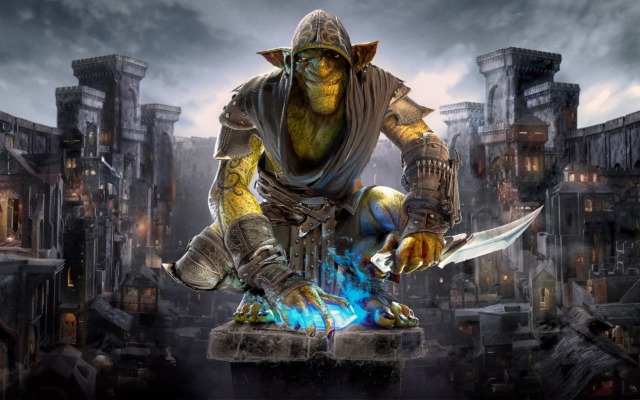
Gameplay is where this game truly shines
From the start, the rules are clear. If you fight head-on with enemies, you will probably lose. Styx is deadly in stealth but vulnerable in open confrontation. I recommend that you avoid confrontation when possible. Guards hit hard, and groups of enemies will overwhelm you quickly.
The environments are split into three large regions, each designed with its own unique vibe. Strongholds of humans are created with layered walls and watchtowers to look scary. The bases of orcs are full of chaotic structures and are filled with blind spots and hidden paths, so you can travel through them much more easily. Elven ruins are a mix of elegance and decay. They offer ledges for more agile movement, have buildings with high balconies, and, of course, secret passages.
Traversal mechanics use those secrets and additional elements of the gameplay to prevent it from being repetitive and boring. Styx can climb high surfaces using metal claws, swing across gaps with a grappling hook, and glide from higher points to change his position in silence and hide. These tools transform the map into one big playground. You might begin by observing from a rooftop, glide to a hidden ledge, drop behind a guard, and disappear before anyone notices. The sense of flow when a plan works is deeply satisfying.
Abilities that are connected to Quartz add whole new layers of creativity. Invisibility (part of the mind control power) allows you to go through tight places without being spotted. Mind control lets you temporarily redirect enemies, create openings, or cause a little chaos.
Limited time manipulation can correct small mistakes you made or allow you to make precise movements through dangerous areas. You still need to plan carefully because resources are limited and mistakes are punished, but it is the beauty of it, as you can create your own small versions of the outcome of fights.
Guards follow their scripted patrol routes but respond quickly to any disturbance. A missing ally, an extinguished torch, or a triggered trap can alter their behavior. So you must be aware of everything that’s happening.
Sometimes the AI behaves unpredictably, which can be frustrating, but often it keeps you alert, so you can never feel entirely safe. What is good as part of the gameplay is the option to quick-save before attempting to do a risky action when you’re not sure if it will work. I think that it’s a good way when you want to figure out how everything works. You can experiment and find your own style for certain types of encounters.
Styx is one of those stealth games that can become exhausting if failure means replaying long segments over and over again. The game respects your time, but it won’t make it easy for you. All the time, you feel the risk of being detected, but you’re not punished for small mistakes.
However, certain animations occasionally look weird and can cause you to see something that will make you lose focus. Combat, while it is an important part of the gameplay, feels limited to a point so you avoid unnecessary violence. Styx can assassinate isolated enemies quickly, but extended fights are random and dangerous. You are a predator in shadows, not a skilled, powerful warrior. The game never lets you forget that.
Final thoughts on Styx: Blades of Greed
Blades of Greed stands as a confident sequel that tries to make a bold statement. The story provides a solid adventure, even if it doesn’t reach the highest possible level. But it is still fun to experience. The real heart of the game lies in its mechanics. Movement feels easy to master, and once it is, you can try various possibilities to avoid being caught.
My rating for this game: 3.5/5
Of course, there are imperfections. Technical hiccups, occasional AI errors, and the idea to make some elements of the game challenging to unlock are something that may cause some players to drop the ball while playing. But those issues rarely overshadow the overall experience.
This is a rewarding journey. It may not make people fall in love with games based on stealth, but for its intended audience, it delivers exactly what it promises.
Styx: Blades of Greed is now available to play on PC, PlayStation 5, and Xbox Series S/X.
Also check out: Game Review: Resident Evil Requiem