‘Fjord’ is a Necessary Exercise of Introspection | TIFF 2026 Film Review
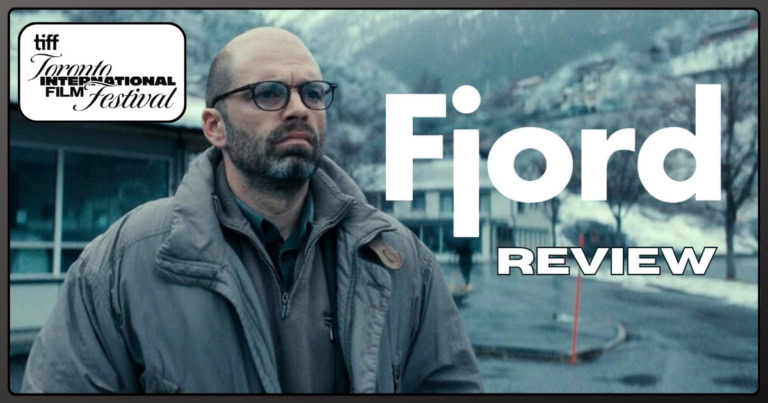
The metaphor is heard loud and clear in Cristian Mungiu’s Fjord, this year’s Palme d’Or-winning picture, as the evangelical, conservative Gheorghiu family moves into a highly progressive (and liberal) neighborhood in Norway. If you didn’t click it because you didn’t meet Mungiu’s latest at its terms, it’s an apt parallel for the return of conservatism, which has become more prominent around the world after Donald Trump was re-elected President. What happens when this ideology returns to a community that has eradicated all forms of conservatism and begins to reckon with their beliefs as the Gheorghius get embroiled in scandal?
The plot of Fjord (2026)
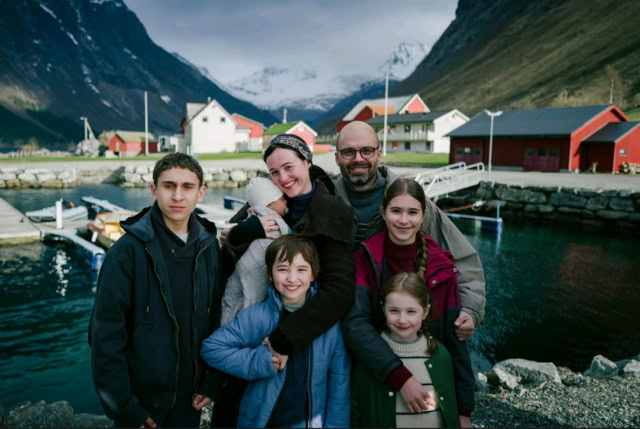
From the moment they arrive, after a warm welcome, something seems off about Mihai (Sebastian Stan) and Lisbet (Renate Reinsve) Gheorghiu, and their children Elia (Vanessa Ceban) and Emmanuel (Jonathan Ciprian Breazu).
At school, the children cannot do anything that seems too “modern.” They don’t watch YouTube videos. They don’t play video games. All they know is the word of the Bible, and if they don’t pray and perform their scripture studies daily, they are punished. This is also when the police arrive to arrest Mihai, after school social worker Frida (Lisa Loven Kongsli) suspects that both Elia and Emmanuel were physically abused by their father.
The Gheorghius now upend this relatively peaceful community in a genuine scandal that shocks not only them but the world. Because yes, Mihai inevitably brings the online alt-right community into his cause, hoping to retain custody of his children. This is where Mungiu begins to blur the lines of what we see as “righteous” or “reprehensible” politics.
The family is on trial for alleged physical abuse. That’s why Child Protective Services intervened and why Mihai was apprehended by the police. However, the trial eventually becomes something more because the family’s views need to be held to the court of public opinion.
Neighbor Mats (Mats Halberg) has no idea whether Mihai actively hit his children (which the father only said was a light “slap on the butt”), but he does know that what he teaches them (the “traditional family”) is reprehensible.
As the progressive neighbor spends more time with them, especially his daughter, Noora (Henrikke Lund-Olsen), who starts to develop feelings for Elia, the values that Mats holds begin to change shape, and perhaps he does too. In this case, there’s no genuine “right” or “left” in politics, nor is “neutrality” an apt descriptor to describe cowardice (read: centrism). Our views consistently shift, and people who believe they hold the same opinions forever will soon learn otherwise.
Cristian Mungiu’s film is complex and pulls no punches
For some reason, Fjord is already causing an insufferable amount of discourse for either being “woke” or “conservative,” but it’s actually neither of those things. We sometimes watch movies by inching too close to our own subjectivities, which can distort what Mungiu is actually saying on screen.
Look at the way he frames the family; the Norwegian flag in the background is a powerful signifier as the Romanians try to assimilate their viewpoints to a society that vehemently rejects them. The camera rarely moves but focuses on subtle inflections that betray both Mihai and Lisbet. If you actually look at what he’s presenting here, you’ll unlock a thought-provoking meditation on how genuinely unwell our society is. It’s not “divided,” it’s unwell. Everyone wants to prove they are “righteous,” but no one wants to recognize that their beliefs about the world are individual.
Everyone wants to convert people to their views, but is there a “right” or “wrong” way to see the world? Of course, abuse is criminally reprehensible, and if Mihai is guilty, he should be locked up and lose custody of his family. However, the trial eventually shifts away from that and turns to his views. Conservatism (or evangelicalism) then goes on trial, and Mungiu does not just excavatesthe ideology. The film reckons with the culture wars in ways so subtle you won’t even realize what he’s doing until a bravura final image so breathtaking it almost sums up the whole movie.
The dash (and I mean small dash) of magical (or theological?) realism that Mungiu infuses close to the start, which gets repeated at the end, distills the essence of what happens when one begins to shift their views, either to the right, the left, or somewhere else.
Are they actually “enlightened?” Can they metaphorically “walk on water?” Cinematographer Tudor Vladimir Panduru never judges his characters, but Mungiu layers every single frame with so much tangible significance that it’s difficult to have a clear-cut answer as to what they all mean.
What I can confidently say is that both Sebastian Stan and Renate Reinsve deliver incredible performances in Fjord, with the former being particularly excellent. It’s been a while since I’ve wanted to see what Stan is capable of in his native tongue. Collaborating with two of the most thought-provoking Romanian filmmakers working today (one of his next projects is supposedly a riff on Frankenstein, directed by the great radical artist Radu Jude) gives him the opportunity to demonstrate what he can do outside the MCU.
By playing Mihai Gheorghiu, Stan follows the trajectory he’s been setting ever since his career-best turn as Donald Trump in Ali Abbasi’s The Apprentice and finally showcases what most people have been missing about him for a while. His performance may not be “showy” or broadly “theatrical,” but it is certainly his most emotionally impactful. Stan doesn’t need to say (or do much), but simply infer from certain expressions on his face that betray any form of “innocence” he would like to maintain.
The same can be said for Reinsve, who continues to stun in ways few actresses of her caliber can. Lisbet may not be able to reach the same heights as Nora Borg in Joachim Trier’s Sentimental Value, but it’s still a turn worthy of equal amounts of praise.
Fjord film rating and final thoughts

Fjord doesn’t pretend to be on the right, left, or the middle. It doesn’t judge its characters, which may imply that Mungiu shares the views of both Mihai and Lisbet. Of course he doesn’t. If you pay attention (without leaving personal politics at the table), you might find one of the year’s most aesthetically and thematically rich stories that may repurpose the way you view the world, as conservatism is still ravaging society and attempting to make a genuinely terrifying comeback.
How we interrogate this “comeback” first means we have to look at ourselves (and society as a whole) to understand why this is happening. Cristian Mungiu has taken that first step, but I’m not sure if audiences are fully prepared to follow him.
Find our previous reviews from TIFF and other film festivals here in the archive!