‘Devil May Cry HD Collection’ Review: An Iconic Action Slasher Game that Redefined the Genre
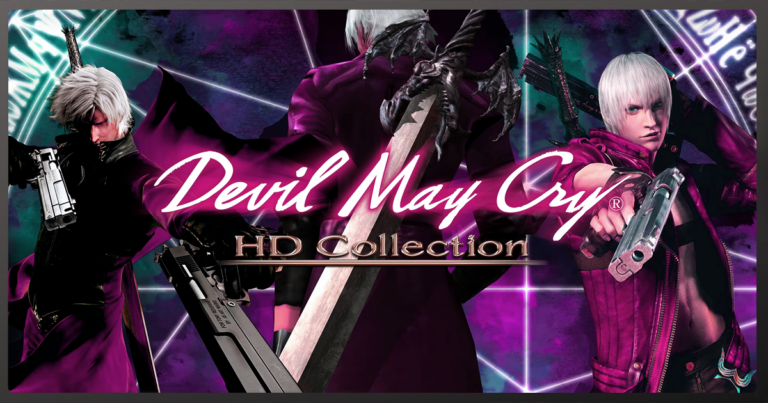
The Devil May Cry HD Collection brings together three entries from the franchise’s early history, offering an opportunity to revisit the beginnings of a series that helped define an entire genre. It contains Devil May Cry, Devil May Cry 2, and Devil May Cry 3: Dante’s Awakening Special Edition.
The series focuses on spectacular sword fights, ridiculous amounts of attitude from the main character, a memorable story, and a combat system that didn’t seem possible. Dante, the main hero of those games, became one of gaming’s most recognizable protagonists. He represents an era when video games were not afraid to embrace chaotic and controversial personalities.
The entire collection represents a fascinating evolution of the franchise. They demonstrate how Capcom experimented with its formula, made questionable decisions that turned into success, and discovered what made Devil May Cry special.
Devil May Cry HD Collection tells the story of a half-human and half-demon hunter running a supernatural agency
The first Devil May Cry starts from the first minute. There is no waiting for 30 minutes to begin grasping the experience. The story presents the atmosphere that becomes a considerable part of this universe as we follow Dante, a half-human, half-demon mercenary who runs a business specializing in hunting supernatural creatures.
Despite his profession, Dante approaches almost every dangerous situation with an insulting level of confidence, treating fights with terrifying monsters as opportunities to show off. He simply has the vibe of a cool guy who thinks that he can beat everyone.
His adventure begins when Trish, a mysterious woman who looks like his deceased mother, arrives at his office and invites him to fight the demonic emperor Mundus. Their journey leads them to Mallet Island, a place full of supernatural entities, ancient secrets, and connections to Dante’s family.
Although the original game does not have particularly complicated storytelling, its atmosphere really carries the game, especially in modern times. The gothic architecture, abandoned castles, mysterious corridors, and dark environments create a setting that feels considerably different from what it did 25 years ago. There are feelings of horror and isolation when Dante is exploring places where you can see there is no humanity, only horrendous creatures and scary objects.
The narrative also gains a lot from Dante’s personality, which is already entertaining despite being noticeably more serious, frustrating, and cockier than in his later years. His confidence, sarcasm, and being full of himself really show somebody who is capable of doing whatever he wants, but doesn’t try to hide that he has a soft side hidden deep.
Devil May Cry 2, unfortunately, is one of those sequels that tries to do too much with too little money and too little determination. The story introduces Lucia, a demon hunter who encounters Dante on the Dumary Island and becomes part of a conflict surrounding Arius, a businessman attempting to obtain demonic power and become a god.
The character development and writing are disappointing. Dante barely talks, Lucia receives more attention than the actual story deserves, and the emotional connections between the two rarely develop into anything particularly meaningful. It’s like the writers don’t really care about those characters and don’t want you to care either, which is a mistake.
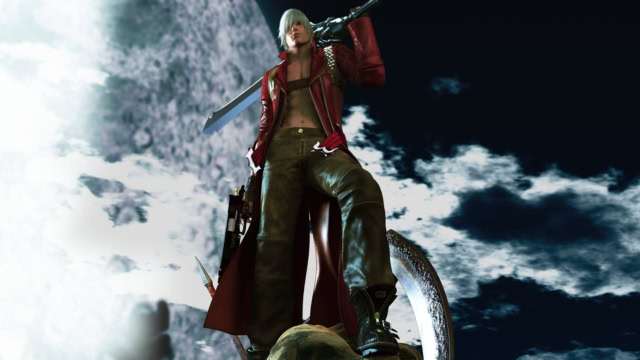
The sequel also struggles to keep the same vibes of atmosphere as in the first game. There are interesting ideas hidden somewhere beneath the surface, especially in the connection between humanity, demonic power, and corporate ambition, but the story never finds time or place to take a better look at them.
Dante’s transformation into an almost completely silent protagonist is disappointing, considering that his personality was one of the original game’s greatest strengths.
Thankfully, Devil May Cry 3: Dante’s Awakening Special Edition is a much better and more spectacular game. Rather than attempting to continue the original game’s narrative, Capcom takes the franchise back in time.
We play as a younger, more reckless Dante, back in the day when his rivalry with his twin brother Vergil is starting to develop. The story starts with Dante receiving an unexpected visit from a mysterious individual working for Vergil, followed by the appearance of a gigantic demonic tower emerging from the ground.
Vergil wants to obtain the power connected to their father, Sparda. Dante is broken by this situation because there is a hidden conflict inside of him that tears him apart and makes this story much more personal. Vergil’s obsession with power contrasts beautifully with Dante’s attitude, turning a brotherhood into a rivalry that becomes one of the most memorable relationships in the franchise.
The slashing action gameplay of these games is the reason why they are so popular
If there is one reason the Devil May Cry HD Collection remains worth experiencing, it is the combat. Even after all these years, the original trilogy proves why Capcom’s approach to character action became so influential and important to the players. The basic mechanics revolve around a mix of melee attacks, firearms, dodging, jumping, and special abilities. The style ranking system encourages us to experiment with different attacks, avoid repeating the same moves over and over again, and keep fighting without receiving damage.
The original Devil May Cry offers a relatively straightforward interpretation of this system, combining swordplay with firearms and a limited selection of supernatural abilities. Dante uses the iconic Rebellion sword, dual pistols, and additional weapons that become available throughout the adventure. Different weapons offer different ways to fight in combat.
As for the Devil Trigger transformation, it temporarily increases Dante’s offensive capabilities and introduces additional supernatural attacks.
Devil May Cry 2 attempts to expand the formula, introducing several new movement options and mechanics that initially appear promising. Dante can perform wall runs, execute additional attacks in the air, and use firearms in various ways that make ranged combat considerably more useful. The introduction of Bloody Palace also provides an additional challenge, allowing us to fight through increasingly difficult waves of enemies.
Unfortunately, almost every major improvement is undermined by the balance that is not working, enemies that are far too basic, and some improvements that were simply unnecessary.
Then comes Devil May Cry 3, which transforms the entire collection into something worth playing. This is where Capcom finally understood how much potential its combat system possesses, and they began turning it into the incredibly satisfying experience that would later become the most important part of the franchise.
Dante has access to multiple melee weapons and firearms, each offering different combinations, attack properties, and tactical possibilities. More importantly, the introduction of combat styles entirely changes how we approach encounters. It’s all in there, and that’s why this evolving gameplay became one of the best parts of Devil May Cry.
Also check out: The Wolf Among Us Remastered Game Review: Detective Noir Meets Fairy Tale Characters
Devil May Cry HD Collection score and final thoughts
Devil May Cry HD Collection is an imperfect but genuinely worthwhile trilogy of games in the popular Capcom franchise. Its biggest strength is the opportunity to experience the evolution of a series that went from an interesting slow-action experiment to one of the blueprints of the action-slasher genre.
The original Devil May Cry remains an atmospheric and entertaining adventure. Devil May Cry 2 is an unfortunate typical sequel that tried to fly too close to the sun. As for Devil May Cry 3: Dante’s Awakening, it remains one of the best entries in the franchise and still is an exceptional action game.
Unfortunately, the remaster itself could have received considerably more attention. Better textures, properly updated cinematics, improved audio, and more substantial technical improvements would have made this a much better collection. Although it was released in 2012, there were games that did a much better job in remastering graphics and other elements.
But, all in all, it would be difficult to say that these games have lost their vibe. The combat remains satisfying, Dante is as entertaining as ever (not in the second game), the soundtrack is a great addition to the fights, and the third game is a great game to finish the trilogy.
Devil May Cry HD Collection is not the definitive way to experience these classics from a technical perspective, but it is an excellent opportunity to understand their legacy. If you love that universe, you can play the other games, watch the recent Netflix anime adaptation or 2007 animated series, or look forward to the new projects that will surely be released in the coming years.

- Game Title: Devil May Cry HD Collection
- Developer/Publisher: Capcom
- Genre(s): Fighting, Platform, Adventure, Action, Shooter
- Version Being Reviewed: PC
- Also Available to Play on: Xbox 360/Xbox One/Xbox Series S&X/PlayStation 3/PlayStation 4/PlayStation 5
- Release Date/Year: March 22, 2012
- Reviewer’s Score: 4 out of 5 stars