‘Silent Hill: Townfall’ Game Review: An Atmospheric Evolution from the Original
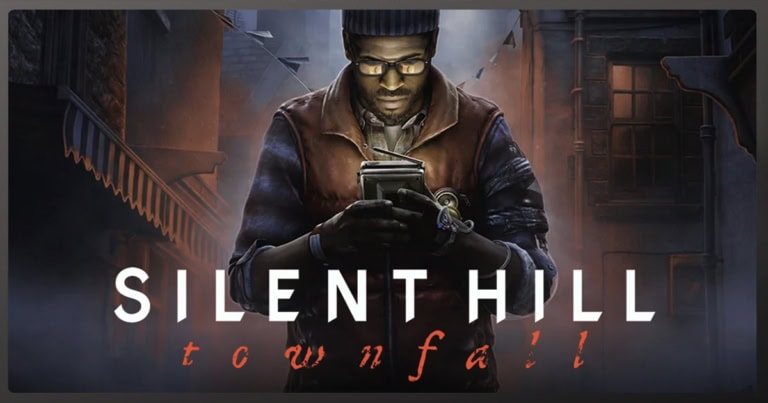
In the Silent Hill series, the name of the town was never the most important part of the games. What really mattered was the feelings those games brought out in the players: uncertainty, guilt, fear, disturbing symbolism, and the sensation that something bad will happen. Silent Hill: Townfall takes that idea further than most recent games, moving the series to the fictional coastal town of St. Amelia in 1996, Scotland. It also makes another major change by becoming the first full-length Silent Hill game presented entirely from a first-person perspective.
On paper, those decisions could have made Townfall feel disconnected from the overall idea of the popular franchise. Instead, these changes give the game a personality of its own. It is not trying to be another Silent Hill 2, and that is probably its biggest strength.
With Townfall, the psychological horror becomes more effective, creating its own rules and atmosphere. It is a slower, more intimate horror game that relies heavily on atmosphere, exploration, and the uncomfortable feeling that there is always something waiting to hurt you.
[Warning: Spoilers from the game are below! I played this game on PC. While I am reviewing this game independently and honestly, it should be noted that it has been provided to me by Screen Burn for the purpose of this review.]
Story of Silent Hill: Townfall is set in an entirely new place, era, and society
Silent Hill: Townfall begins with Simon Ordell washing ashore at the marina of St. Amelia, a Scottish fishing community that has been devastated by a mysterious tragedy. Simon is an outsider, but the longer he remains on the island, the clearer it becomes that his presence is not accidental.
The game deliberately refuses to explain everything immediately. Instead, we have to understand the story through conversations, pickable objects, environmental clues, strange radio transmissions, and increasingly disturbing visions. The mystery surrounding Simon, St. Amelia, and the people connected to the town, forms the foundation of the entire experience.
Silent Hill stories are at their best when the player is allowed to discover the meaning behind the secrecy rather than simply being told what happened. Townfall constantly encourages you to question what is real, what is a false memory, and what may be a manifestation of guilt.
Simon’s journey is therefore less about physically escaping the island and more about understanding why he has been drawn there in the first place. His relationship with the people connected to St. Amelia, particularly Zoe and Richard, gradually reveals a much larger story about suffering, responsibility, and the consequences of trying to bury traumatic experiences.
Much of the story is intentionally cryptic. Notes, conversations, and environmental details are all connected, and many of the game’s secrets become more effective because the player has already spent hours noticing seemingly insignificant details.
The game’s story also benefits from not explicitly defining every supernatural element for the player. There are moments when we are expected to interpret what we are seeing rather than receive a definitive answer. And this works because we immerse ourselves in the world so we can experience it in a much better way.
Silent Hill: Townfall eventually brings its central ideas together effectively. Its story is ultimately focused on the feeling of remorse, responsibility, and the destructive consequences of refusing to confront the past.
Gameplay is unique compared to the franchise’s previous titles
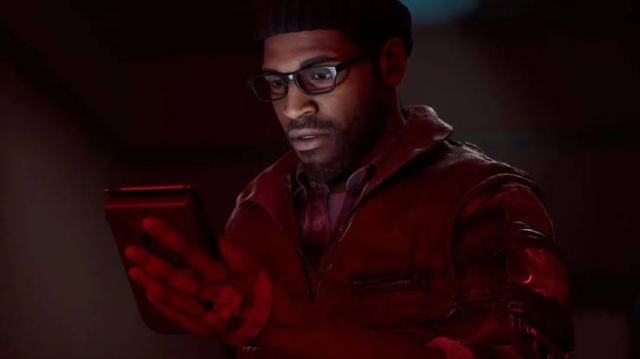
The biggest gameplay change is obviously the first-person perspective, and it thoroughly changes how Silent Hill feels. Previous games generally used the third-person camera. Townfall removes that distance. You see St. Amelia through Simon’s eyes, which makes exploration significantly more personal and uncomfortable. Looking around a dark room becomes scarier because you cannot simply rely on a distant third-person camera to reveal everything around you.
Townfall is built primarily around exploration, puzzles, and stealth rather than constant combat. Weapons are available, but they have limited ammo and are unreliable enough that fighting usually feels like a last resort. Melee weapons can break after relatively few encounters, while firearms are valuable because ammunition is limited. Stealth therefore becomes a major part of the experience. Simon can hide behind objects, peek around corners, and duck into small spaces when enemies begin searching for him.
The most interesting gameplay mechanic is the CRTV. This strange portable television acts as both a puzzle-solving tool and a way of detecting supernatural activity. Certain signals can reveal enemies through fog and walls, effectively giving Simon another way of understanding an environment that he cannot completely trust. We can then take time to hide or run.
The first-person perspective also allows the game to focus heavily on small environmental details. You notice old furniture, posters, household objects, and decaying surfaces because the camera is positioned directly inside the world rather than floating behind Simon.
The period authenticity is particularly impressive. Something does not have to look obviously supernatural to be frightening. Occasionally, an abandoned 1990s kitchen with a television still running and some quirky weird noises is more unsettling than a room covered in blood.
Silent Hill: Townfall game rating and final thoughts

Silent Hill: Townfall is an example of how to take an interesting horror premise from a known franchise and turn it into something fresh. We get to discover new locations, meet new protagonists, play with a first-person perspective, and experience a gameplay structure that places much more emphasis on exploration and stealth rather than mindless killing.
But in the end, not every decision brings a perfect result. The stealth can become repetitive, some enemy encounters are more frustrating than frightening, and several puzzles occasionally confuse obscurity with genuine challenge.
Those flaws exist within a game that understands what makes Silent Hill special. Townfall is not frightening because it constantly throws monsters at us. It is frightening. It makes closed spaces feel wrong because it forces us to question what we are seeing and because the story tries to turn the environment into a reflection of its characters’ suffering.
St. Amelia does not feel like Silent Hill, but with a different name. It feels like a real community with a unique history, culture, and memories, which makes its destruction more disturbing. The first-person perspective is equally effective because it removes the distance that has traditionally existed between the player and the protagonist. We are not watching Simon enter the darkness. We are entering it with him. We are hiding from the monsters. We are trying to survive.
Silent Hill: Townfall is not flawless, but it is a confident and atmospheric evolution from the original series. Its best moments are genuinely unsettling, its story rewards patience, and its first-person perspective gives the franchise a different kind of intimacy. For a series that has spent decades exploring the darkness hidden inside ordinary people, moving to an unfamiliar town was undoubtedly the kind of risk it needed. Townfall proves that Silent Hill does not have to return to the same streets to remain Silent Hill.
Fears, unsettling emotions, weird encounters, mysterious characters, scary vibes—it’s all connected. It may not be a perfect world, but it certainly succeeds in what it’s meant to be. A troubling game with scary motives that will make you question whether you want to continue exploring or turn your game off and cover yourself with a blanket so you don’t feel so scared anymore.
Silent Hill: Townfall is now available to play on PC and PlayStation 5.
Also check out: Mortal Shell II Game Review: A Unique Soulslike Experience