‘Tenzing’ Movie Review: A Biopic of Immense Grandeur
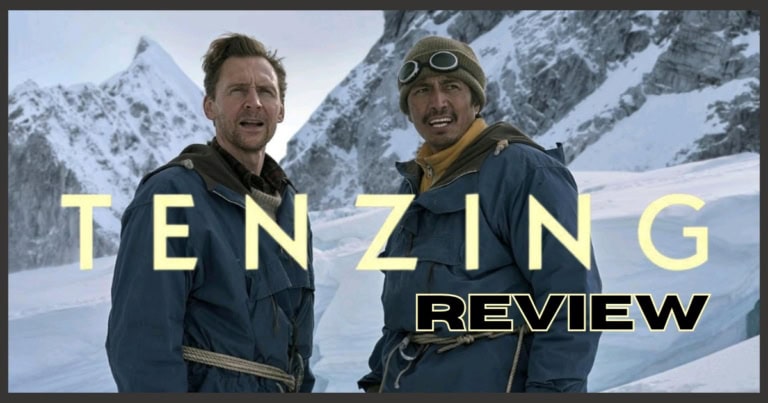
As flawed as Jennifer Peedom’s narrative feature debut, Tenzing, might be, something undeniable about her filmmaking instantly makes me keen to explore her earlier mountain-related documentaries, Mountain and Sherpa. The way in which she visualizes Tenzing Norgay’s (Genden Phuntsok) connection with Mount Everest, or, as he calls it, Chomolungma, is so emotive (almost reaching spiritual awareness). It immediately positions the audience on the mountain’s beauty and dangers before he accompanies Edmund Hillary (Tom Hiddleston) to the very top and makes world history.
The story in Tenzing (2026)
The narrative may be the film’s weakest part. Peedom and screenwriter Luke Davies don’t take many storytelling risks, but they know which aspect of Everest’s ascent to focus on. Not on Sir Edmund, but on the man who made it possible to climb an impossible mountain. This is a dream he’s had ever since he was a boy and met mountaineer George Mallory (Johnny Flynn) before he died in a tragic accident while attempting to summit Chomolungma.
Edmund Hillary and John Hunt (Willem Dafoe) are secondary characters in a movie that shifts its attention to Tenzing, from the cradle to the ascent. Peedom presents this in a non-linear structure, frequently flashing back to 1933, when Tenzing learned English and attempted (to no avail) to become a Sherpa in front of Jill Henderson (Caitríona Balfe) before she eventually took a chance on him.
There are many underdeveloped aspects of that part of the narrative that stick out like a sore thumb, predominantly how severely surface-level both female characters, Jill and Tenzing’s wife, Dawa (Thinley Lhamo), are.
Apple TV’s uneven but bracingly exhilarating adventure film
In fact, most of the flashbacks hamper forward momentum that occurs once Peedom and cinematographer Stefan Duscio present an image of almost overwhelming emotional power, as the sheer magnitude of Everest is contrasted with Tenzing’s small body. All while knowing that this is what he is made to do.
It simultaneously showcases the majesty of such a peak, especially from afar, while also hinting at the horrors that won’t be ignored when the expedition eventually begins. In those sections, the film works at its strongest, not when it tries to further develop Tenzing, but when, in reality, most of that development happens during the film’s main event in 1953.
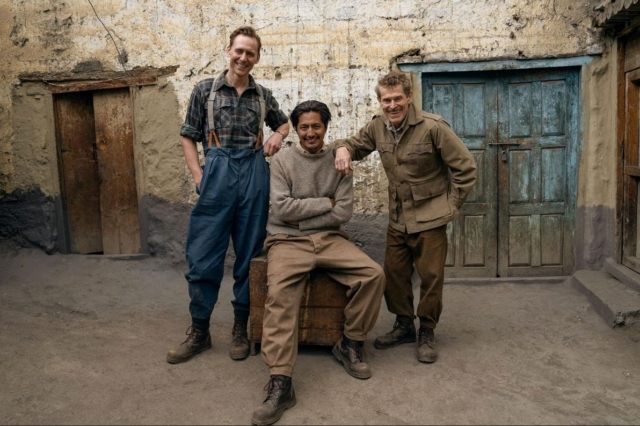
The brief flashback in the opening scene tells us everything we need to know about Tenzing before we see him in action. Did we really need more texture when it repeats things we saw in 1953? I doubt most of it was necessary, especially when you consider how incredible Genden Phuntsok is as Tenzing, portraying his vulnerabilities and pent-up emotions with a smile that instantly hides decades of suffering and hardship.
Just by looking at him, we know that he had a difficult past. That’s the mark of a great actor: saying so much by conveying so little. Spelling out what Phuntsok is doing in flashback greatly reduces his emotional impact, especially when he climbs Mount Everest, and that smile takes on a whole new significance.
But the stuff in 1953 is so damn good. Peedom works in pure classicism, offering us an unparalleled lesson in visual (and spiritual, I’ll say it) storytelling that is unmatched in our direct-to-streaming economy that has forgotten the real power that IMAGE-making holds.
Several Everest-related sequences are bracingly exhilarating, from the way Peedom alternates between the subjective and objective viewpoints of the climbers (illustrating hypoxia in an extremely legible way is difficult to pull off) as they explore uncharted territory.
Tenzing film rating and final thoughts

The terrain is so new that historians might enjoy how Peedom depicts the discovery of the Hillary Step, the last section before reaching the previously thought-impossible summit. It’s as crowd-pleasing and rudimentary as you think, but the craft of portraying this journey is so undeniable that it won’t be long before you ultimately get swept away in this historic moment of exploration.
It also helps that both Tom Hiddleston and Willem Dafoe are strong in supporting roles. Although, that was probably expected.
What’s most impressive is how Peedom’s respect for the work of sherpas and her innate curiosity about the very nature of wanting to climb peaks that seem ridiculous to even attempt inform how she depicts the story of Tenzing Norgay. It’s a massive success for a documentary filmmaker whom I hope will make more narrative features and further expand on the language she developed in her documentaries to show the world what they’ve been missing all along.
Nothing is greater than a movie that reminds you why no art form will surpass it. As ordinary as Tenzing’s narrative might be, it doesn’t matter once you reach the top with two figures who changed the course of exploration forever.
Tenzing is now streaming on Apple TV.
Also check out: Sally Review (Sally Ride Documentary)