‘The Hunger Games: Sunrise on the Reaping’ Review: Gorgeous, Flawed, and Mesmerizing
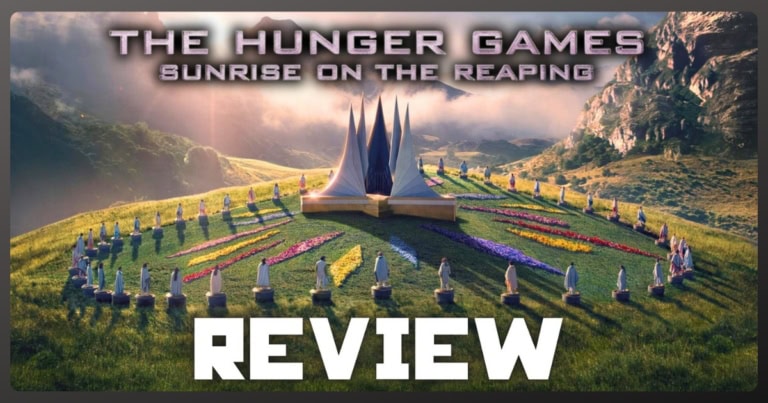
The Hunger Games franchise has roared back to life in the 2020s thanks to two unexpected prequel novels. The Ballad of Songbirds and Snakes evolved the franchise through a more adult novel that subtly enriched Katniss Everdeen’s story while diving deep into villainous President Snow’s mind. More recently, Suzanne Collins’ Sunrise on the Reaping ran back Catching Fire’s greatest hits in a slightly juvenile, fan service-stuffed story about Haymitch Abernathy’s victory in the Second Quarter Quell that seemed written to be developed into another movie.
So how is that movie? Hitting theaters worldwide on Friday, The Hunger Games: Sunrise on the Reaping is one of the most gorgeous films I’ve ever seen. The film improves many of the book’s weakest aspects while strangely weakening its best moments when it’s not outright removing them.
Anchored by mesmerizing star turns from Joseph Zada and McKenna Grace, the film features the best visuals and maybe the best (young) acting of any Hunger Games entry while focusing a muddled novel into a tighter film with strong themes.
The Sunrise on the Reaping movie gets better and worse on screen
Fans have waited years for Haymitch’s story to be told in full after getting the abridged version in the Catching Fire book. Set against the backdrop of Panem’s second Quarter Quell, the special edition of The Hunger Games that only happens every 25 years, Haymitch Abernathy finds himself caught in Snow’s poisonous arena with a rebellious plan in mind. That plan gets pretty messy and comes with deadly consequences, but this story works better on film in many respects than it did on the page.
It’s both a gift and a curse that films can’t fully bring a first-person character perspective to life. For Katniss, it meant that much of her complex internal thoughts were forced to come across extremely subtly onscreen, relying on Jennifer Lawrence’s face acting alone to convey them. For Haymitch, it means that his contradictory characterization in the novel is thankfully streamlined, allowing Joseph Zada to bring a much more consistent presence to the screen.
The districts’ implicit submission to barbaric rules and the Capitol’s reliance on carefully staged and edited propaganda to maintain control are central themes of Sunrise on the Reaping. Haymitch’s struggle with these topics and how his actions affect his loved ones slowly shape him into the character Woody Harrelson played so well in the original series.
Joseph Zada fills those shoes shockingly well, bringing a nuanced emotion to Haymitch that Harrelson never got to explore since Haymitch became quite the master at repressing his emotions.
While the propaganda theme of the novel didn’t land properly since similar concepts were already covered in The Hunger Games, it’s much more effective on film. That’s mostly because The Hunger Games film adaptation stripped those aspects out, but at least it works in Sunrise on the Reaping’s favor.
By the end of the film, there’s a great parallel established between how Plutarch worked Haymitch into his propaganda for the Capitol versus Katniss into his propaganda for District 13.
The goriest Hunger Games book to date, this film adaptation strips out much of the violence seen in the novel and its preceding film, The Hunger Games: The Ballad of Songbirds and Snakes. It’s an understandable choice; some kills Suzanne Collins wrote simply couldn’t be put on screen with a PG-13 rating, but the filmmakers aren’t creative enough to write interesting new material to fill those gaps.
That speaks to a bigger issue with the film. The adaptation changes the weakest parts of the novel for the better but simultaneously changes the best parts of the novel for the worse.
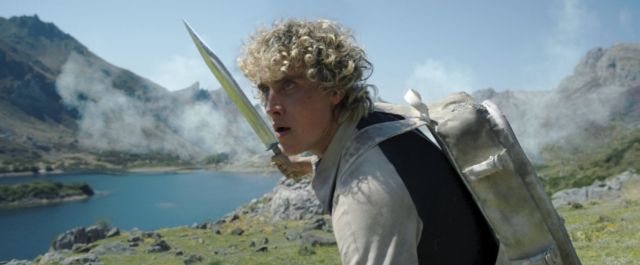
Haymitch’s relationships with key characters are either threaded better throughout the film (Lenore Dove) or kicked to the side even more than they were in the novel (his mother and brother). His bond with other tributes remains strong up to a point; he never forms a key sibling-like relationship that makes his losses even more devastating.
A great montage at the end of the film improves the dour tone of the novel’s conclusion before cutting to a final shot and an epilogue that both feel like an SNL sketch. Maybe that’s a bit dramatic, but the novel’s melancholic and bittersweet epilogue was a much stronger ending to Haymitch’s story despite its drawbacks.
Fans will love seeing younger versions of many supporting characters from the original films, and they’re integrated much more naturally in the film than they were in the book. Part of that comes down to the film’s pacing. It’s breakneck in the first act, with scenes moving so quickly and characters spitting out so much rapid-fire exposition that unfamiliar viewers might become easily discombobulated.
The pacing evens out in the second and third acts, and these returning characters naturally slot in for small appearances. In the novel, readers sink into a world without them until they appear with spotlights on to overtake scenes with their future importance.
As a result, the film flows well in its second and third acts (apart from some compression at the end of the Games). A few key changes make Sunrise on the Reaping a much tighter story on film than it was on the page, with a stronger thematic focus at the expense of further developing some of Haymitch’s relationships. Speaking as a diehard Hunger Games fan, these changes need to be discussed in-depth and with full spoilers, so stay tuned for a separate article about them in the coming days.
Also check out: Coriolanus Snow’s Journey in Songbirds and Snakes Reframes Original Hunger Games
The most technically impressive Hunger Games film
Without a doubt, where Sunrise on the Reaping shines the most has everything to do with what you’re seeing on screen. The performances, the production and set design, cinematography, and color grading are all off the charts.
As a dystopian franchise, The Hunger Games has never had particularly awe-inspiring design choices until now. The 70s-themed Capitol brings an incredible amount of flair to Panem. The trains, the hovercrafts, the costumes, even the lamps—every inch of Haymitch’s Panem has been transformed into a vibrant feast for the eyes. Hunger Games costumes and makeup are always excellent, and the same remains true here, but it’s the locations and small set decoration choices that really set this film apart from the others.
After so many years of desaturated color grading in blockbuster movies (sorry, Wicked), Sunrise on the Reaping is here to show why color matters. Sweeping sequences like the chariot ride, entrance into the arena, and volcano explosion dazzle your eyes with their vivid and dramatic presentation. Enough can’t be said about the audience’s first look at the arena, which leapt off the IMAX screen in an absolutely immersive way that the trailers simply couldn’t convey. The only other times I’ve ever felt like I could reach out and fall into the screen like this are during Avatar films in IMAX 3D.
Even the cinematography is a step up from previous Hunger Games films. One scene in particular between Haymitch and Lenore Dove stands out as a perfect dream sequence, akin to the fire-filled nightmare Katniss describes in the Mockingjay novel that wasn’t brought to the screen. The way the actors are filmed, especially in close-up shots, stands out as well and serves to really drive home their emotions.

Standout performances in the film
Speaking of the actors, the performances in Sunrise on the Reaping are excellent across the board. Joseph Zada anchors the film with the required intensity and dramatic presence a lead actor should bring. He doesn’t feel like young Woody Harrelson, but he does feel like a young Haymitch, which is the ideal outcome.
On the other hand, McKenna Grace is so incredibly electric as Maysilee (and Merrilee) Donner that she could leap off the screen and into real life. There’s never been a performance quite like Grace’s in a Hunger Games movie. All the more shocking given the franchise’s famously strong female leads, Grace brings an entirely new energy to these films. That’s fitting for a character who’s also entirely unique. Although it’s such a standout performance that you can’t help but lament Maysilee’s lack of screen time in the film’s third act, especially if you’ve read the novel and understand what we lost.
If The Hunger Games was the kind of franchise that could be recognized for its acting performances, McKenna Grace would be marching her way to the front of the line for supporting actress consideration at at least some awards shows.
Whitney Peak turns in another surprisingly strong performance. Lenore Dove is her own character, but Peak channels Rachel Zegler’s Lucy Gray Baird so intensely in her voice and expressions that it’s like Lucy Gray’s ghost is speaking to Haymitch through Lenore Dove’s face. It was a surprising take on the character that made me appreciate her a bit more after finding her characterization a little lacking in the novel.
Glenn Close and Elle Fanning are pitch-perfect as Capitol citizens working with the tributes of District 12. Close’s Drusilla Sickle is the best Capitol citizen ever realized on screen, finally bringing their grotesque book description to life through her appearance, outfits, and demeanor. Fanning truly is the ultimate Effie Trinket casting, bringing her younger version to life without doing an impression of Elizabeth Banks. She’s used sparingly but very well.
Jesse Plemons is similarly good as Plutarch Heavensbee, filling the shoes of the late Philip Seymour Hoffman. Plemons is never fully unleashed, which is a bit of a shame, but his final monologue in the film lets him shine brightly enough.
Ralph Fiennes is a great actor, so it’s hard to say he’s not good, but he simply isn’t right for President Snow. Donald Sutherland and Tom Blyth brought a quiet intelligence and a cold, calculating presence to the character.
Fiennes is the odd one out, seeming more quietly confused than smart. He walks around the movie looking nothing like Snow should: the wrong hair color, no facial hair, and a baffled look on his face like he just doesn’t speak the same language as everyone else around him. There are glimmers of greatness in his conversation with Haymitch, but Fiennes is held back by a terribly-written scene that was awful and character-breaking in the novel and remains awful in the film for similar reasons.
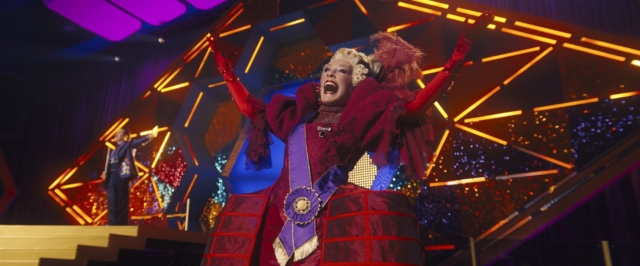
Kieran Culkin does a fine job playing a psychotic version of Lucky Flickerman from The Ballad of Songbirds and Snakes, but he’s not Caesar Flickerman. Much like Fiennes as Snow, Culkin’s appearance and demeanor do not match Caesar at all. It’s all the more frustrating given how consistent Caesar is supposed to be across decades of Hunger Games hosting. Culkin’s performance is funny and energetic, but he’s simply not playing the character he’s supposed to be.
Standout tribute actors include Molly McCann as Louella McCoy and Percy Daggs IV as Ampert Latier, two tributes that form a close bond with Haymitch. Both bring a quiet intensity to their roles with layers of nuance for such young actors.
Iona Bell is well-cast as Lou Lou but doesn’t make as much of an impact because many of her scenes are trimmed down. The same goes for Laura Marcus as Silka Sharp and Rada Rae as Wellie, who are both entirely robbed of key scenes in the finale that should have been standout moments for them as actors.
Ben Wang unfortunately doesn’t register at all as Wyatt Callow, the fourth tribute from District 12. Wyatt has a small role to begin with, and Wang’s performance does nothing to make him stand out beyond what’s written on the page. He’s completely miscast as the character, not fitting Wyatt’s vibe as described in the novel and adding nothing unique to his interpretation onscreen.
Finally, the other victors and mentors in the Games are well-cast but don’t have enough screen time. Kelvin Harrison Jr. is the best as Beetee Latier, although he feels like a drastically different character from Jeffrey Wright’s portrayal in the original series (to be fair, the novel had the same issue). Lili Taylor is great casting for a younger Mags Flanagan, and the same goes for Maya Hawke as Wiress, but the two simply don’t get enough scenes to really make an impact.
Also check out: The Hunger Games: On Stage Review
The Hunger Games: Sunrise on the Reaping works better as a film than the book
The Hunger Games: Sunrise on the Reaping is the prequel film that most fans have been begging for since day one. It’s a crowd-pleasing journey into the darkest depths of Panem that’s much more focused on screen than it was on the page.
There are very few book-to-movie adaptations I’d give that description to. But from the moment I read Sunrise on the Reaping, I expected it to work better on film because the novel was clearly written for the purpose of this adaptation. What I didn’t expect was that the strongest parts of the book would be removed or dulled down for the film adaptation.
A similar problem plagued The Ballad of Songbirds and Snakes; small changes to certain scenes and characters dramatically changed the impact of the story. By not repeating the same mistakes as Ballad but keeping its improvements to the novel, Sunrise on the Reaping could have become the definitive Hunger Games prequel film.
For many viewers, it likely will be. Ballad only brought in about half of the worldwide box office of the lowest-grossing Hunger Games movie. And credit where it’s due: nothing that Ballad changed really improved its story, while Sunrise makes some adjustments that truly serve the film better.
The Hunger Games: Sunrise on the Reaping is a very entertaining time at the movies and a return to the over-the-top drama that defined the series’ most popular installment, Catching Fire, so it’s certainly worth seeing in theaters. I just hope we all get to see the four-hour cut of this movie one day!

- Film Title: The Hunger Games: Sunrise on the Reaping
- Director: Francis Lawrence
- Writer: Billy Ray, Michael Lesslie, and based on the book by Suzanne Collins
- Cast: Joseph Zada, Mckenna Grace, Glenn Close, Kieran Culkin, Whitney Peak, Elle Fanning, Jesse Plemons, Ralph Fiennes
- Genre(s): Adventure, Fantasy, Sci-Fi, Thriller
- Rated: PG-13
- Running Time: 158 minutes
- Theatrical Release Date: November 20, 2026 (United States, United Kingdom, Canada)
- Reviewer’s Score: 3.5 out of 5 stars