‘Ramayana: Rise of a Legend’ Review: A Technical Masterpiece Dragged Down By Part One Problems
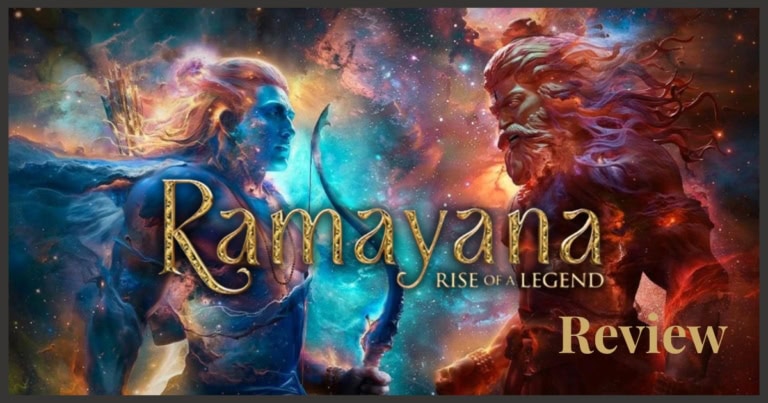
The budget of Nitesh Tiwari’s Ramayana: Rise of a Legend is ridiculous. The budget is as high as $500 million in American money, which is extreme given how risk-averse Hollywood has gotten. In India, it’s already the country’s most expensive movie. The two-part epic has imported top-tier Western talent to bring Valmiki’s poem to life—a vision as ambitious as Peter Jackson’s The Lord of the Rings or Denis Villeneuve’s Dune.
Among others, Ramsey Avery, who worked on the first season of Prime Video’s The Lord of the Rings: The Rings of Power, is a production designer; Terry Notary is an action director and motion capture consultant; and Hans Zimmer is a co-composer alongside A.R. Rahman.
Sadly, beyond the film’s obvious craft, Ramayana: Rise of a Legend mostly suffers from an uneven structure that can’t seem to overcome its glaring “part one” issues. Because, yes, Rise of a Legend is the American title to mask the fact that this film is nothing but a part one, and audiences will spend almost three-and-a-half hours with endless exposition dumps.
The IMAX 3D uncut original Hindi version of Ramayana: Rise of a Legend
Sony is also releasing an English-language dub of the film alongside its original Hindi version in North American theaters. The Western cut is 30 minutes shorter than the full-length 195-minute feature and uses AI-generated lip-syncing. It’s also the version shown to Western press, and it predictably received a terrible critical reception in the United States.
Rest assured, this critic saw the full-length, uncut, uncompromised, and undistorted Hindi version of Ramayana: Rise of the Legend (in IMAX 3D, mind you), and the review is based on that version. Technical stuff like this usually doesn’t need explaining in critical writing, but it would’ve been terribly unfair to see a bastardized version of a movie that isn’t made for Western audiences.
Hindu mythology and scripture isn’t necessarily something that this critic is familiar with, but mythopoeia is one of the main elements I am fascinated by. The opportunity to see a blockbuster with such gargantuan scale is too good to pass.
An unimpeachable technical masterpiece
Ramayana: Rise of the Legend tracks the origin stories of Rama (Ranbir Kapoor) and Ravana (Yash), an archetypal good-versus-evil story within a mythological tapestry spanning centuries. Rama is the seventh avatar of God Vishnu, while Ravana becomes King of Lanka after Brahma grants him invincibility from supernatural beings. The film’s opening half hour or so is devoted to Ravana’s backstory: a young teenager named Dashanan, tormented by the Asuras’ defeat by the Devas.
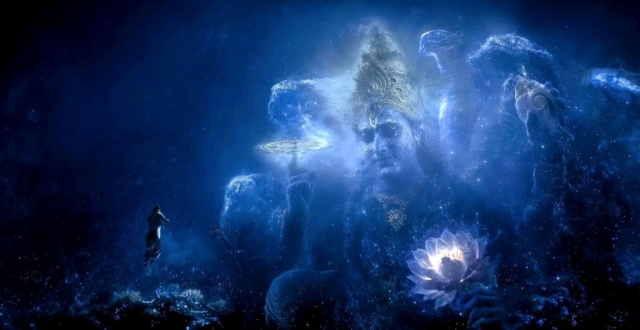
Dashanan’s punishment, visualized as a tree decimating everything in its wake, is one of the film’s many spiritually charged tableaux that linger in our memory. Tiwari has a keen sense of scale and scope and understands the enormity (and challenge) of bringing such a sacred text to life.
Shot entirely on IMAX cameras and using 3D to its most immersive effect in any film not named Avatar, the film has no shortage of jaw-dropping visual (and digital) compositions and thrillingly juxtaposes unwieldy religious imagery with a true sense of the otherworldly.
The mechanics of Ramayana’s vast (and magical) world make sense in the context of the production and frequently stun our senses when Tiwari and his cinematographers, Pankaj Kumar and Mahesh Limaye, represent a concept in a single image. So, when one lingers with Dashanan punishing himself, it’s hard not to be moved by what’s on screen.
It’s also hard not to feel the palpable energy in Yash’s career-best performance as Ravana, especially during the Ravana Tandav earlier in the movie. Whenever he’s on screen, Ramayana: Rise of a Legend lifts up with a real sense of urgency that isn’t palpable when the film entirely focuses on Ram’s story and his courtship with Sita (Sai Pallavi). Yash has a real alluring power that he perfected by playing with the camera in Prashanth Neel’s KGF duology, which Kapoor sadly can’t match in a movie that paints this divine figure as stoic and emotionless.
That might have been how he was depicted in the poem, but such a figure doesn’t translate well to an extremely long movie when you’re asked to spend considerable time with him and Sita. There needs to be an emotional anchor beyond the broad strokes we’re shown about his feats of derring-do and the way he’s able to bridge gaps and unite people as a figure of light, while Ravana’s darkness begins to consume him. This is thrillingly represented in 3D when going inside his “eye” and seeing the different sides of his personality that influence—or corrupt—him, since they all reach towards the same objective.
If one is to spend much time with the character, connection is important, either direct or visual. But the images, while incredible, don’t have much significance when the action stops dead in its tracks. If one connects more to Yash’s fiery performance than an actor who has always had difficulty playing with the camera, it’s difficult to remain invested in a story that technically dazzles but leaves little impact once the credits have rolled.
A part one that’s too busy setting the next film up
Rise of a Legend also suffers from the great part one-ism of table setting and endless exposition instead of caring about the movie you’re making. It’s a film that speaks of the future, specifically of the second part set to be released in 2028.
For example, the character of Jatayu (Anupam Kher), after a climax of immense technical skill and wizardry, dumps a bunch of exposition on Ram, which teases what’s to come in the second film. And most characters function like this. They have no identity of their own but to tell audiences what’s going to happen in a hopefully much better entry than this, but they’ll have to wait two years to get to what some have referred to as “the good stuff.”
None of this would have been a problem if Tiwari had made his exposition sound less like plotting, but it has sadly hampered lots of Indian “part ones” in recent memory. Mani Ratnam’s Ponniyin Selvan: I suffered from that same problem. The second entry, by contrast, was incredible.
Or how about the greatest mythological tapestry India has seen this past decade? When S.S. Rajamouli excised a considerable amount of Baahubali: The Beginning for Baahubali: The Epic, it somehow made his bloated and uninteresting first part so much better, with pacing that actively made sense and scenes that felt less expository. Baahubali: The Conclusion, on the other hand, is an unimpeachable masterpiece that completely reinvents the language of cinematic mythmaking.
Ramayana: Rise of a Legend film rating and final thoughts

Ramayana: Rise of a Legend might have the money to show us images (and well-defined creatures) we haven’t seen on film before, but it doesn’t feature characters crafted with tangible emotional power in the same vein as the greatest living Indian filmmaker. Here’s hoping Part II of the story will be a better and more daring entry than a movie that seems poised to be remembered as a marvel of production design, craftsmanship, and stereoscopic filmmaking, but not much else.
Also check out: La Bola Negra Film Review