‘Wildwood’ Review: A Stop-Motion Game Changer
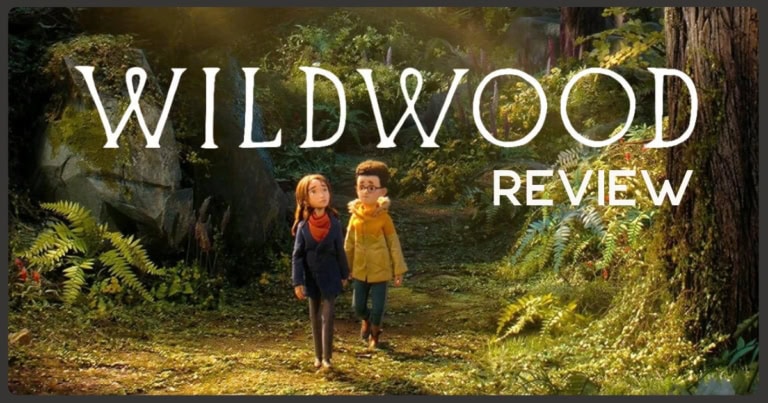
Wildwood is an extremely mystifying experience. For most of the runtime, Laika Studios kept me in a constant state of questioning. Not in terms of plot or character beats, but in how exactly any of this is possible. As a studio, Laika has always been in a league of its own, creating exceptional visual masterworks in stop-motion animation. However, their 2026 film Wildwood pushes the envelope like we have never seen before.
The story isn’t as strong as other works like Kubo and the Two Strings or even Coraline. But technically, director Travis Knight has achieved something truly innovative here. Like James Cameron’s work on Avatar, the craftsmanship on display will move everything forward.
What is Wildwood about?
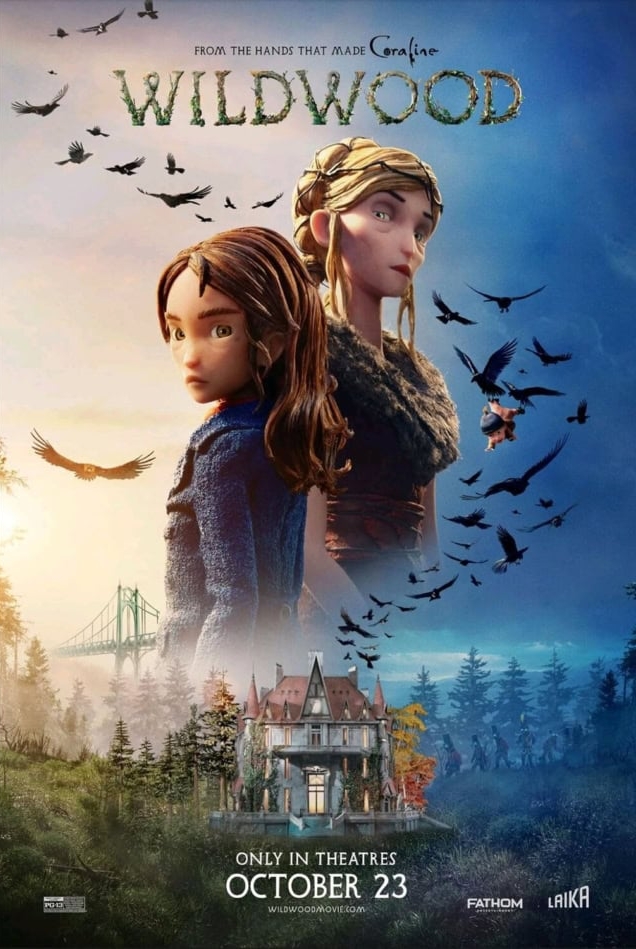
The film’s story, written by Chris Butler (Paranorman, Kubo and the Two Strings) and adapted from a book by Colin Moloy, centers on a teenager named Prue (Peyton Elizabeth Lee), who lives with her mom (Maya Erskine) and dad (Jake Johnson) in the laid-back city of Portland, Oregon.
Prue’s mom and dad are hippie-ish and come across as socially conscious right away. For example, Prue has a baby brother named Mac, and his parents say he can grow up and marry whoever he wants, and they can’t wait to meet him or her. In this moment, we begin to understand that Laika is making a more mature film that tackles broader, bolder topics.
Prue eventually takes her baby brother out for a walk in the stroller. But her parents insist she stay away from the forest because it’s unsafe. And while out on the town, Prue respects their wishes. Here, we meet Curtis (Jacob Tremblay), a kind-hearted, geeky kid who often talks about Dungeons & Dragons and seems to have a soft spot for Prue. However, Prue doesn’t see him in the same light.
Curtis and Prue enter a playground, and when Prue gets distracted for a moment, a murder of crows begins to gather strangely around her baby brother, Mac. Before she can act, the crows swarm Mac and carry him off into the forest. This sequence is the first of many breathtaking chase scenes that showcase Wildwood‘s visual ambition. Prue races on a bike through busy intersections and pathways with immense stop-motion detail, while the creatives at LAIKA depict a sea of crows carrying a screaming child across a distant blue sky.
The spectacle ends as Prue and Curtis find a magical entryway into the forest, where everything seems impossible, including encounters with talking coyotes, hawks, and more. Prue soon discovers that her brother Mac was kidnapped by Alexandra (Carey Mulligan), a woman with a tragic past who fell into dark magic after her son died.
Laika and Travis Knight’s slightly overcrowded story
Wildwood’s only real issue is its character overload. Once we enter the new realm, we meet an expansive cast of personalities, including a rat played by Awkwafina, an owl played by Richard E. Grant, and a group of bandits, including Brendan, voiced by Mahershala Ali. And that barely scratches the surface of the film’s cast.
The choice feels intentional and matches the film’s scale. They clearly aimed for a sprawling cast to tell an equally sprawling story and make it feel like an animated epic. However, the choice makes our attachment to Prue feel colder and more distant than it should.
That said, it doesn’t completely hinder the experience because most of these characters are written with heart. More impressively, Butler’s screenplay isn’t afraid to raise the stakes, using the PG-13 rating to show that some of these fantastical characters can die. But with so much going on, it’s unfortunate that it makes the viewer feel less attached to Prue. She is supposed to be the emotional anchor of the story; aside from her intentions to sacrifice a baby, you almost feel more for Alexandra as a villain.
Wildwood movie rating and overall thoughts

Despite the overcrowded narrative, Wildwood is an undeniable achievement in animation. The film offers an array of incredible moments, from ground-level chase sequences to aerial set pieces. But in the grand finale, Laika breaks the sound barrier in stop motion.
As the story builds to a rising conflict, director Travis Knight pushes his animators to realize a full-scale war between every character in the realm. The detail is mind-numbingly complex, and it’s one of the few sequences in recent memory that made me question how any of it was possible.
There is obviously some use of visual effects, but it is extremely difficult to tell where it begins and where the stop motion ends, which is absolutely incredible. Designing a war sequence is already a brutal undertaking with live-action performers, especially when it comes to choreographing the combat. But the amount of work required to execute the same principle in stop-motion animation is hard to imagine. Yet Laika makes the whole effort look so easy. For this reason, Wildwood is almost guaranteed to win Best Animated Feature.
As narrative experiences, I still prefer Coraline and Kubo and the Two Strings. Both titles remain Laika’s best films, balancing unforgettable stories with boundary-pushing stop-motion storytelling. Still, Wildwood is one of the studio’s great achievements, delivering visually arresting scenes we never dreamed possible in stop-motion features.
Also check out: Shaun the Sheep: The Beast of Mossy Bottom Review