‘All You Need Is Kill’: A Beautifully Animated, but Tired Timeloop Film
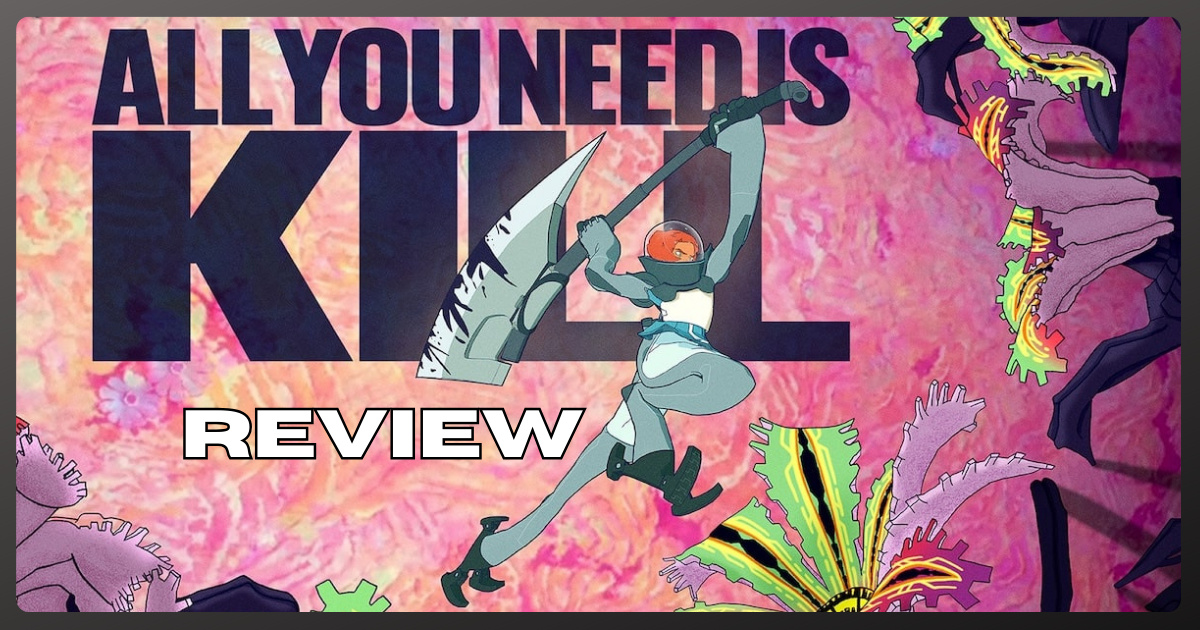
It feels strange that Doug Liman’s Edge of Tomorrow, the American adaptation of Hiroshi Sakurazaka’s All You Need Is Kill, is somehow better than Kenichiro Akimoto’s more faithful and less Hollywoodized 2026 transposition for Japanese audiences. There’s no denying Studio 4°C is an animation powerhouse, but the timeloop has become the most stale and unimaginative subgenre that’s always in need of a formal (and thematic) reinvention.
In the wake of Alexander Ullom’s It Ends, which had a release on the Letterboxd Video Store last month and will bow out in cinemas through NEON later this year, a movie like All You Need Is Kill feels incredibly pedestrian; especially considering how it offers nothing the audience hasn’t seen before.
The story in All You Need is Kill
Of course, if you’ve seen Edge of Tomorrow, the story beats of All You Need Is Kill are largely similar, yet the ending is a tad emotionally different and perhaps better than Liman’s adaptation. In any event, the brisk 85-minute feature never gives us something to chew on and seems desperate to end as soon as it begins.
The film puts us inside a never-ending montage where protagonist Rita (Ai Mikami) attempts to get out of a timeloop caused by the emergence of the Darol, an extraterrestrial creature that landed on Earth a year ago and stayed dormant before wiping out the planet on its first anniversary.
No matter what she does, Rita always dies, and we see her attempt to defeat the aliens like someone perfecting their techniques on a video game after being respawned time and again. It’s beautifully animated but amazingly tiresome.
When this gets quickly tedious, a male protagonist, Keiji (Natsuki Hanae), is introduced, who is also stuck in the same loop as Rita. Together, they will find a way to get out of it without the audience’s investment, because Akimoto seems eager to conclude this story as quickly as it begins.
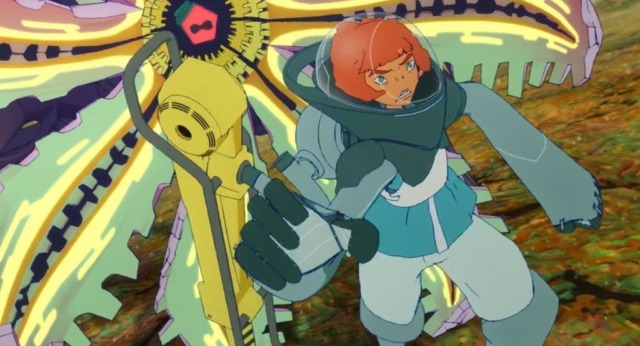
The biggest drawback of All You Need Is Kill is its runtime: a lean-and-mean 85 minutes, which wouldn’t have been a problem if it had responded to the story’s needs in that time. Yet, it barely feels like a complete film.
We have no moment of introspection where the audience will connect to the protagonists at a cellular level; most of the beats visualized are repetitive and have little emotional impact. The climax, which should theoretically instill awe and strong emotions within the audience, doesn’t really work.
A film with beautiful animation that offers not much else
Don’t get me wrong: this is a beautifully animated movie. There’s doubt in my mind that any animated film (anime or otherwise) released this year could top Studio 4°C’s staggering work in All You Need Is Kill. The colors are eye-popping and mind-melting, and the employment of depth of field and perspective makes the world drawn feel incredibly textured and three-dimensional. The action is hyperkinetic and incredibly stimulating. It’s also surprisingly violent, unlike the Tom Cruise/Emily Blunt-starring live-action adaptation.
On some sparse occasions, Akimoto draws a relatively bleak conclusion to the planet’s fate, which could parallel the direction Earth is going if it continues to exploit its own natural resources and doesn’t take care of the planet giving them life. This commentary should be ripe for exploration, but Akimoto stays within the confines of the dull, one-note relationship between Rita and Keiji, which doesn’t reach the emotional apex its filmmaker wants.
If there’s one thing All You Need Is Kill makes the case for, it’s that critics of the timeloop genre may be the most vindicated people in the world right now. It’s a tired, boring film type that should always reinvent its structure rather than simply repeat the beats audiences expect. And there’s nothing this movie does differently from its counterparts or from the live-action adaptation that took many creative liberties from Sakurazaka’s original text.
Usually, the more faithful (and local) adaptation wins over Hollywood, but All You Need Is Kill is the rare case where Liman’s film is far more exciting (maybe not aesthetically, but certainly thematically) than Akimoto’s animated offering. It may not be as visually stimulating as the one currently playing in cinemas, but it’s a far richer and more entertaining timeloop than the brisk, but undercooked movie that ended up being the “definitive” transposition of Sakurazaka’s source material.
That said, the animation is far too good to be dismissed, and if there’s any movie currently making the case that “animation is cinema” more than any other, it might just be this one. So it’s not terrible, but definitely not the finished product one hoped it might have been.
Also check out Demon Slayer: Kimetsu no Yaiba – The Movie: Infinity Castle Review: Setting the Stage for an Epic Finale