‘Clayface’ Review: A Messy and Meaningless Spin-Off
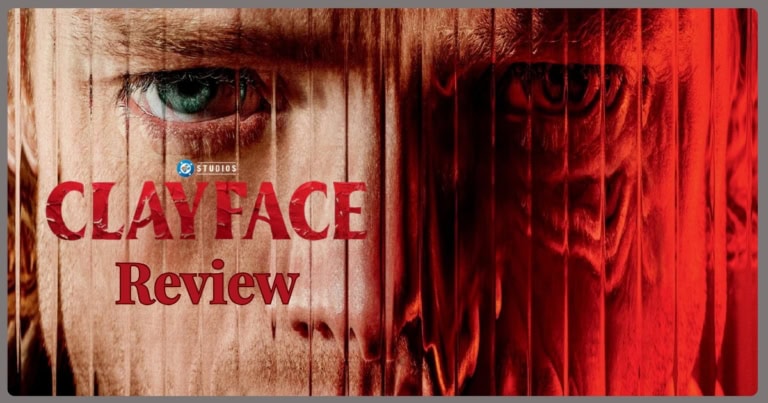
DC’s Clayface is a character I’ve loved since childhood. There was something incredibly cool about a villain with shape-shifting abilities like the T-1000 from Terminator 2, plus the ability to manipulate his enemies through acting. Not to mention, Clayface had a truly tragic backstory that made him sympathetic. He was always my favorite from the 1990s animated series. DC didn’t really have to do much to make me love a movie about this character, and yet, the latest from DC Studios doesn’t quite shape together the way it should. Clayface is not as terrible as other solo properties like Morbius or Kraven the Hunter. But for a film with a writer like Mike Flanagan behind it, Clayface is neither memorable nor trying to accomplish anything meaningful in its setup. In addition, it feels like a movie that should have been longer and was overly chopped in the editing room.
What is DC’s Clayface movie about?
Clayface centers on Matt Hagen (Tom Rhys Harries), an actor on the rise in mainstream Hollywood. He has the hottest movie in town, and everyone, including interviewers, beckons him to quote his iconic line; when he does, it sounds ripped straight from other movies. Something like, “I’m coming back, and hell is coming with me.”
After receiving more accolades, he finds himself in the club celebrating his achievements. Here, Matt is approached by Mia Torrez (Joana Ribeiro), who tries to seduce him on the dance floor. His friend Corey (Joshua James) warns him that Mia is a crime boss’s girlfriend, but she still ends up in his bedroom. The next morning, he is surrounded by Markos Szabo (David Dencik) and his henchmen, and they mutilate his face as punishment.
Clayface shows its first signs of weakness in Matt’s disfigured phase. He tries to pursue charges against Markos, but for some reason the public believes Matt is to blame. In the court of public opinion, he becomes a pariah.
Most of this isn’t explained well and is hand waved narratively. On top of that, it’s very difficult to believe anyone would blame Matt for the incident, given the extreme nature of his injuries. In this early section, it feels like a few scenes were removed, taking away important context for the setup.
Then Matt discovers a possible cure from an innovative biotech scientist named Caitlyn Corr (Naomi Ackie). She invented a technology that uses nanocells to repair tissue. Matt pushes to be the guinea pig for human trials, and when Caitlyn finally agrees, the injections perform rather smoothly at first. That is until small side effects begin to show themselves. For instance, when someone who has wronged him confronts him, Matt’s face begins to droop bizarrely, as if his skin could fall off. Caitlyn realizes the nanocells react strangely when Matt shows extreme emotions.

This does not feel like a Mike Flanagan script
The thing about a Mike Flanagan screenplay is that it goes beyond standard horror. It’s not just about the terror, but how the terror shapes the story’s emotion. And even though he tends to monologue in his screenplays, his scripting at least understands how humans communicate.
It’s hard to decipher exactly what happened here, but the only assumption is that Flanagan wrote the first draft of Clayface, and then Hossein Amini (Drive, Snow White and the Huntsman) wrote the shooting script for director James Watkins. The dialogue is extremely clunky, and unlike a traditional Mike Flanagan story, Clayface isn’t really about anything, or at least it doesn’t say anything interesting within its horror concept.
For example, I don’t consider Joker a great movie, but beneath its psychotic surface, it has plenty of undertones about mental health. For a concept like Clayface, a tragic figure who uses his acting skills to look like anyone and manipulate others to plot revenge, it doesn’t build a rich thematic world.
It’s pretty strange to think Flanagan would hand over such a screenplay unless they completely redid it during production. In a year with movies like Obsession, a pretty silly concept on the surface that builds deeper themes, there’s no excuse for surface-level horror in 2026.
Clayface film rating and final thoughts

There are some positives here. Tom Rhys Harries is actually very good as Matt Hagen. He has the arrogance of a rising performer, but he can also show vulnerability in his eyes. And even though the Clayface script doesn’t do her any favors and tries to shoehorn a subtle romance between her and Matt, Naomi Ackie is also quite good as Caitlyn.
She also has a husband, played by Max Minghella (also known as the actor you like from the movie you don’t remember), who works as a detective with Gotham PD. For such a small role, he gets one of the film’s most shocking story reveals.
Moreover, the last twenty minutes of Clayface demonstrate what the entire film could’ve been. It feels like it took 2/3rds of the movie to find an identity finally. Here, Matt Hagen truly understands the enormity of his gifts and begins to shapeshift and masquerade his way through a sea of opponents. Because of this sequence, regardless of the film’s quality, the character will survive going forward in the DCU. It’s a shame the rest of the movie didn’t match that energy.
Overall, Clayface might work for some in the body-horror community, and it does have one terrific sequence that shows Clayface’s potential as a villain. But truly great horror communicates something deeper, and a character like Clayface deserves better than a messy, meaningless vengeance film.