‘How to Make a Killing’ Clumsily Reinterprets an Ealing Classic
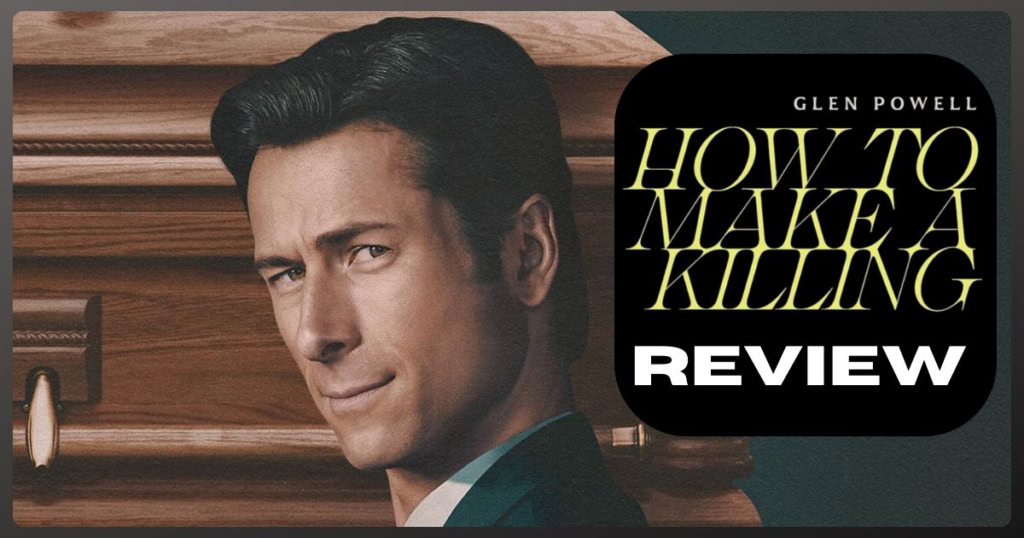
Many might not know that John Patton Ford’s latest film, How to Make a Killing, is loosely based on Robert Hamer’s 1949 classic Ealing comedy Kind Hearts and Coronets. The 1949 film was adapted from Roy Horniman’s Israel Rank: The Autobiography of a Criminal. If you’ve seen Hamer’s film, chances are you’ve seen Patton Ford’s reinterpretation. It sadly doesn’t do much to reinvent the screenwriting and thematic wheel of this modern-day set dark comedy. Glen Powell’s Becket Redfellow plots to kill the entire Redfellow family tree after his late mother was essentially disowned by the wealthy family’s patriarch, Whitelaw (Ed Harris).
It’s also a far more conventional treatment of Israel Rank than Hamer’s movie, because that work had Alec Guinness play every single family member Dennis Price’s Louis D’Ascoyne Mazzini wanted to kill. In that regard, the comedy was more prominent.
In addition, the relationship he had with its female characters was far more complex than the one-note attributes of actors Margaret Qualley and Jessica Henwick that are sadly stuck into Patton Ford’s “remake”.
When Hamer directed Kind Hearts and Coronets for Ealing, it broke new ground for the studio and had more transgressive themes than most of their body of work at the time. This initially angered head Michael Balcon, who called the film “unsellable.” It eventually stood the test of time, which doesn’t seem likely for Patton Ford’s revision of the material. There’s little hope it will even be remembered by the time the year ends.
Thankfully, though, Glen Powell is still such a welcome (and deeply charismatic) screen presence that we’re, of course, compelled to see his entire plot through. Despite the audiences being familiar with the source material, will find nothing new or even inventive. It’s a damn shame, because Patton Ford’s breakout feature, Emily the Criminal, was such a remarkable surprise that one eagerly anticipated seeing what he would do next.
How to Make a Killing doesn’t have much to say
To watch such a surface-level “eat the rich” satire, while Hamer reinterpreted Israel Rank as a cautionary tale for anyone who dared attempt what Louis did is rather disappointing. That said, at least there’s an even more morbid (and downright cruel) ending for the protagonist than Kind Hearts. Becket must forcibly trade one prison for another, but the visual metaphor might be far too clear-cut for an astute public to get something out of.
It’s also hard not to compare the two versions of Israel Rank when one is far superior to the other. Although Powell might be more effervescent than Price and feels literally born for the camera. However, Patton Ford’s treatment of female characters falls short, especially for contemporary cinema standards. In the latest version, they are underdeveloped and serve as objects for Becket’s pleasure, whereas in the 1949 film, they have their own agency and feel fully three-dimensional.
That said, even if various actors play the members of the Redfellow family, ranging from Topher Grace as a fraudulent Joel Osteen-esque megachurch CEO, Bill Camp as the benevolent boss who takes Becket under his wing, Zach Woods as a tortured but vapid performance artist, and Ed Harris as the grandfather, they are all superbly performed. If Patton Ford didn’t want to engage in the Alec Guinness framing device (which could’ve cost a lot of money), at least he’s mounted an A-list cast who do great work and highlight how evil (or not) their very nature is.
Becket develops a close relationship with Camp’s Warren, who feels great remorse towards what Whitelaw did to his mother, and shows him the ropes at the company he works for. His soft-spoken demeanor leads Becket to realize that not all Redfellowes are bad, and he begins to have second thoughts about whether this plan is truly worth it.
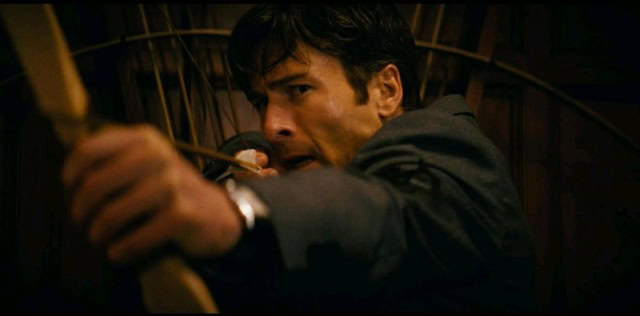
Glen Powell and Ed Harris give much-needed energy to the A24 film
When he eventually meets his vengeful grandfather, things change, and this is where the movie veers into unexpected territories. Thanks to Ed Harris’ terrifying portrayal, who hasn’t lost a step in the gun-toting department, almost forty years after Alex Cox’s Walker. Harris brings so much texture to his limited screentime that we eventually realize that the corrupt forces behind the Redfellow fortune essentially stop with Whitelaw—and Whitelaw only.
He might even steal the spotlight away from Powell, even though the Top Gun: Maverick veteran is one of the great burgeoning movie stars of our time and has enough charisma to carry an entire movie on his own. He’s so good, one feels bad for Qualley’s Julia and Henwick’s Ruth, the only two female characters with a modicum of development and aren’t as remotely intriguing as Joan Greenwood’s Sibella and Valerie Hobson’s Edith D’Ascoyne in Hamer’s film.
Again, it might be disingenuous to compare the two, but it’s hard not to, especially when one version is so much better, and the other is a perfect reflection of the sanitized, handholding times we live in. Patton Ford refuses to say anything concrete about his characters and, most importantly, why Becket theoretically has no other choice but to enact this plan to get what he’s owed.
Final thoughts on How to Make a Killing
On the heels of Park Chan-wook’s film, releasing something as toothless and dull as How to Make a Killing feels unacceptable. Patton Ford also tells his audience directly what the film is about, more than Hamer does, and takes very few thematic risks with such a story. It goes so far as to repurpose the cautionary tale at the heart of Kind Hearts into something less thematically rich in the process.
Worse yet, none of the kills are fun. They are mostly retreads of what you’ve seen in the prior work, save for a gunfight chase that brings lots of much-needed vigor to a film in desperate need of a pulse.
Powell and Harris are the main reasons why How to Make a Killing may keep you engaged. However, there’s a reason Hamer’s film was so far ahead of its time: even watching it today feels rewarding. One can’t say the same for this new film, but it’ll certainly distract you from the horrors of the world, so maybe that’s the ultimate win Patton Ford wanted to make. If that’s the case, they’ve succeeded, but this is certainly not A24’s finest hour, let alone Powell’s greatest moment on screen. That would be Hit Man. Watch that instead.