‘The Bride!’ Is A Bizarre, Messy Swing You Can’t Look Away From
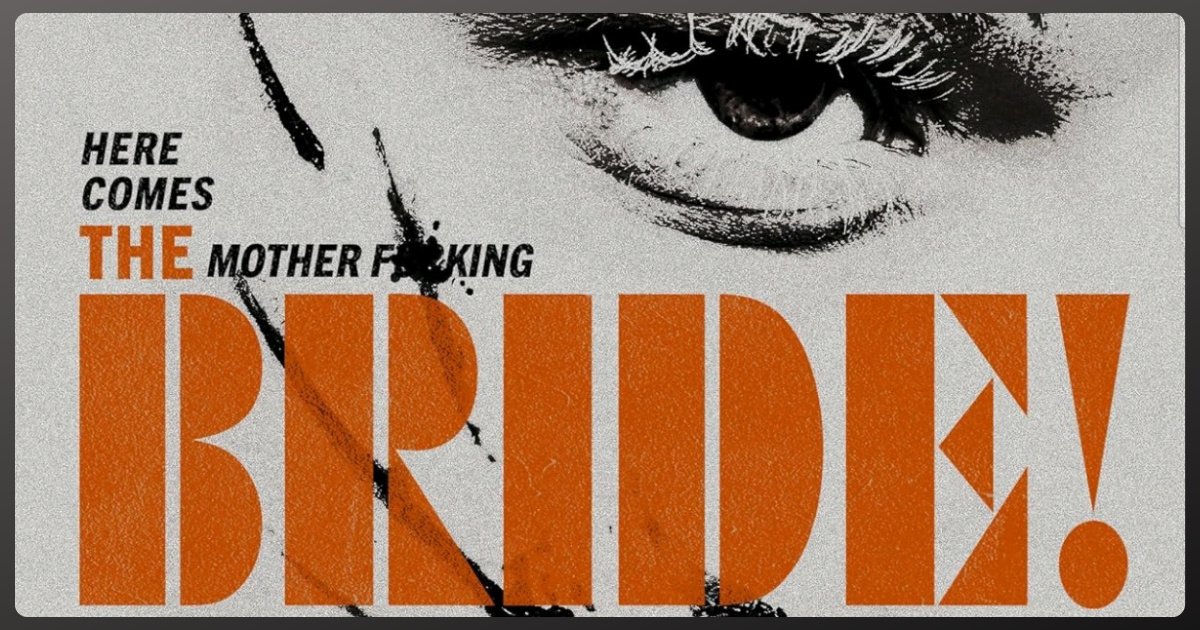
When the credits roll on Maggie Gyllenhaal’s The Bride! it’s impossible to think that anyone would come away from it having no strong feelings, to say the least. The film acts as a complete revamping of the 1935 classic Bride of Frankenstein, which changes everything about it from the settings to the central framing of its story.
Gyllenhaal follows up her feature debut, The Lost Daughter, with an unhinged fury, melding all kinds of genres of film and gothic horror into a one-of-a-kind dynamic experience that is on the cusp of delivering more than just a simple reimagining of the story. Gyllenhaal has a plethora of ideas, and a decent amount hit the target, but unfortunately, the same amount, if not more, are wildly off base far too often.
The Bride! has plenty of ethereal visuals and virtually excels on nearly every technical front, but the film’s screenplay completely weighs it down with multiple underserved plotlines and thematic intentions that are either not developed or unfocused throughout the bloated runtime.
Despite the film’s numerous issues, Jessie Buckley delivers a spellbinding performance that anchors the entire project, making it an unbelievable mess that you can’t look away from. It’s the definition of a truly strange and unhinged cinematic experience in both a complementary and derogatory sense.
The retooled story of The Bride!
The Bride’s! retelling of the age-old monster tale takes place in 1930s Chicago as lonely Frank/Frankenstein (Christian Bale) is searching the city for Dr. Euphronius (Annette Bening). Frank discusses with the doctor that he has been suffering from loneliness for over a hundred years, having no one to truly relate to, so he has come to inquire with her about creating a companion for him.
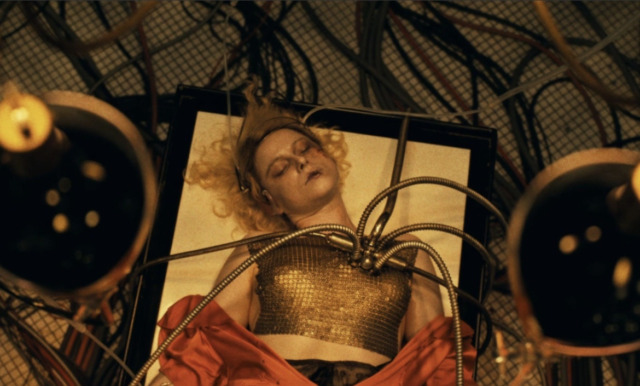
It takes much convincing, as Euphronius would rather study with the unique specimen she already has, but she eventually indulges, and the two dig up and revive the dead body of Ida (Buckley), and thus, The Bride herself came to be.
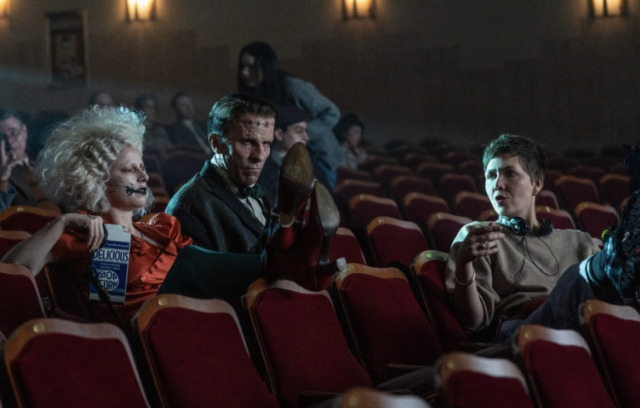
At the film’s opening, we see Ida was murdered by the cronies of a mob boss she was going to expose for his abuse of multiple women. But when she is revived, her mind is essentially blank, not even being able to remember her own name and having dreams of Frankenstein author Mary Shelley (also Buckley) in her dreams every night.
After becoming acquainted with Frank, it isn’t long before the two lovers, unfortunately, get into trouble with the law and end up on the run. Tbey search for movie theaters as their sanctuary, as Frank idolizes his favorite movie star, Ronnie Reed (Jake Gyllenhaal).
With detectives Jake (Peter Sarsgaard) and Myrna (Penélope Cruz) on the search for the two monsters of the dead, Frank slowly begins to realize The Bride’s capabilities are far beyond what he could have imagined. The two go through virtually everything during their sparking romance.
The Bride! would be even more of a mess without Buckley
From its beginning, The Bride! seems content with fully reveling in the mess of its story and influences, and while that leads to its fair share of highs and lows, Jessie Buckley gives a captivating lead performance. From the film’s opening scene, you will know whether you will vibe with its deranged wavelength as Buckely’s performance interchanges between three characters throughout the film: Ida, Mary Shelley, and the person she has yet to become, The Bride.
It will throw people off from the get-go as Buckley suddenly shifts from Ida’s thick drawl to Mary Shelley’s heavy literary English accent mid-conversion, but she is the only performer who is truly one with the absurdity you witness on the screen. She’s able to sell every moment of emotion and bizarrely interwoven humor, even when the craziness of the performance borders on being grating (in part to how insane these roles are written). There’s no doubt she’s more than committed and occasionally makes the more visually ambitious swings the film takes more impactful.
Once Frank and Ida begin their run to wreak mayhem in New York City, the film’s genre blends and inspirations start to take shape, even if it’s certainly an irregular one. The most apparent are the Bonnie and Clyde inflections, following two doomed lovers on a crime thriller adventure of sorts, with even some of the final moments of the film invoking parallel imagery to that of Bonnie and Clyde’s infamous ending on the silver screen and in real life.
Where the film starts to venture into something more interesting is when it melds the cinema, visuals, and music of the past and present into scenes. There are scenes where we see both Frank and Ida invade the film, watching on the big screen, dancing, and talking within the scenes of cinema that Frank seems to love so much. There’s even a full musical sequence in the film that is pure, stunning, visual insanity.
It’s ironic that both cinematographer Lawrence Sher and composer Hildur Guðnadóttir filled these roles for both Joker and Joker: Folie à Deux as The Bride! shares a similar visual palette and string-oriented melody to them both, melding color and gritty depth to each image, making the world of the film come alive. Even scenes where pieces you thought would never fit form into something genuinely breathtaking for a few fleeting moments.
The chaos of The Bride!
Where The Bride! is unfortunately truly scattered in a not good way is all over its screenplay. Maggie Gyllenhaal clearly has a lot she’s pulling from, and the film has a clear love for everything it pays to do, but more often than not, it never materializes.
The loud brashness of the film’s mix of comedic and dramatic tones starts to dip into insufferable territory when, throughout a portion of the halfway point, the ideas start to repeat themselves in a way that comes across more as wheel spinning and deeply confusing rather than captivating.
The lack of focus on basically any of the vast array of ideas Gyllenhaal throws at the wall grows largely stale, as literally anything substantial you could maybe grab a hold of is immediately lost when the film decides to veer unnaturally into an entirely different direction. The central romance between Bale and Buckley particularly suffers from this, as when they start running off together, there is never a point where the film shows us why they are meant for each other when they first meet, despite the clear commitment from the two performers.
In addition to the full detective noir subplot between Sarsgaard and Cruz that largely comes across as a bizarre addition to Ida’s journey rather than a logical stepping stone on the path, the film’s constant zig zags start as intriguing but become largely tiresome and dull throughout the 2-hour runtime.
Then there’s the central theme of Ida fully grabbing agency in her role as The Bride and essentially becoming a revolutionary for feminism amidst the abuse that she and other women around her face throughout the film. These themes have a strong foundation and are helped by Buckley’s commitment, but much of it comes across as hollow in the end and is another casualty of the film’s lack of focus and setup.
Much of the dialogue and theming is loud and bold, and we’ve seen that work well before, but the writing just doesn’t have the focus or weight it should to come across as anything other than an overly long supercut.
Final thoughts on The Bride!
The Bride! ,above all else, is certainly a swing for the fences that is so rare in today’s film climate. The film is filled with gorgeous visual iconography, a more than keen directorial vision, and two devoted lead performances. But the screenplay is so thinly written that all its many swings never feel capitalized on and end up all over the place.
What should be a bombastic experience comes across as mostly hollow at its end despite the film’s unhinged nature. A bizarre swing that many, including myself, will appreciate, that just never coalesces into the inventive reimagining it should be.
Also check out: Guillermo del Toro’s Frankenstein Review: Highs & Lows of this New Take on Shelley’s Classic Tale