‘The Samurai and the Prisoner’ Review | Fantasia Fest 2026
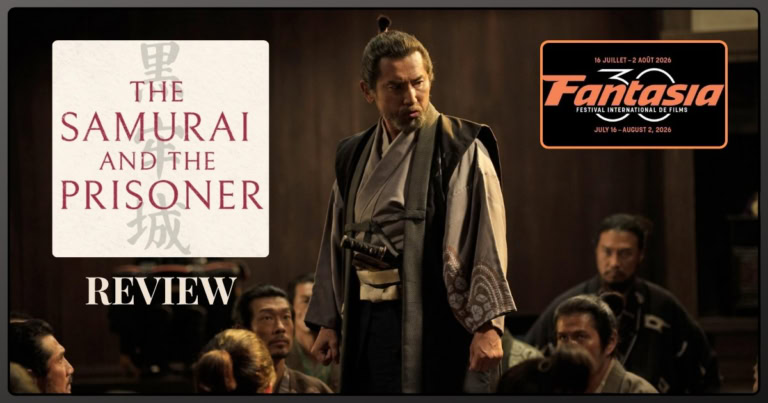
The Samurai and the Prisoner shares a unique commonality with Rian Johnson‘s recent work. Like Knives Out, it shares themes with the overall story. The film directed by Kiyoshi Kurosawa (Cure, Pulse) sees the prolific filmmaker lean into the charm of a detective mystery like an Agatha Christie novel, only here it’s through the lens of a period war drama set in feudal Japan. The mixture makes for one of the more unique experiences at Fantasia International Film Festival 2026.
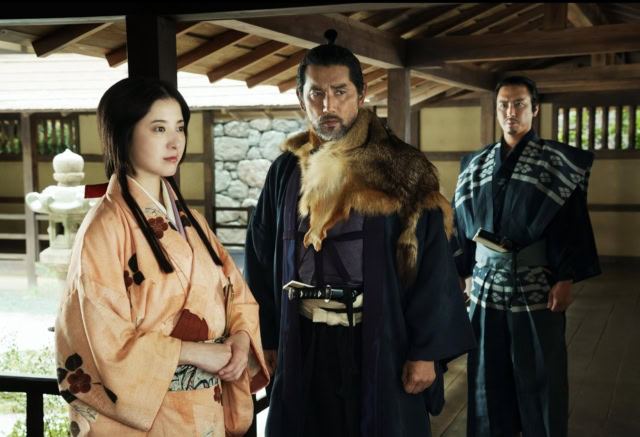
Directed and written by Kurosawa and based on a novel by Honobu Yonezawa, The Samurai and the Prisoner centers on Lord Murashige Araki (Masahiro Motoki), protector of Arioka Castle in 16th-century Japan. As the Lord and leader of his domain, Araki finds himself in a tense string of conflicts involving betrayal, politics, and murder.
The slow-mounting drama stems from a fierce enemy gaining power, Lord Oda (Bando Shingo). The first betrayal comes from Araki’s brilliant military strategist, Kanbei (Masaki Suda). This revelation shows Lord Araki’s moral character. His opponent, Oda, would have executed Kanbei for acting like a traitor. Lord Araki spares his life but keeps Kanbei a prisoner.
Kiyoshi Kurosawa’s mystery film feels episodic
Shortly after Kanbei’s imprisonment in the castle dungeon, Araki becomes entangled in his first mystery as someone is murdered in the castle walls. The narrative then shows how matters were investigated in the days of the samurai.
For instance, one death was mysteriously committed with a bow in broad daylight. And the bow was removed without anyone noticing. In one theory, Lord Araki and his men test whether someone shot the arrow with a string attached. But the demonstration leaves a trail on the ground, debunking the possibility. After testing theories and gathering witness statements, he returns to the dungeon to seek expertise from his former strategists. His counsel in the prison helps, but more mysteries follow.
If there is an argument to weigh against the multiple mysteries, it’s that the film feels similar to The Mandalorian and Grogu. The way Lucasfilm made the experience feel episodic is the same feeling captured in The Samurai and The Prisoner. It has the nuance of three different investigative procedurals combined into one story. Quite similar to Poker Face, in that it felt like one complete story across several mysteries.
The key difference is that The Samurai and The Prisoner builds richer themes throughout the narratives, and each one matters to the story. For most of the film, the core discussion is fear versus mercy. Lord Araki doesn’t believe killing his transgressors (as a way to show power) leads to loyalty. By contrast, Lord Oda uses fear and death to assert control.
Each strange event within Lord Araki’s walls speaks directly to this discussion. His men and citizens grow wary of the imposing threat, loyalties shift constantly, and superstitions around Buddhism and Christianity take shape. With Kanbei’s intelligence, he unpacks the puzzles with entertaining flair. And like Knives Out, once the answer is known, Lord Araki breaks down the underlying truth in a Daniel Craig as Benoit Blanc fashion.
The Samurai and the Prisoner isn’t for everyone but is artistically satisfying

The performances in The Samurai and The Prisoner are terrific, especially Masahiro Motoki, who plays Araki with great intensity and earnestness. He exudes a samurai swagger that is both intimidating and disarming. For example, he can viciously take down a threat one moment, and the next he projects a disarming presence as he makes tea for a visitor.
Masaki Suda as Kanbei is terrific in the supporting role, with a thick, threatening charm that you can feel even when he isn’t on screen. He is fantastic at portraying a personality whose motives feel ambiguous from scene to scene while quietly giving the viewer the sense that he is always calculating and sizing everyone up.
The Samurai and The Prisoner is beautifully composed with classical flourishes of organic lighting and various shots that make the castle feel claustrophobic but alive. It’s never overly stylish, but the composition is engrossing for a period piece with mostly dialogue. The same is true of the production design and location choices, which balance the organic lighting with earth-toned settings, such as rooms with warm wood backgrounds or fields of bright yellow. It gives the castle character, evoking the feeling that Araki’s kingdom is supposed to feel safe, despite the danger looming upon it.
This isn’t a movie for everyone. Still, I genuinely enjoyed the character dynamics of a wartime leader trying to play chess, with his greatest weapon being a traitor who might be smarter and more dangerous than the one threatening his kingdom. It can feel episodic at times, but it has a unique genre blend we rarely see.
The Agatha Christie-style mystery thrown into feudal samurai wartime is an interesting combination of styles. And it is all the more enhanced by a final narrative punch that is bittersweet, unexpected, and artistically satisfying.
Also check out: TIFF 2025: Wake Up Dead Man: A Knives Out Mystery Review