‘Verity’ Review: Showalter’s Film Adaptation of Colleen Hoover’s Work Misses the Point
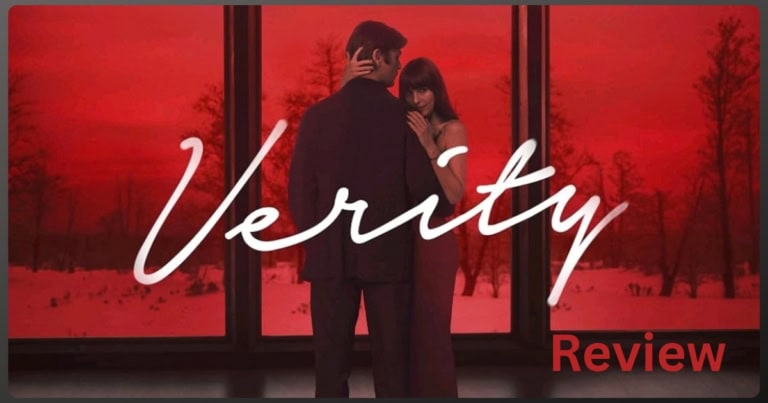
The one good thing about Michael Showalter’s Verity is that it has more verve than previous adaptations of Colleen Hoover’s work. It’s not very good, but at least Showalter has fun with compositions that recall the oeuvres of Brian De Palma and Paul Verhoeven. Plenty of split-diopters and superimpositions create a quasi-campy quality as cinematographer Jim Frohna captures Lowen Ashleigh’s (Dakota Johnson) obsession with author Verity Crawford (Anne Hathaway) after she is tasked with writing the last book in her popular series.
What is the story in Verity about?
After a near-fatal accident, Verity Crawford has been left essentially catatonic and can no longer walk or even speak. Her husband, Jeremy (Josh Hartnett), believes the manuscripts she wrote for her final book should be completed and assigns the burgeoning Lowen to ensure they’re published.
But soon Lowen finds a USB card with a hidden manuscript. The protagonist begins to uncover truths about Verity’s marriage to Jeremy and her fractured relationship with her son, Crew (Brady Wagner), after the death of their daughter, Harper.
A movie in desperate search of a visual and thematic identity
Verity is the kind of thriller that would’ve worked well with either Brian De Palma or Paul Verhoeven at the helm. These filmmakers would’ve fully committed to the psychosexual tension at the heart of Lowen’s story and the romantic affair that begins to blossom between her and Jeremy.
Unfortunately, Showalter is so inept at framing what matters most in a film like this that he ends up not knowing exactly what Verity should be about. What could’ve been a fun and campy time at the movies ends up being a laborious bore because Showalter and screenwriter Nick Antosca have no idea what should be at the forefront of the story.
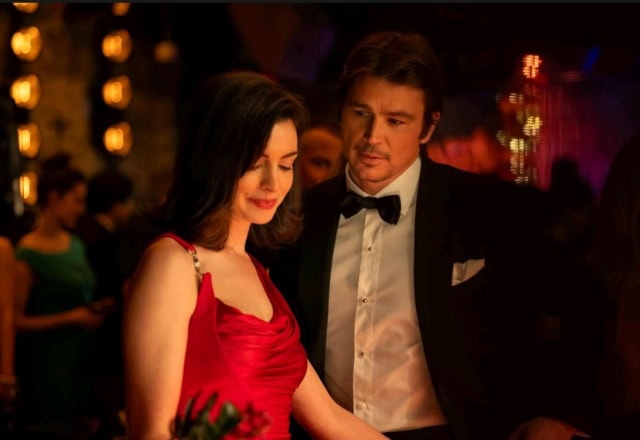
The conceit seems heavily inspired by Adrian Lyne’s Fatal Attraction or Verhoeven’s Basic Instinct, but Verity’s execution feels scattershot and misguided. Does it want to be a full-on psychological, Hitchcockian thriller where Lowen feels manipulated by Verity’s writing and soon realizes that things aren’t what they seem? If so, the filmmaker should commit to this aesthetic from beginning to end, but he floats between horror and camp, making the tonal shifts jarring and dramatically flat.
It almost seems as if the basis of an idea was present but never fully fleshed out, but is it the film’s fault or Hoover’s writing? After all, her books are big commercial commodities, but many readers agree that she isn’t a particularly adept writer. When discussing difficult, harrowing subjects like spousal abuse in It Ends With Us or murder in Reminders of Him, emotional subtlety is thrown out the window in favor of broad histrionics that caricature real and distressing issues.
Verity seems like the only source material where histrionics feel rife for the film, yet it’s played with such seriousness that it feels mostly strange when a filmmaking choice tries to break it. One such instance is when Jeremy reads something fairly damning about his wife, as text is superimposed on the screen, and the camera crash-zooms on his face.
Such a choice would’ve worked if the film bathed in its giallo-like inspirations (or might have benefitted from viewing De Palma’s daring Femme Fatale), but at every turn, Showalter never wants to have a laugh. Hoover’s writing is flimsy.
Verity film rating and final thoughts

The film’s aesthetics could turn this fairly turgid book into a special piece of camp filmmaking that is simultaneously provocative and exciting. Sadly, that never happens, especially in its laughable conclusion, where, instead of providing tangible answers, it leaves things open-ended in the most baffling way.
Revealing more would spoil a considerable chunk of the film’s plot. Let’s just say spending much time on Lowen reading a manuscript instead of developing what actually happens inside the house was not the best choice.
And none of this is the actors’ fault. They all do solid work, especially Josh Hartnett, whose trajectory since Christopher Nolan’s Oppenheimer has made him far more interesting an actor than he was before.
Dakota Johnson seems to take her role more seriously than the former. Perhaps the movie would’ve benefitted from an actor able to portray a broader range of emotions than she can, but the performance isn’t bad. It’s Antosca’s (or Hoover’s?) writing that significantly hampers any form of momentum that the movie could have because it refuses to engage in any tonality it presents.
Oh, and Volker Bertelmann reheating his Conclave motifs yet again? I feel he’s so much better than this, but it’s a good indication for audiences that Verity is lazy from top to bottom.
Showalter isn’t a particularly bad filmmaker, but he doesn’t seem to know what he wants from the material or his aesthetics. It might have worked better with a more confident voice behind the camera, but it takes a Herculean feat to make Hoover’s writing (real talk, who names their kid “Crew”) feel remotely human. Showalter tries with his Temu De Palma, but Verity might only be remembered as the most Tyler Perry film never directed by the man himself.