‘Clarissa’ Review: A Beautifully Shot Subtle Example of Slow Cinema | BFI London Film Festival 2026
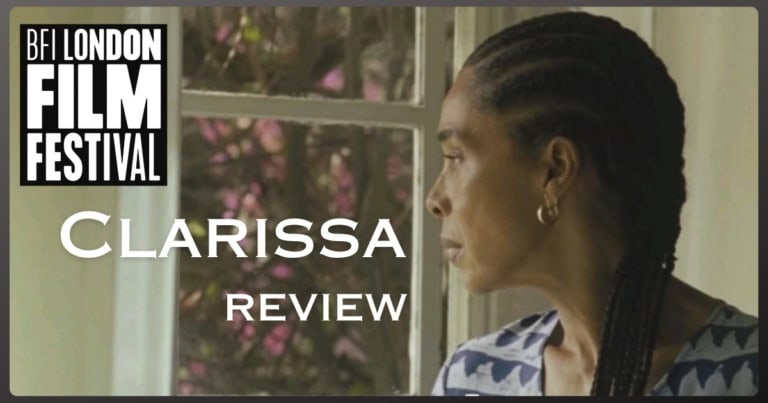
Clarissa is the eponymous character, played by a luminous Sophie Okendo, who is transplanted to modern-day Lagos in this tale of societal interaction interspersed with class dynamics, loosely based on Virginia Woolf’s Mrs. Dalloway novel from 1925. Sensuous and slow-paced, Clarissa embraces the Nigerian landscape to make it a central character amongst a stellar cast. However, the subtle direction and restraint seem to be better suited to the period drama setting of the novel and may frustrate audiences seeking more dramatic tension.
What is the film Clarissa about?
As Arie and Chuko Esiri’s second feature film, Clarissa revels in the art of hidden meaning and subtext but may be striving for a degree of sophistication. Clarissa is planning a reunion party and unfortunately becomes a victim of its convoluted efforts.
That is not to imply that the film is not beautifully composed. It is filmed on 35 mm film; there are long scenes exploring rivers, the verdant landscapes captivate, and so do the shadowy long corridors of dormitories. This may ultimately be the film’s demise in being a case of more style over substance. This then poses the question of whether Clarissa could have been a better film on its own merits rather than a literary adaptation, which would therefore have satisfied its audiences fully.
Is another adaptation of Mrs. Dalloway necessary?
The film almost operates as a series of memoirs for Clarissa as scenes flit between the past and the present without a linear narrative. Plus, as there are different actors playing the characters at various stages of their lives, a moment to establish some background may have been preferable to avoid confusion.
Another obvious point of contention may be the character’s names themselves—Clarissa, Peter, Hugo, Sally, and others are not typical Nigerian names and have simply been lifted from the book. This may be jarring to fans of the typical films made under the Nollywood umbrella.
There is the argument that there is a plethora of original Nigerian stories that are still waiting to be told instead of rehashing a classic literary text, as audiences have been crying out for more authentic storytelling. However, the directors appear to wish to break from the mould of the current expectations of Nigerian cinema and to make a statement.
Addressing class divisions in Nigerian society
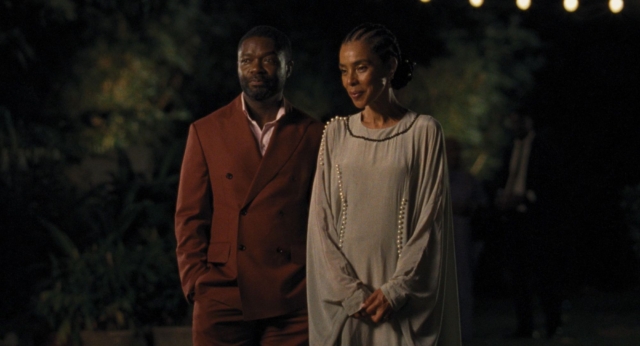
It is obvious that Clarissa is wealthy as she prepares for her dinner party. In the past, her friend Sally, played by the always impressive Ayo Edebiri, had described her as “a snob.” In the present, Clarissa lives within a palatial home where she has time to focus on the flower arrangements and obtaining ingredients to prepare for a dinner.
She is not the one creating the meal but has a loyal team of cooks and other staff, which delicately highlights the class divisions. However, these elements are superficial highlights and simply do not delve far enough into the underlying hierarchies and prejudices existing within Nigerian society. Instead, these moments operate as a reflection of the status quo rather than launching any meaningful critique, which seems to be a wasted opportunity.
Clarissa provides a backstory to introduce supporting characters
Despite being the titular character, the film also introduces other characters inhabiting Clarissa’s milieu. Septimus’ story orbits Clarissa’s as the husband to her seamstress Aisha. By contrast, he is serving within the military and lives within an impoverished sector where broken car windows are on display.
The film provides a slight context to his military background, with scenes set within the barracks exploring those military activities and tasks. There is no focus on the men themselves to create any resonance.
One scene criticising army personnel’s use of social media does provide some insight into the current status of the country within a military regime, and Septimus’ visits to a therapist for his night terrors emphasise the mental health load suffered. These small extracts assist in placing the historical background with subtle nods to the military coup and the country’s colonial past following British rule. Yet, there is the assumption that audiences may already be familiar with such events, as the directors do not proffer explanations.
However, Clarissa boasts an impressive cast, many of whom are underused. The younger actors seem to have more active scenes with good chemistry between Edebiri and India Amarteifio, playing a younger Clarissa, with hints of a special relationship between them, which would have been perceived as taboo within conservative Nigerian society. The lingering looks and yearning are fascinating to observe, à la a Regency period drama, and add to the overall sensuous feeling within Clarissa.
Clarissa might have settled in love with her marriage to Richard, as she appears to be at the centre of this friendship dynamic in the past and the present. She alludes to her former flame, the writer Peter, played by a magnetic David Oyelowo, that we all put our great futures behind and settle: but this seeming regret is never expanded upon, thereby losing any momentum.
As a youth, Clarissa enjoyed cerebral philosophical debate and was prone to making unilateral pronouncements, such as theatre being a translation and a social experiment. As an adult, Clarissa’s debates seem to be reduced to her fixation over a broken plate!
In observing these behavioural contrasts, there is the impression that Clarissa is that proverbial gilded bird trapped in a cage of ease and conformity. Okenedo excellently rises to the occasion with a captivating portrayal of Clarissa inhabiting an air of regret that hovers menacingly.
Clarissa (2026) movie rating and final thoughts

Sizzling chemistry between Okenedo and Oyelowo will leave audiences wanting more than the film can unfortunately deliver. The breadcrumbs are planted along the trail, but the film resists presenting a foregone conclusion, preferring to revel in the type of European arthouse cinema that not all audiences will appreciate.
Overall, Clarissa is a stunning film that invites discussion but lacks sufficient tension. Clarissa releases in U.S. theaters on December 11, 2026. Watch for more reviews from this year’s BFI London Film Festival coming soon.
Also check out: Your Mother Your Mother Your Mother Review | TIFF 2026