‘Klara and the Sun’ Review: Taika Waititi Destroys Kazuo Ishiguro in Ridiculous Adaptation

Anyone who turned on Taika Waititi post-Hunt for the Wilderpeople may be the most vindicated individuals in the universe upon seeing his adaptation of Kazuo Ishiguro’s Klara and the Sun. The Japanese-British writer’s thought-provoking, emotive prose is reduced to a bevy of unfunny TikTok-lite jokes that hamper a genuinely heartfelt story. This adaptation might have been something truly special on the big screen if it were directed by someone who actively cares about the source material they’re adapting.
Taika Waititi’s poor take on Ishiguro’s Klara and the Sun
Ishiguro’s subtle, minimalist story is distorted in a movie that’s constantly in your face and fundamentally misunderstands the characters it depicts. It’s almost embarrassing to see Waititi stoop this low in an attempt to make us laugh instead of forming active connections between the film’s titular character (played by Jenna Ortega, in the worst performance of her career) and the family she is now tending, Josie (Mia Tharia) and mother Chrissie (Amy Adams). Klara is a B-1 robot, now discontinued in favor of more advanced (and lifelike) B-3s.
In a dystopian future, robots serve as human companions, and Josie desperately needs one because she is riddled with an illness caused after her genes were altered to make her smarter (a process called “lifting”). It’s a bit complicated to explain in this review, but what you have to know is that Chrissie is still reeling from the loss of her first daughter and now expects the worst to happen once more.
At first, she doesn’t think Klara would be a good companion, but the two “teens” begin to bond as they spend more time together. Afterward, Chrissie’s motivations start to clear up, but to say more would mean revealing things that shouldn’t be spoiled for the few souls who will seek Klara and the Sun out.
Whereas Waititi’s pre-Thor: Ragnarok films were deeply humanist and heartfelt, while also balancing his darker themes with genuinely funny comedy, the Academy Award-winning filmmaker has sadly eschewed what made his filmmaking so singular once he started working for “The Mouse.”
Waititi’s films became endless joke fests, and few of them were funny. The heart and poignancy that made his work stand out from the rest of the pack are gone because he’s too busy trying to mock the very people he portrays on screen. Jojo Rabbit was a horrendous “satire” that exploits real historical tragedy, while Thor: Love and Thunder couldn’t decide whether to be self-serious or purely comical.
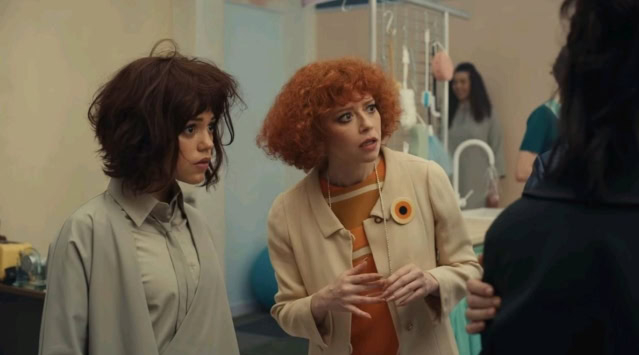
A more subdued film for Waititi, but still yielding disastrous results
Going back to more independent roots for Klara and the Sun, albeit with two A-listers, seemed like a recipe for success. After all, adapting Ishiguro on screen means that you have to have a degree of respect for the work, right?
The best-known adaptation is James Ivory’s The Remains of the Day, an unequivocal masterpiece that gives Anthony Hopkins and Emma Thompson two of their most emotive performances. If only Waititi had the same amount of care as Ivory did when he transposed Ishiguro, because he seems not to really understand the core tenets of the author’s writing and the text he’s adapting on screen.
Everything is a joke to him, even the horrible disease afflicting Jodie, which is causing her great distress and pain. There’s very little, if any, subtlety in how he depicts her ailments and her relationship with her mother. If the jokes landed, perhaps some might not have been bothered by the insane liberties taken with the material, but only a select few are, and they all involve frequent collaborator Rachel House always having the last laugh. Any other scene doesn’t work because the humor is so unnecessary that it hampers any connection we might have with Klara and Jodie if Waititi and Dahvi Waller’s script just stopped trying to make us laugh for one second.
The lustful frames of Mike Berlucchi, who attempts to make us see the world (and most notably, the sun) through Klara’s eyes, mean nothing inside a movie that wants to make everything seem so comical and lighthearted. Klara and the Sun is set in a world where climate change has ravaged the planet. It is so polluted that humanity has turned to robots to mitigate the lack of human presence and where genetic alterations can prove fatal for people who want to meaningfully contribute to society. There’s something to be said for all the subjects it presents, which Ishiguro conveys with profound effect throughout the book.
Klara and the Sun (2026) film rating and final thoughts

The perspective of an emotionless, static robot who starts to harness the power of the sun and find joy in the simple things of life before a selfless act causes her memories to flash before her eyes is powerful storytelling. The way Waititi depicts this narrative arc in Klara and the Sun is so disrespectful that it immediately leaves a bad taste in the mouth. It lightly treads on themes of empathy and grief in ways so surface-level that it almost spits in the face of one of our greatest-ever authors.
None of the performances are particularly good, either, with Amy Adams no better than a plank of wood and Jenna Ortega continuing her streak of turns with very little spark in front of the camera. Only Rachel House manages to make us laugh, but she’s a natural talent. She doesn’t need to do much to make us laugh. Actually, she’s far too good for Waititi, whose penmanship has taken a real nosedive these days.
Maybe it’s best for him to take a step back and see what matters most in this life before making another terrible movie again. It might save him the secondhand embarrassment of the lowest-rated film of his career.