
‘Project Hail Mary’ is Afraid of Perfection
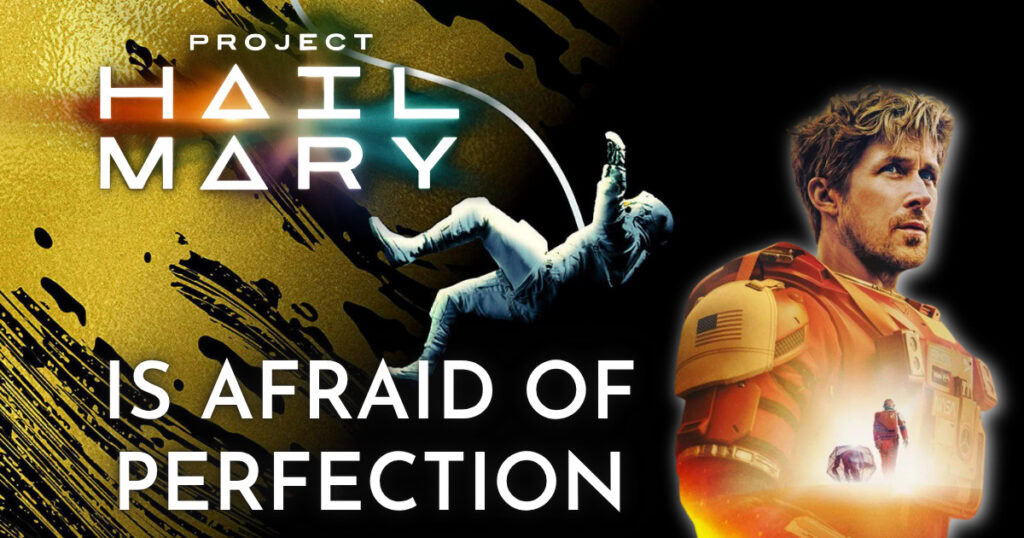
Project Hail Mary took audiences by storm last weekend. Adapted from the groundbreaking science fiction novel written by Andy Weir, the film achieved a record-breaking box office opening and is beloved by critics and audiences alike. I’d go so far as to call the novel near-perfect! Produced by and starring Ryan Gosling, the movie is a faithful adaptation in most respects but ultimately misses the mark in several important areas, seemingly for no good reason.
Project Hail Mary is such an engaging novel because a pervasive sense of impending doom runs throughout, mixing melancholy and loss with hope, happiness, and awe-inspiring wonder. But you wouldn’t know that from the film. It entirely strips out the novel’s environmental commentary, undercuts and changes each main character for the worse, and focuses on humor over well-rounded characters and intense emotion. The uplifting and lighthearted moments are absolutely the heart of Project Hail Mary in both mediums, but they carry more intensity in the novel because of the nuanced tone threaded throughout the story.
I want to clarify that I think Project Hail Mary is a technically well-made film and the story it tells is still good thanks to the imagination of Andy Weir and the talent of directors Phil Lord and Chris Miller. The space sequences are absolutely stunning, the practical effects are fantastic, and Ryan Gosling and Sandra Hüller are perfectly cast in their roles despite the baffling writing decisions for their characters.
If you haven’t read the book, it’s easy to love the story told in the film. The problem is that there’s a version of this story that’s twice as good and easily could’ve made it onto the silver screen intact.
[Warning: spoilers discussed below for Project Hail Mary.]
A “Sign of the Times” for this book adaptation
I understand that movies can’t adapt every single aspect of a book and I typically don’t care much about changes that don’t impact the core themes of a story. Project Hail Mary is a strange case because it keeps many of the novel’s most important elements, but throws out others that do change the story significantly.
One of the film’s most popular additions is a scene where Sandra Hüller’s Stratt sings “Sign of the Times” by Harry Styles at a karaoke party. It’s very out of character for her, but the song fits so well with the themes of the novel that it could’ve been a legendary scene.
To its detriment, the film ignores the most significant changes taking place on Earth that enable the Project Hail Mary mission: namely, paving over the Sahara Desert with millions of solar panels to breed Astrophage and nuking Antarctica to release greenhouse gases and increase global warming as much as possible. These moments in the book are shocking and weighty, drilling into readers that regardless of what happens in space, Earth will be changed forever.
Even if the mission is a success, sea levels will rise, natural disasters will increase, and no one knows what humanity will look like when the data from Tau Ceti comes back. If the sun is saved, Africa will no longer be disproportionately poor because the continent will suddenly control most of the world’s energy supply.
Stratt’s actions are drastic and overbearing, altering not just the lives of the individual scientists she recruits but carrying intense ramifications for world powers and the global population.
None of this is even mentioned in the film, while Stratt’s character is whittled down so much that she’s missing almost every powerful moment she has in the novel. Sandra Hüller is a fantastic actress and great choice for the character but never gets to embody Stratt completely.
Eva Stratt is one of the most interesting morally complex characters created in recent years but the film version of Project Hail Mary gives her nothing to do. She doesn’t wield a horrifying level of power anymore. She doesn’t have a preemptive pardon from the President of the United States exempting her from wide-ranging lawsuits.
She’s not changing the global landscape to get this mission into space, and Sandra Hüller doesn’t even get to deliver the excellent dialogue written for her by Andy Weir. Her two key monologues from betraying Ryland are absent, hand-waved away in a couple of lines that don’t compare to the intense, mean exchange she has with him in the novel.
What she does get is a karaoke scene that Hüller absolutely kills. She’s an incredible singer (who knew?!) and “Sign of the Times” was an inspired choice on her part because it fits the story perfectly, not only with the overall themes but also with Stratt’s personal responsibilities. Unfortunately, the producers don’t seem to realize this since they removed most of her storyline.
It’s a sign of the dire times that Eva Stratt alone can nuke Antarctica, reverse global climate change progress, turn the Sahara Desert into the world’s largest energy factory, and force the world’s leading astrophage expert to sacrifice his life. If Project Hail Mary was better adapted, we would have seen Stratt wielding this power and problem-solving with Ryland Grace earlier in the film, before a montage of these world-altering events played during the karaoke scene.
Imagine how much more fitting those lyrics would be if Stratt sang them over the destruction of Antarctica and the transformation of the Sahara, as the Earth itself shapes to her will to support her last-ditch effort to save it. “Just stop your crying, it’ll be alright / They told me that the end is near / We gotta get away from here…”
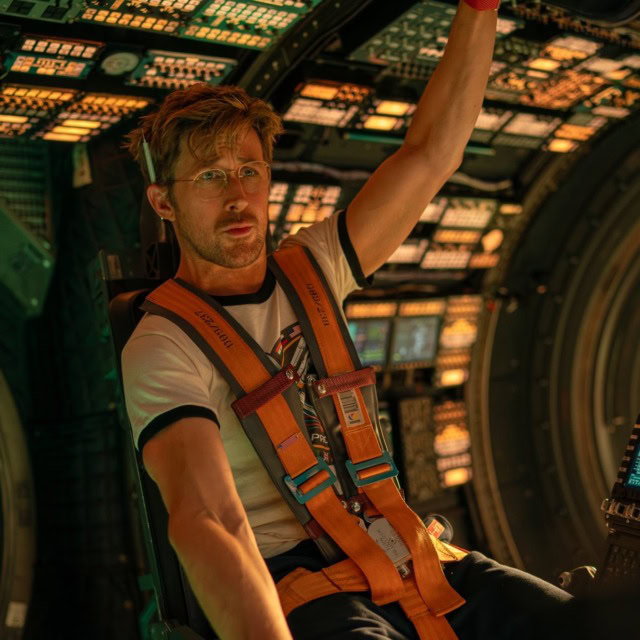
The ghost of Ken haunts Project Hail Mary
Stratt isn’t the only character cheated by this adaptation. Rocky was brought to life pretty well, from his character design to personality and way of speaking. He’s a bit more childish and cutesy and not quite the equal partner he is to Grace in the book, but he’s the least affected of the main characters.
Ryan Gosling’s Ryland Grace is significantly different, though. It’s as if Gosling is possessed by the ghost of Ken from Barbie, spitting silly, childish humor into every single scene and playing up his incompetence in sharp contrast to the character in the novel. The book version of Dr. Grace is a bit immature and very funny, but he’s also a scientist who takes his work seriously and performs it carefully.
Ryan Gosling was perfect casting for the role and could have easily delivered the quiet, serious, competent moments as well as the humorous ones. But the film’s script takes several key moments away from Dr. Grace. Instead of reacting in wonder at intelligent alien life and being desperate to communicate with them, Gosling screams in fear and engages in desperate attempts to get away from the alien ship, which is funny but entirely out of character.
Similarly, there’s a significant moment in the book where Dr. Grace risks his life to save Rocky on the Hail Mary and badly burns himself to put his friend back into his natural atmosphere. This is totally cut out of the film. Grace remains asleep to heal while Rocky drags himself to safety, which is an unfortunate change. The entire point of the sequence in the book is that these two beings love each other enough to risk their lives to save the other.
Ryland Grace in the movie is much more “frightened middle school teacher” than “PhD-level scientist on a mission.” This is in complete opposition to the book, where these aspects were properly balanced and his character was actually three-dimensional.
Meanwhile, the film rushes through its ending so much that the major emotional punch of Rocky and Grace’s reunion is mostly gone. It’s still heartwarming to see them reunite. But a lot of tension and the sense of relief are stripped away by erasing the twist of the Taumoeba eating the Hail Mary’s fuel while the two were still together and removing Rocky’s dialogue during their reunion.
While it’s nice to see that the most important part of the ending is kept intact, the movie again misses the mark there. We’re all happy that Grace and Rocky stay together and he gets to build a new life on Erid, but the book comes with a heavy sense of loss as well.
Ryland has lived there for 16 years; he’s weighed down by extreme gravity, and he lives in an environmental dome in the middle of a pitch-black planet. But it’s worth it because he’s with his best friend, he gets to teach again, and he can contribute greatly to the scientific understanding of an intelligent alien race. It’s a bittersweet ending: you’re happy that he’s alive and with Rocky, and it means so much more because of what he had to endure to survive on Erid, which he chose over the uncertainty of returning to Earth.
The movie once again erases much of this nuance and subtext. Rocky lives on a bright blue, sun-soaked planet with beaches that rival Earth’s. Which doesn’t make any sense. Why didn’t the Eridians evolve eyes if their planet gets sunlight?
Ryland hasn’t aged a day. He hasn’t even learned to speak the Eridian language as he does in the book, he’s still speaking English. The book’s ending hit hard because he’d carved out a new, permanent life on this strange world with these kind creatures. In the movie, it’s more like he’s taking an interstellar vacation.
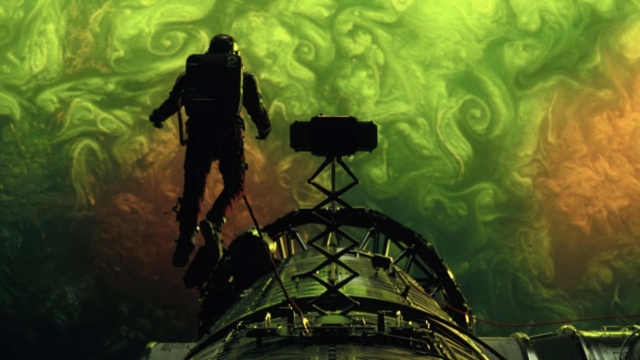
Project Hail Mary lacks the novel’s emotion
Ultimately, Project Hail Mary is a decent adaptation that’s nowhere near as emotionally impactful as the novel it’s based on. It could be a lot worse, but it also could’ve been a lot better. Gone is most of the tension that beautifully built up through the second half of the story on the page.
What’s even sadder is that this isn’t a case of an adaptation stumbling because of its runtime. Sure, the fuel-eating twist was probably removed to save time, but including Stratt’s key scenes and the reality of what Earth went through to launch the Hail Mary could’ve easily been included in less than ten minutes.
The rushed pacing of the beginning and end of the movie may be harder to work around without making the film three hours long. But honestly, just make it three hours! People love to complain about film runtimes, but the most successful movies are long: Avatar, Avengers: Endgame, Avatar: The Way of Water, Titanic; literally, the top four highest-grossing movies in the world are all over three hours long. For the film executives at Amazon Studios: there’s no good reason to emotionally stunt a fantastic science fiction story because you’re scared of 15 more minutes.
Changing Ryland Grace’s personality for the worse is a baffling creative decision that has nothing to do with runtime. With Ryan Gosling as a producer on the film it honestly feels like a decision he made for his personal acting reasons.
Cutting Stratt’s role down to the bare minimum is another choice that actively harms the film for no good reason. If Sandra Hüller had the opportunity to play Stratt in all her glory, I firmly believe she’d already be an early contender for Best Supporting Actress at next year’s Academy Awards. Instead, she’s going to be remembered for singing a Harry Styles song and people shipping her with Dr. Grace.
Project Hail Mary is an epic story that should leave you feeling happy and fulfilled, which the movie does! But the heaviness of the journey in the book is what gives those positive emotions more weight and meaning. The film glosses over or outright ignores the more serious and intense feelings at play and therefore lacks the emotional punch of the novel.
It’s infuriating to see adaptations this well-made that come so close to excellence but choose to steer away from it for no discernible reason. The producers had the blueprint to perfection; it was literally written for them. Why are they so afraid of it?
Also check out: Project Hail Mary Podcast Review with John & Vin
