‘The Blood of Dawnwalker’ Game Review: A Dark Fantasy Vampire RPG
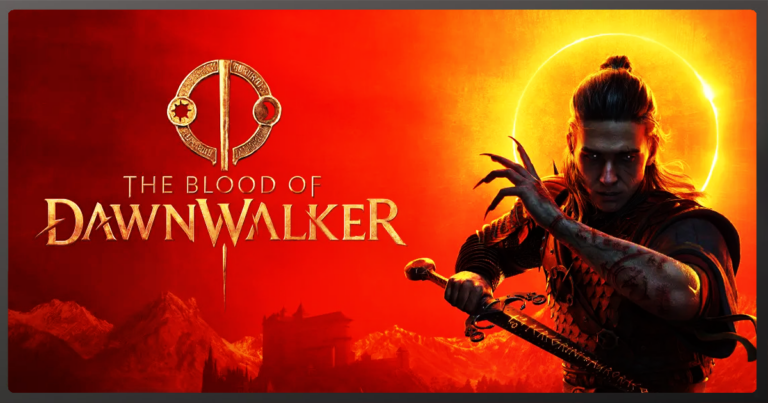
From the first announcements, The Blood of Dawnwalker was revealed to be a dark fantasy RPG. But when many people saw the trailer, they started to compare it to The Witcher 3: Wild Hunt. And it was not surprising because the studio that made the game, Rebel Wolves, was founded by veterans of CD Projekt Red. After spending time with The Blood of Dawnwalker, it becomes clear that simply calling it “The Witcher with vampires” or “Geralt game but weirder” doesn’t really explain what makes it a good game.
The Blood of Dawnwalker is set in a fictionalized version of 14th-century Europe during the devastation of the Black Death. The game takes place in the Carpathian-inspired Vale Sangora, a region where society has been weakened enough for vampires to emerge from the shadows. You play as Coen, a young man who is transformed into a Dawnwalker, caught between his human existence during the day and his vampiric nature at night.
The game’s open-world exploration, dialogue choices, character relationships, quest structure, investigation mechanics, crafting, equipment, progression, and narrative presentation all carry echoes of The Witcher 3. Yet the difference is that Rebel Wolves takes those foundations and places them inside a much more focused story about vampires, family, corruption, survival, and the frightening temptation of supernatural power.
[Warning: Spoilers from the game are below! It is also worth noting that I played this game on PC.]
The Blood of Dawnwalker: Coen‘s story
The story begins in the Carpathian Mountains during the 14th century, when Europe is suffering from war, disease, poverty, and overall social collapse. Coen, the main protagonist of the story, lives in the village of Laslea with his family.
A crisis surrounding his sister Lunka eventually brings Coen into contact with Brencis, a powerful vampire lord whose intervention saves her life but changes everything. Coen is ultimately transformed into a vampire, all for Brencis to take control of the region and impose a blood tax on the humans.
From there, the story becomes much more personal, as we realize what Coen lost. He is not trying to save the world. His motivation in all this is his family. Coen has people he loves, and those people are threatened by forces he never thought existed, and those that are dramatically more powerful than he is.
The vampire hierarchy gives The Blood of Dawnwalker a strong sense of oppression and drama. Humans are no longer at the top of the food chain, and the world has changed because supernatural beings have decided that humanity is something to be controlled and preyed upon rather than protected. Yet the vampires are not presented simply as monsters hiding in castles. They have their own politics, ambitions, rivalries, rules, and ideas about what the future should look like.
When Coen is turned into a vampire, he realizes that his transformation is both a curse and a gift. His new powers make him dramatically more powerful, but constantly using them means he turns into something that threatens to remove his remaining humanity.
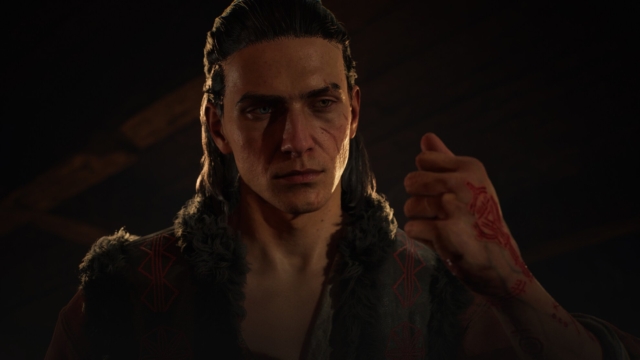
The structure of the story is also closely tied to time. Coen has thirty days and thirty nights to accomplish his goal, meaning that every decision has its cost. If he spends time investigating one problem, the opportunity to earn something valuable may disappear.
Normally, you can stop the apocalypse whenever you want and spend several hours collecting herbs, clearing bandit camps, playing minigames, or completing side quests. But in The Blood of Dawnwalker, you have to feel the world moving around you, and every second matters.
Gameplay and mechanics may feel similar (but at times better) than The Witcher 3
The most obvious comparison to The Witcher 3 comes from the structure and mechanics of the game. The Blood of Dawnwalker is an open-world action RPG with a third-person perspective. Exploration, dialogue choices, quests, character progression, equipment, crafting, investigation, and world and character designs look pretty similar.
If you spent hundreds of hours exploring Velen or Novigrad, the places in The Blood of Dawnwalker will feel really familiar, and that’s not bad. The vibe really feels similar to The Witcher 3. Locations feel nostalgic, and many things in the game are reminicent, but they are not used to make it feel like a Geralt of Rivia bootleg game.
When it comes to combat, Coen does not fight like Geralt. His abilities are focused around his transformation and a mix of conventional weapons, physical attacks, supernatural powers, and vampire abilities. During the day, Coen retains more of his human likeness and relies more heavily on traditional combat and witchcraft-inspired abilities. At night, his vampire powers become much more prominent, and he uses them to do the impossible.
Combat itself is more physical and direct than in The Witcher 3. There is a greater emphasis on timing, positioning, dodging, attacks, and exploiting openings. That makes encounters feel closer to a character-action RPG than a traditional Witcher-style combat system.
The most important success is that the mechanics generally serve the narrative. The day-night cycle reworks vampirism. The abilities work and solidify Coen’s transformation. The smaller open world reinforces the focus on characters and quests. Even when individual systems are imperfect, there is a clear design philosophy connecting them.
That is something many open-world RPGs struggle with. They can have dozens of mechanics without those mechanics actually saying anything about the protagonist or story. The Blood of Dawnwalker is much more coherent in that respect, and it really respects players and the story.
The Blood of Dawnwalker game rating and final thoughts

The Blood of Dawnwalker is not the next The Witcher 3, and ultimately that is the wrong standard by which to judge it. The similarities are obvious, sometimes almost impossible to ignore, but Rebel Wolves has created something with a unique personality and its own world.
The game takes the narrative structure, open-world mechanics, quest design, and role-playing assets associated with CD Projekt Red and places them inside a much darker story about vampires, family, power, and survival.
Coen’s transformation matters because it changes how he moves and fights. Night matters because it gives him access to different powers. Time matters because he cannot save everyone or explore everything. The world matters because its history and folklore make the supernatural feel like a natural extension of the setting. Every single aspect of this game has its meaning and importance.
Combat can become repetitive, the vampire fantasy occasionally feels less powerful than you’d expect, some open-world activities are boring, and the game itself can have some issues. But those things don’t matter that much in the long run, thanks to the writing, atmosphere, characters, setting, and day-night structure in The Blood of Dawnwalker.
You can see the DNA of The Witcher 3 everywhere, but you can also see the developers attempting to move beyond that legacy. Coen is not Geralt, vampires are not monsters from the Continent, and the 14th-century Carpathian-inspired setting gives the game an atmosphere that feels very different from traditional medieval fantasy projects.
When the clock is running down, the sun is disappearing, Coen’s vampiric powers are becoming more dangerous, and a decision forces you to choose between what you want and what someone else needs. That’s when you see The Blood of Dawnwalker for what it truly is—another great RPG that creates its own history and legacy. That is ultimately what makes it worth remembering.
The Blood of Dawnwalker is now available to play on PC, PlayStation 5, and Xbox Series S/X.
Also check out: 1666: Amsterdam Game Review (Early Access)