‘The Uprising’ Review: Paul Greengrass’ Gritty Realism Sinks Medieval Drama
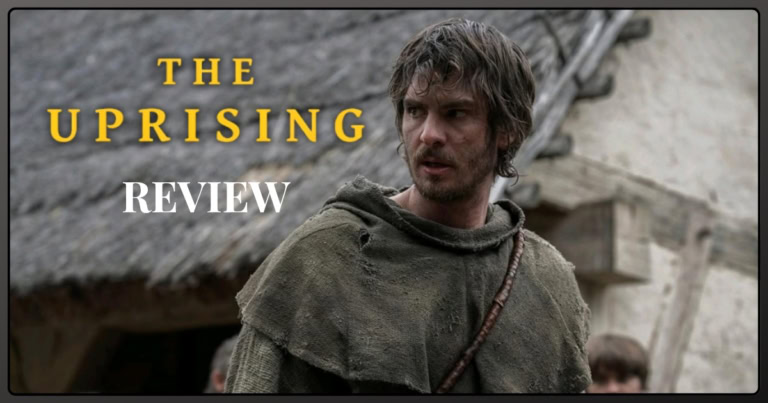
Directorial choices can undoubtedly hamper a film, and no motion picture released this year proves this inextricable fact more than Paul Greengrass’ The Uprising. The film is allegedly a prequel to the legend of Robin Hood, but not really. The marketing desperately tried to convey that this was a thrilling reinterpretation of the archetypal story, but Greengrass’ style proves unsuitable for a medieval epic where we should feel the anguish in the characters’ eyes as senseless brutality unfolds.
Unfortunately, the only thing we feel is the urge to throw up, as Greengrass’ camera shakes, and shakes, and shakes, and shakes until it becomes comical. Of course, one should expect stylistic flourishes like these from the English filmmaker who has completely redefined (for the worse) the language of action cinema through his vérité approach in The Bourne Supremacy.
Instead of legible, sweeping fight choreography, Greengrass employed vérité techniques: over-the-shoulder, handheld camerawork, where the device essentially became a character in its own right that physically followed the figures on screen. He wasn’t afraid to accept imperfect images and confront the audience, who were battered with two hours of erratic camera movements and rapid editing.
There was, obviously, an artistic intent. It’s undeniable. But that “intent” led many studio executives to copy it not to create immersion but to hide the poor stuntwork on display. This reached its paroxysm with Olivier Megaton’s nauseatingly incompetent Taken 3, but none of these cheap copycats made Greengrass rethink his directorial approach, continuing to permanently tarnish the language of action cinema.
The Uprising‘s story could have been better served
You would think that the Cheam-born director would have some form of self-awareness. None of that is found in The Uprising, a film that is far worse than the exploitative The Lost Bus, which turned a real-life, harrowing tragedy into a Universal Studios theme park ride.
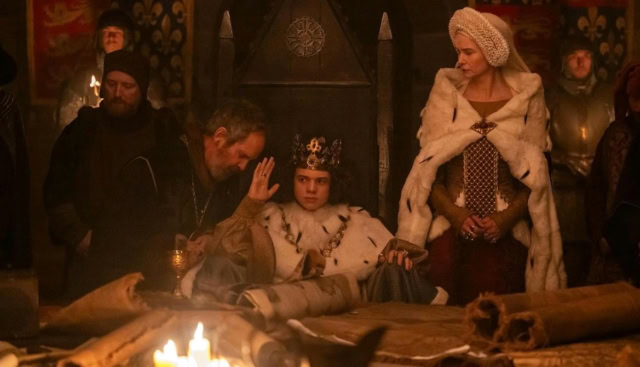
To be fair, “gritty realism” suits period epics, especially ones where the story isn’t bright and jovial in the slightest. However, not the way in which Greengrass visualizes it. The Uprising follows a ploughman (Andrew Garfield) who revolts against the 14-year-old King Richard II (Woody Norman) after the young monarch raised taxes on the peasantry, making their living situation untenable.
It’s a simple situation that essentially yields a succession of large-scale (and extremely brutal) action scenes. However, the way Greengrass stages and films that action is so painfully dull that it renders any emotional progression moot, even when prominent figures in the Peasants’ Revolt, notably John Ball (Jamie Bell) and Wat Tyler (Cosmo Jarvis), enter the fray.
Greengrass’ film is hampered by its visual style
This is an important moment in English history that hasn’t yet been depicted in film. The event itself is dark enough, as the King tricked the group of peasants into giving them self-determination after reaching an agreement, only for Richard II to trap most of the rebels to slaughter them.
A film like this needs to be appropriately brutal and emotional, and it needs the audience to connect with the characters’ plight: they feel betrayed by their head of state and believe they have the right to earn a living. Yet, the way Greengrass captures the story, always through extreme crash-zooms and a camera that can never stand still, means you never know who any of these people are.
Who is the ploughman beyond the revolt? What impact did Ball and Tyler have? We never get the chance to connect with them or experience any introspection because cinematographer Pål Ulvik Rokseth’s lens is so dizzying that it never lets us associate with anyone on screen. Perhaps Andrew Garfield gives an impassioned performance, but we don’t have the opportunity to sit with anyone.
Greengrass continually repeats the same set-up until its climax: characters shout at one another, as the camera shakes and never allows us to see anything on screen. Volker Bertelmann’s repetitive music (basically, the same score from All Quiet on the Western Front and Conclave) bludgeons our ears, so we know that bleak things are indeed happening on screen.
It’s strange that Greengrass frequently cuts away from the action to present sweeping shots of the castle walls being taken over by the peasants, only to return to the rugged frames that render this film ice-cold. There’s no sense of aesthetic desire to evolve or adapt his household style to the story at hand.
He thinks gritty realism equals potent cinema. While it may work on a film like United 93 or Captain Phillips, that approach won’t produce the same results in a period epic where we need to see what’s going on for the climax to feel powerful and gut-wrenching. Instead, we get undercooked, paper-thin characters who never get a chance to breathe or make their case in a terribly unpleasant movie that disconcertingly tells us bad things are happening without ever showing it.
Oh, and what about that ending? To say that it’s one of the most laughable conclusions I’ve seen this year would be the understatement of the year. It certainly stretches the point that The Uprising is an origin story to the myth of Robin Hood that Universal desperately wanted to pivot on, until it backfired spectacularly in their faces.
The only silver lining of The Uprising is Woody Norman’s sniveling portrayal of King Richard II, a detestable turn that feels worthy of Jack Gleeson’s King Joffrey in Game of Thrones. He’s the only one whose performance matches Greengrass’ style. The other actors, no matter how talented, can never match it.
The Uprising film rating and final thoughts

It’s a shame The Uprising ends up such a tedious, repetitive affair. The story itself is worth telling, but it should’ve been brought to life by a filmmaker who knows how to use the visual language of medieval cinema on screen.
Greengrass is painfully ill-suited to do this because he believes gritty realism is still the way. Vérité-style is for vérité documentaries, not for action movies. Haven’t we action enthusiasts suffered enough from the fallout of The Bourne Supremacy and The Bourne Ultimatum to merit such inept viscerality once again? It didn’t work for the Bourne movies, and it certainly doesn’t work on quasi-Robin Hood.
Also check out: The Death of Robin Hood Review: Poetic and Painfully Bleak