‘Leviticus’ Review: As Tender as it is Haunting
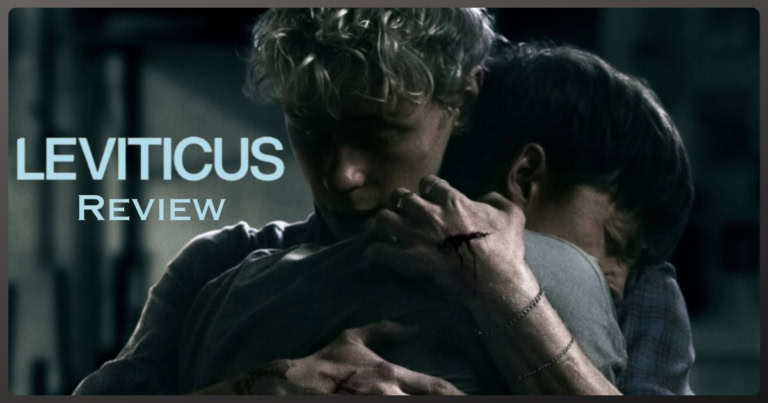
Leviticus resides in a fascinating place when viewing it from its genre roots. It’s able to weave both a compelling queer story and progressively brutal horror while changing enough elements to remain just distinctive enough from its inspirations. You’ll hear many comparisons to genre flicks like It Follows and Smile, but director Adrian Chiarella clearly understands that within his feature debut. Chiarella adds his own sense of dread and fear surrounding homophobia in religion, capturing the fear queer people often face of being their most authentic selves.
There are admittedly a few bones to pick with the surrounding elements of Leviticus’ central metaphor. The horror tends to be more effective when focused on the lingering stillness of its quiet tragedy rather than opting for more cheap jumpscare routes as the tension builds throughout the narrative.
More than anything, there are multiple points where Leviticus starts to overexplain the eeriness surrounding its central concept and could add more depth to its religious thematics. Still, despite the occasional missteps, Leviticus is a solid film in terms of genre fare within its tension. More importantly, the film works due to the tenderness of the central relationship surrounding its haunting atmosphere.
What is Leviticus about?
The film is set in Australia and follows the secret love between Naim (Joe Bird) and Ryan (Stacy Clausen). The two often engage in a more roughhousing nature to their relationship while they truly embrace one another, but they unfortunately keep their relationship closeted within their uber religious small town. Naim, in particular, is more shy within the church, with virtually the only other person he regularly talks to besides Ryan being Naim’s cruel mother (Mia Wasikowska).
Naim and Ryan’s relationship, however, starts to take a darker turn once, one day, Naim witnesses Ryan cheating on him with the pastor’s son. This leads to him snitching on them both, but this act turns out to be the worst mistake Naim could’ve made. The church’s preacher calls a deliverance healer (Nicholas Hope) to help point the two boys in “the right direction.” But what seems like a prayer of cleansing ends up being a curse that, once inflicted on you, an entity takes the form of whomever you desire the most.
The entity never appears to others besides the one cursed and only torments them when that person is alone; the longer the entity gets more used to whomever it follows, the more uncannily realistic it becomes to imitate their lover. It isn’t long before Naim’s mother also decides to send him to the healer, and with both boys cursed by an unshakable terror, they can only rely on sticking together to keep the curse at bay.

Despite its flaws, the film works thanks to the relationship at its center
The central metaphor surrounding the conceit of Leviticus’ horror of queer people facing a constant threat of harmful ridicule just for loving someone isn’t exactly subtle. This approach ends up working for and against the film in interesting ways. If there’s one thing that could’ve used a bit more depth, it’d be the backdrop of the Catholic Church’s conversion therapy that percolates throughout the film like an ever-lurking fungal infection of evil. The focus of this element of the film can often be fairly one-note and mainly acts as broad strokes to get the ball rolling for the film’s premise.
Then there’s the horror elements of the film itself, which are mostly effective in the scare department, but oftentimes the film shines within the other elements surrounding the terror our leads must endure. Over-reliance on the themes of trauma has plagued even the strongest of recent horror releases with a bit of predictability. While Leviticus avoids many of those pitfalls, it’s often disappointing when a fair amount of its scares can be over-reliant on fairly predictable jump scares; for every solid one, there’s a pretty cheap one.
The horror works when Chiarella just lets the dread and true sadness that occurs when a kid is forced to hide their true selves from a community that would never accept them. There’s an echoing and unnerving fear to those who are closest to you, trying to repress what’s natural to you, paint the one you love most as your enemy; it’s deeply sadistic, and the film finds a nice balance between common horror theatrics and a sombering terror within its third act.
What’s most impactful about Leviticus and remains strong throughout is the chemistry both Joe Bird and Stacy Clausen completely radiate with. Buying into their relationship is crucial to believing that their love could survive such a harsh environment that surrounds them, and they sell every moment of heartbreak and loving tenderness with every measure. The romance of the story is more impactful than the horror surrounding it—a love that might literally kill both of them. But their love is worth facing the danger surrounding them every moment, figuratively and literally.
Final thoughts on Leviticus

Leviticus can occasionally fall victim to overexplaining the mystery of its metaphor and overrelying on cheap scares. But the film firmly cements itself as a solid debut feature that captures the horrific nature of organized religion suppressing true desire, while retaining a tender core to the relationship at its center.
Also check out: Tuner is an Accomplished Fiction Debut from Daniel Roher