‘Mother Mary’ is an Utterly Hypnotic Exploration of Artistic Integrity, Fame, and Horror

Mother Mary is the latest of director David Lowery’s line of metaphorical surrealist experimentation within his filmography. Lowery’s previous films, such as The Green Knight and A Ghost Story, tapped into a far more fantasy-oriented surrealism than what’s explored within Mother Mary, but it makes for his most fascinating delve into this euphoric filmmaking style yet.
Mother Mary plays with the same dreamworld filmmaking Lowery is known for reveling in (even within his more commercial features). It brings a uniquely mesmerizing quality to the themes of artistry and fame lying at the center of the connection between the two leads.
Some will argue that the messaging that lies behind Lowery’s impeccably crafted images is thinly drawn and overly hollow. But the film’s interwoven, heavy-winded monologues and abstract imagery ultimately make for a wondrous, captivating chamber piece of metaphysical that rarely loses its transfixing beauty, even if there’s not much that’s underneath it.
With exceptional performances from Anne Hathaway and Michaela Coel, Mother Mary will surely test the patience of many, but ultimately proves to be a more than engrossing piece of art.
Mother Mary’s chambered story telling
The film is essentially a deep, dialogue-driven two-hander between pop star Mother Mary (Hathaway) and her estranged friend and former costume designer Sam Anselm (Coel). Mother Mary is considered an icon that can reach a religious type of experience from her audience when they witness her perform, but something changes after she has an awful on-stage accident. She sees getting help from Sam to design her next costume for her comeback and potential final tour as the jolt she’s long needed.
Sam has long since cut off her friend since Mother Mary silently dropped her to the wayside and took the credit for one of the most iconic looks that she designed. Sam constantly remembers the rejection she felt when it happened and that she used to see their work together as something great. While the two need to work through their years of inner conflict to create together again, the second half of Mother Mary unveils there’s a deeper ghostly horror at work here. This was not only the partial cause behind the pop stars’ incident, but it represents a certain larger chasm that lies between the two characters.
What really lies behind the film’s intoxicating symbolism
Throughout Mother Mary’s vast stretches of monologue after monologue between its two characters, you can tell Lowery loves his overt symbolism through the artistic visual strokes of his film. The filmmaker’s slow methodological pace is still effective thanks to the unreal images he works with in his first film with true roots in the horror genre, and the exceptional performances from Coel and Hathaway.
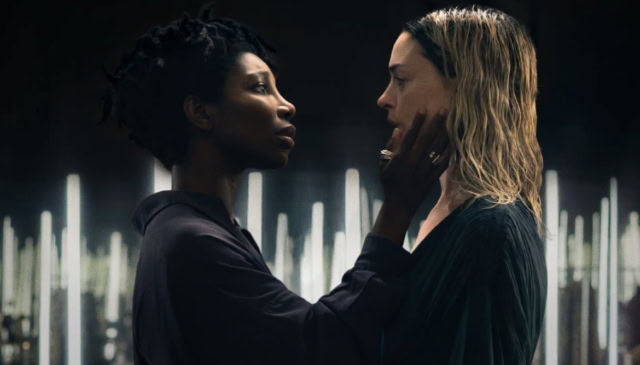
Michaela Coel is particularly fantastic here, shifting so seamlessly through sharp comedic line deliveries and the inner pain that was left when her relationship with Mother Mary ended. She has monologue after monologue to drive through, and she balances emotions with the perfect amount of quiet facial nuance and bitter frustrations.
Hathaway unleashes a more primal emotional vulnerability, powering through one of the most physically demanding roles of her career with a new dance routine she has planned to go with her new dress and song. Her raw intensity, her crackling relationship with Coel, and the inner psyche of her pop star persona bring a side to Hathaway as a performer that is freshly in step with the otherworldly plains Lowery works with here.
Lowery’s latest is sure to stir up countless debates, as once the film transforms from duo-led chamber piece into an abstract ghost story surrounding a piece of red fabric, the ideas at play become more vague. Lowery’s missing connective tissue from previous features like A Ghost Story is that the visual and captivating atmosphere is there, but the story is too emotionally hollow to really grasp onto what’s being said.
Many will say the same applies here. It is true to an extent, as the messaging behind the weight of sacrifice, behind crossing ultra fame, art, and relationships, doesn’t say much amidst the splendid imagery. But it’s mostly effective here despite the messiness because of how captivating the central experience truly is.
Much is left to self-interpretation, but it only makes the biting dialogue and terrific imagery more exciting to chew on. The supernatural horror elements Lowery weaves into the film’s second half are as breathtaking as they are delicately haunting. It crafts a feeling of religious exorcism to the theatrics of self-sacrifice, expression, and the emotional anguish that surrounds its central popstar.
Final thoughts on Mother Mary

It will be difficult for some to find much meaning behind David Lowery’s Mother Mary. The film can get lost amidst its endless metaphors, but Lowery digs into a uniquely haunting experiential work. With incredible performances from Anne Hathaway and Michaela Coel at the forefront, Mother Mary is as thought-provoking as it is mesmerizing.
Also check out: Send Help Review: Sam Raimi Does It Again