‘The Hunger Games: Sunrise on the Reaping’ Changes Haymitch and Snow for the Better but Ruins the Epilogue

Sunrise on the Reaping is my least favorite Hunger Games book; let’s get that out of the way right off the bat. I don’t think it’s bad. This is an excellent series, so “the worst” book still gets a 7/10 from me. However, I did find the novel to be messy, stuffed with egregious fan service, and retreading themes from the original Hunger Games books.
Haymitch’s story also contained incredible moments that were unlike any other Hunger Games story to date, and its exploration of revolutionary timelines was unexpected and very welcome.
I expected a few of the book’s issues to be addressed in the film adaptation, and I’m very pleased that they were. But I was also extremely disappointed to find that many of the most original, creative, and devastating moments from the novel were whittled down or excised entirely from the movie.
We saw the same playbook with The Ballad of Songbirds and Snakes, where small changes to the movie like Snow giving Lucy Gray the rat poison changed characters for the worse. I didn’t write an entire article about that at the time (maybe I should have, because it makes movie Lucy Gray much more innocent than book Lucy Gray), but Sunrise on the Reaping’s changes deserve a full breakdown.
[Warning: massive spoilers for The Hunger Games: Sunrise on the Reaping below. To read a less spoilery review of the film, go here: The Hunger Games: Sunrise on the Reaping Review: Gorgeous, Flawed, and Mesmerizing]
Snow and Haymitch’s relationship in Sunrise on the Reaping
One of my biggest gripes with Sunrise on the Reaping in print was how out-of-character President Snow acted, from telling Haymitch all about Lucy Gray and even playing clips of her after he’s spent 40 years erasing her from existence to not killing Haymitch in the arena despite his continued rebellious actions.
The film adaptation corrects the second half of this issue by having Plutarch save Haymitch’s life, recommending to President Snow that Haymitch be made an example of to everyone in the districts and forced to suffer if he wins.
That’s an incredibly interesting idea that wasn’t touched on in the novel. Plutarch sacrificing Haymitch’s loved ones to create a person who could potentially help a future rebel is very on-brand for him. It also affirms his loyalty to Snow after being tortured for information about Haymitch.
At first, I didn’t love the idea that Snow would allow Plutarch to gain so much power in the Capitol and get so close to him after ever suspecting him of being a rebel sympathizer. But in a conversation with my friend, I realized that it adds another great wrinkle to Snow and Plutarch’s relationship.
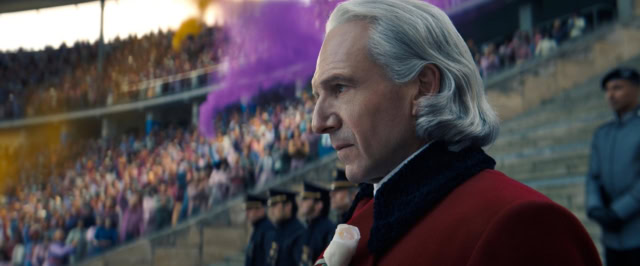
Snow clearly sees himself in Plutarch in that moment: a loyal Capitol citizen who might have had a moment of weakness for a District 12 tribute but who has the intelligence and ambition to maintain control over the districts. Even if Snow still suspects Plutarch of being sympathetic to the tributes, he’s willing to forgive his moment of weakness because of Plutarch’s creative and terrible suggestion for Haymitch.
It also recontextualizes their scenes in Catching Fire where the two discuss Katniss and how to stop the uprisings. In that film, it looked like Snow was getting his Head Gamemaker’s professional opinion. But this scene in Sunrise on the Reaping adds a personal element to those conversations, reframing them like Snow is also seeking a personal opinion from someone he regards as a protégé.
Haymitch and Maysilee
Haymitch himself is much easier to get behind on screen. In the novel, he feels extremely passive and unfocused. Haymitch kind of just does whatever other people tell him to do. He rebels because Lenore Dove and Plutarch say so; he does whatever Mags, Wiress, and Beetee want in the arena, and he always feels swept up in these other people with very little of his own personality nailed down.
None of that is a bad idea (Katniss was also used by pretty much every adult she ever met), but it simply wasn’t executed very well in the book. It’s nice that people like Lenore Dove and Maysilee had such a strong and lasting impact on Haymitch that they changed his outlook on life, but the novel version of Haymitch felt like he had no thoughts of his own besides theirs.
On screen, Haymitch is a much more active player. He has a sense of self; he has a purpose. He chooses to rebel, which is a big change from the book, where it genuinely felt like he only did it because Plutarch wanted him to. He has his own thoughts and desires that are certainly shaped by Beetee, Maysilee, and Lenore Dove, but it doesn’t feel like they’re implanting the thoughts in his head for the very first time.
This was an extremely welcome change to me because Haymitch just came across as very aimless, unfocused, and lacking a strong voice as a point-of-view character in Sunrise on the Reaping.
But speaking of Maysilee Donner, that’s an area where the film really fumbles. I think McKenna Grace does an incredible job portraying her, but the depth of her relationship with Haymitch is completely sacrificed.
Their alliance at the end of the Games is a key part of both of their lives. In the novel, they form a beautiful sibling-like relationship in those days which is unlike any other male-female tribute pairing we’ve seen before. Cutting it out of the movie is a disservice to both characters and the actors portraying them.
It’s similar to how Mockingjay Part 2 cut out the Johanna-Katniss relationship. In that book, the two women became friends and partners as they trained together to fight in the Capitol. When Johanna failed her training, she and Katniss shared one of the only genuinely heartfelt moments they ever had together.
But it’s understandable why that relationship was cut from the films. It’s nice, but it’s not essential to the overall story, and the movie timeline was compressed to remove the weeks and months of training Katniss did in the books.
Haymitch and Maysilee’s bond is far more important to Sunrise on the Reaping than Katniss and Johanna’s was to Mockingjay. Maysilee changes Haymitch forever. She’s the sister he never had, and her strong convictions about being treated with respect in the Hunger Games and never allowing the Capitol to take her dignity are as important to Haymitch as Peeta’s thoughts on the same topic were to Katniss. They’re the spark that inspires these people to imagine a different life.
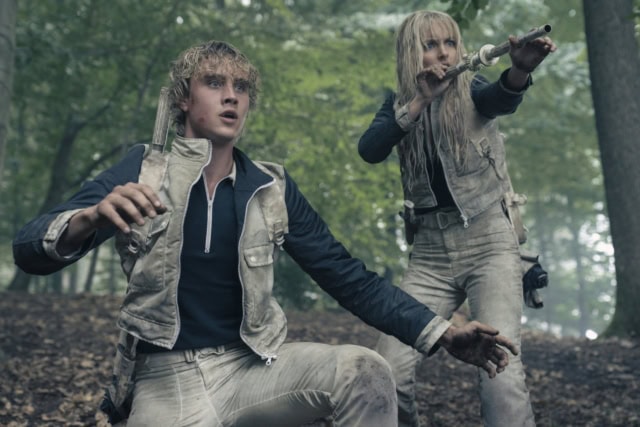
Which makes it all the more disappointing that Maysilee’s insistence on eating a proper meal in the arena with plates, glasses, napkins, and cutlery is reduced to a joke when it was a genuinely important moment in the book. Maysilee wanted to show the Capitol that she was a human being that deserved to be treated like one instead of an animal for their entertainment, but that seems to have gone over the filmmakers’ heads. It’s already a long movie, but even five minutes to develop that depth between Haymitch and Maysilee was very much needed.
Maysilee’s personal rebellious actions are taken out of the film, namely her and Maritte murdering Gamemakers in the arena. That was a really interesting wrinkle in the novel, but I understand why it was cut for the film.
McKenna Grace and director Francis Lawrence have spoken about the scene in recent days and said it didn’t work for Haymitch to submit to the Capitol by getting mad at Maysilee for killing a Gamemaker while he was actively trying to destroy the arena. I agree with that thinking, and that’s why Haymitch is a stronger character in the film. Because he’s not constantly flipping back and forth in his thinking the way he is in the book.
It also makes Maysilee’s death purely Haymitch’s fault. In the film, she’s punished with the mutts because of him, whereas in the book it’s primarily for her own transgressions, with a side of punishment for Haymitch. McKenna Grace did say that Maysilee said the line “no one ever wins these games” to Haymitch during their argument after killing the Gamemaker, and I would have liked that since she’s really shortchanged at the end of the film.
On the one hand, I don’t love that Maysilee’s retribution against the Capitol was taken away from her, but on the other, I thought it made no sense in the book that Gamemakers would ever be in a position where a tribute could murder them, so I’m erring on the side of liking the change.
There’s also nothing about her mockingjay pin that eventually becomes the symbol of the revolution. The first Hunger Games movie put this element in a tough spot because it cut out Madge and had Katniss find the pin at the Hob, but Maysilee’s ownership of it still could’ve been acknowledged to bring a deeper meaning to Katniss’s symbol.
Merrilee is seen wearing her pin at the beginning of the film, and Maysilee wears hers as well, but the camera doesn’t focus on it, nor does she discuss it with Haymitch as she does in the book. It’s a huge missed opportunity since that pin is what connects the District 12 girls: made by Lucy Gray Baird’s relative, owned by Maysilee Donner, passed down to Katniss by Maysilee’s niece.
The Second Quarter Quell arena
What happens in the arena in general is changed a little too much in the film. The poison aspects never hit very hard (although I also expected a little more from that in the book). Once Haymitch finds out it’s all poison, it never becomes an issue again.
The tributes don’t struggle to find food or water despite sponsor gifts not really appearing. There’s one time Haymitch gets an apple, but that’s it. It’s just a bit of a lackluster approach to a standout arena, although not visually. The arena is absolutely gorgeous and brought to life incredibly well; it’s just the story aspects that are lacking.
There are far too many generic mutt attacks. Sunrise on the Reaping is a very graphic novel. There are some truly horrible deaths in the book, from Ampert being eaten alive by carnivorous squirrels right down to the bone and Maysilee being skewered by sharp-beaked birds to Silka brutally beheading Wellie before her bloody battle with Haymitch. Those deaths obviously cannot be depicted with a PG-13 rating, but the filmmakers didn’t come up with creative ways to get that brutality across instead.
Ampert is attacked by squirrels, but they just bite him a bit, and then he dies. Maysilee is attacked by birds, but they just stab her a bit, and then she dies. It’s extremely repetitive, especially considering Haymitch is also swarmed by stinging butterflies first.
That makes three mutt attacks that are just “a large number of animals swarm a single human.” Wellie’s death occurs offscreen, and Silka’s battle with Haymitch is significantly cut down. The entire end of the Games is simply too rushed.

The film also cuts out one of the very best scenes in the novel, where Haymitch and Wellie are hiding in a tree while they try to win the Games. Haymitch shares some chocolate with Wellie, and they hear Silka crying at the base of the tree, so he drops some down for her as well. It’s a very poignant moment in the book that drives home how all three of them are just scared children trying to get back home. It also makes Silka’s horrible murder of Wellie the next day even worse.
The chocolate scene is probably the single most affecting moment in Sunrise on the Reaping, in my opinion. To remove it from the film and not replace it with a similar thematic element at all is another disservice to the story and the complexity of relationships that developed in the final days of the 50th Hunger Games.
Speaking of relationships, it was a nice touch to include Lenore Dove in a few extra scenes as Haymitch imagined speaking to her, my favorite of which was her appearing to him in the wake of the volcano’s eruption. That scene was gorgeously shot, and the additional time with Lenore Dove made her character feel more balanced than she did in the novel, where she barely appears but has such an extreme impact on Haymitch.
Unfortunately, Haymitch’s family doesn’t appear after the first act, and I think that’s something that could have been added to the film. Scenes of them reacting to the Games like we saw in the first Hunger Games movie would’ve been great. Their deaths lack the impact they had in the book because Haymitch doesn’t really talk about them or think about them in the arena in the film.
Finally, the arena is never shown to be shaped like an eye. There is a reference to this moment during Caesar’s recap of the Games, where the camera zooms out and becomes the eye of the bird on the Capitol seal, but it’s not as effective as the novel revealing that the entire arena was an eye all along. That reveal should have been kept the same, even if it was still shown during the recap and not Haymitch seeing it as he’s lifted into the hovercraft.
The story’s ending and that awful epilogue
The ending of the film is a lot more upbeat than the book’s ending, which might surprise people who didn’t read it! The book’s ending is just so bleak, with Haymitch obsessing over Lenore Dove and Edgar Allan Poe’s The Raven repeating over and over again in his mind. It’s a very despairing conclusion that shows how Haymitch’s future will be full of alcohol and dead children.
The movie’s ending was more fitting, in my opinion. I loved the montage of Haymitch facing another Hunger Games every year, starting with Effie coming to District 12 and ending with two coffins and another funeral every time. Haymitch’s voiceover about how he would keep fighting every year was also done well. The montage kept the horribly depressing aspects of the book’s ending intact while still being hopeful for change, even as the chances of it seemed to slip away.
However, the final shot of the montage and the epilogue were both so terrible they felt like an SNL sketch. I liked Haymitch seeing Burdock and Asterid in the woods, hiding from them because he felt like he couldn’t be part of their lives anymore. I was even okay with baby Katniss being with them and thought it was a cute family moment.
But when they raised Katniss up in their arms like baby Simba from The Lion King, said her name, and her iconic theme kicked in, I just couldn’t believe what I was seeing. It’s such a ham-fisted and overly dramatic moment for The Hunger Games franchise that doesn’t fit at all. I truly don’t know what the filmmakers were thinking with that scene.
Things only got worse from there with the changed epilogue. The book epilogue did a wonderful job of building on the short glimpse of post-Capitol life we saw at the end of Mockingjay, but the film epilogue does a terrible job of the same thing.
Seeing a memorial to the tributes and older Haymitch was a nice touch but lacked the feeling evoked by the written epilogue. The book epilogue had a touch of melancholy to it as Haymitch thought about an older Lenore Dove, took care of geese like she used to, and remarked that he would probably die soon, but it was beautiful that he began to share his memories with Katniss and Peeta so the tributes he knew could be chronicled in the book they began writing in Mockingjay.
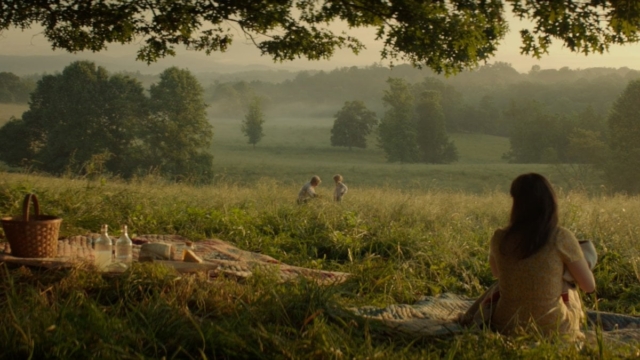
The movie epilogue trades all of that emotion for a quick scene with the three of them reunited (with Katniss and Peeta looking genuinely awful, with extremely poor makeup and hair considering how excellent the makeup, hair, and costume design were throughout the rest of the film).
There’s a little exchange about geese as Haymitch goes to sit with them in the Meadow where he used to sit with Lenore Dove, but the crux of the epilogue is Katniss saying “thank you, Haymitch” in a horribly on-the-nose acknowledgement of his role in the rebellion that ruined the entire ending for me.
The ending montage (which again, I liked) paired with the “thank you, Haymitch” delivered by Katniss feels like the series is trying to retcon Haymitch as being the reason the Capitol fell. He is not. Rebellion is a team effort, and Haymitch played a big part in it, but Katniss is the main character of this franchise, and she is the reason that Snow was finally defeated. It truly felt like that line in the epilogue was taking something away from her rather than sharing the credit with Haymitch.
I think that moment would have played much better if Peeta had thanked Haymitch and Katniss chimed in, or if Haymitch had thanked Katniss first and she responded with her own thanks. To have Jennifer Lawrence deliver such a heartfelt “thank you” and get a nod in return felt very out-of-character for the entire franchise, but especially for Katniss and Haymitch in a post-Mockingjay world.
It just feels like the filmmakers are screaming “look at what Haymitch did for Panem” at the audience at the top of their lungs. He deserves credit, but the novels are also pretty clear about Haymitch failing as a mentor for decades and not being a great person all the way to the end. He’s still mocking Katniss when she goes to him for help in the aftermath of Prim’s death.
Sunrise on the Reaping (the book) did a great job of showing why Haymitch is the person we meet in The Hunger Games without excusing his behavior, but this ending to the film feels like it’s excusing him.
Sunrise on the Reaping changes things for better and worse
I’m just fascinated by how some of these changes are excellent and some are entirely awful. I don’t think a Hunger Games movie has strayed this much from key aspects of the source material while absolutely nailing other parts since the original film.
I think correcting the issues with Maysilee and Haymitch’s relationship, fixing the biggest issues in the arena with the generic deaths and rushed ending, and doing the epilogue from the book would’ve had this film challenging Catching Fire as the best film in the franchise (and I say that as a diehard Hunger Games fan who didn’t love the book as much as the others).
There’s always more that could be done. I would’ve loved more scenes with Mags, Wiress, and Lou-Lou, a flashback to Wiress’s arena, seeing Beetee reacting to Ampert’s death, more new scenes with Snow—the list can go on and on—but I understand that’s simply not realistic.
Of course I’d love to watch the four-hour cut of Sunrise on the Reaping (and the four-hour cut of The Ballad of Songbirds and Snakes, which I certainly haven’t forgotten about). But general audiences aren’t going to watch that long a Hunger Games movie, so it’s understandable that a lot has to be cut out.
The key metric I measure book-to-movie adaptations on is whether they preserve the themes of the original work, and by that metric, The Hunger Games franchise soars. I just think Sunrise on the Reaping loses a little too much in some of the cuts it made, while most of its additions and adjustments actually make the novel’s themes better.
It’s a strange case but an interesting one, because I can’t think of another movie that actually improves on some of the written work’s themes when it’s translated to film while simultaneously butchering others.
I will say that Sunrise on the Reaping is clearly a thought-provoking work that I keep returning to analyze, from my book review and film review to this article and another I’m working on about the propaganda discussion in Sunrise vs. the original Hunger Games novels. Here’s hoping Suzanne Collins writes more stories set in Panem because there’s truly never a dull moment!