‘Spider-Noir’ Series Gives Renewed Hope to a Failing Marvel Universe
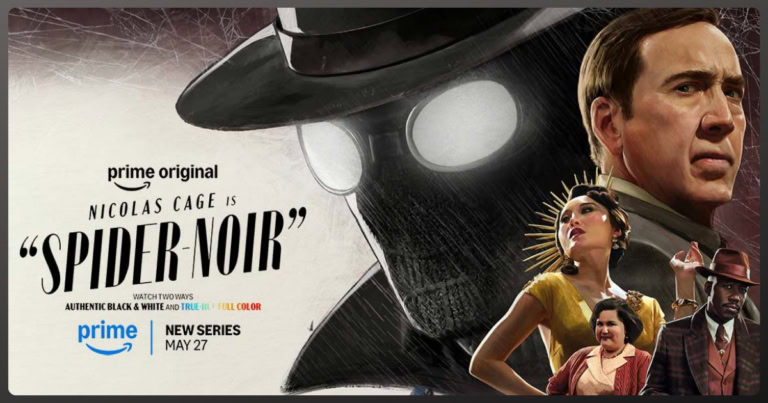
It would be fair to say that the Sony Spider-Man Universe (SSU) hasn’t had a particularly great run ever since the release of Ruben Fleischer’s Venom. Apart from those trilogy’s box-office successes, each live-action installment (the Spider-Verse films are innocent) was critically and commercially reviled and became the subject of ironic memes rather than actual fan engagement. J.C. Chandor’s Kraven the Hunter might have killed the SSU’s film lineup. However, since Sony must occasionally churn out a Marvel title if they want to keep the rights to the Spider-Man IP, they now have their sights on the television market. After many potential shows being greenlit and ultimately scrapped, here comes Spider-Noir, the first (and potentially last?) series set in an alternate timeline from this disjointed cinematic MCU-adjacent universe.
Many television projects have been in development since the start of the SSU. Only one actively came to fruition, and it’s not surprising that it focuses on one of the most popular Spider-Man variants in the comics and was brought to life by Nicolas Cage in 2018’s Spider-Man: Into the Spider-Verse.
The veteran actor, in his television debut, is now playing the character in live-action form, but in a different universe than his animated counterpart. If it sounds confusing when it comes to continuity’s sake, it won’t matter by the time the first episode opens. It very clearly states that it should be able to stand on its own two feet without necessarily caring about the goings-on of the Marvel multiverse.
The story in Spider-Noir
In Spider-Noir, private investigator Ben Reilly (Cage) once masqueraded as New York’s one and only hero: The Spider. Sadly, personal tragedy caused him to give up his heroic activities and contribute to society as a civilian, founding a private investigative firm with his secretary, Janet (Karen Rodriguez).
That is, of course, until a massive case involving superpowered individuals working hand-in-hand with mob boss Silvermane (Brendan Gleeson) causes Reilly to don the mantle of the Spider once again. It is then that he attempts to figure out how figures such as Lonnie Lincoln (Abraham Popoola), Flint Marko (Jack Huston), and Dirk Leydon (Andrew Lewis Caldwell) got their powers in the first place.
To say I was skeptical of this series being good was the understatement of the year. Never mind that Spider-Verse visionaries Phil Lord and Christopher Miller were in the executive producing chair; each SSU title was bogged down by focus-grouped studio meddling from people who have no business shaping how a film should be conceived and structured.
Fortunately, Spider-Noir doesn’t succumb to the same interference that has plagued Sony’s non-Marvel Studios movies. It’s an ever-creative permutation inside an aesthetically daring corner of the Marvel universe. The series works best as an introspective character study on a tormented soul who has to wrestle with the idea that he can do good with the powers he has.
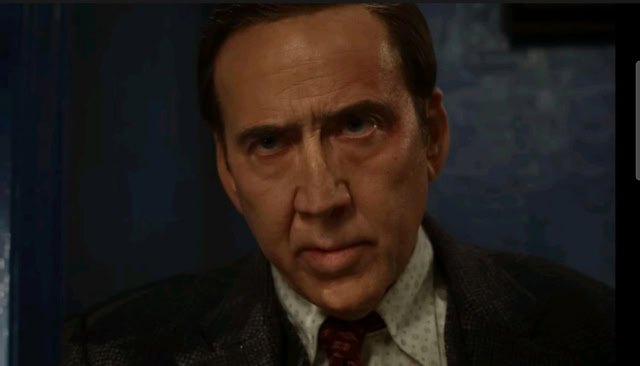
Spider-Noir is a gripping and aesthetically exciting character study
Much like Marvel’s Wonder Man, Spider-Noir’s best sections occur when we sit with the lead, either in conversations he has with his journalist friend Robbie Robertson (Lamorne Morris), club singer Cat Grant (Li Jun Li), or by himself in front of a bottle of whiskey, as he attempts to suppress some of his darkest memories. It doesn’t reinvent any screenwriting wheel or treat things we’ve never seen before in archetypal superhero stories; but showrunners Oren Uziel and Steve Lightfoot successfully deconstruct what we believe is the idealized Marvel hero when they fully engage with who Reilly believes he is, and contrast it to who people perceive him as.
With episodes directed by Harry Bradbeer, Nzingha Stewart, Alethea Jones, and Greg Yaitanes, Spider-Noir expresses great reverence for the broken souls of film noir and adapts their aesthetic inspirations as the character evolves over the course of eight episodes. There’s a clear evolution in Reilly’s emotional journey that, against all odds, is thrilling to watch, whether in his hallucinations or the harsh nightmare of reality.
Set after World War I and during the Great Depression, the socioeconomic context of Spider-Noir feeds into the character as much as his personal experiences as a wannabe “superhero.” The black-and-white, gloomy setting of the series is visualized through dark, expressive shadows, with Ben mostly in focus (and in the spotlight), in contrast to other characters with their own self-serving needs.
Of course, the series’ look and feel owe a great debt to film noir, specifically the work of Fritz Lang, Robert Siodmak, and Orson Welles. There’s a specific scene occurring late in the series that’s a notable tribute to Welles’ The Lady from Shanghai. There are even some modern noir-inspired techniques that come into play as the episodes progress, such as an overabundance of split diopters and actual split-screen panels.
Each stylistic flourish, whether it’s a copy/paste of a noir film for astute viewers or something inspired by other filmmakers, makes this entire series feel alive, especially when it focuses on Reilly’s mental state and gives us an idea of his “superhero origin story.” That specific scene, shot by frequent David Lynch collaborator Peter Deming, likely yields the freakiest image Marvel has ever produced, and one that’s sure to be burned into the retinas of viewers who dared to step into this world.
In a way, it feels intentional that Deming was brought on to shoot the show’s trippiest episodes because Lynch’s imperceptible style was heavily influenced by classic film noir. And there is real thought in actively ensuring that each frame carries significant meaning for the story and character and in letting us infer on Ben Reilly’s psyche in ways that few superhero pieces of media are interested in.
It also helps that Uziel and Lightfoot go the distance in making each character of the show a representation of the different tropes that have populated the noir sub-genre; specifically by referencing key actors of the era, such as communicating Cage’s performance as Ben Reilly with that of James Cagney, arguably one of the most well-known noir actors, whom the character actively watches in a movie theater.
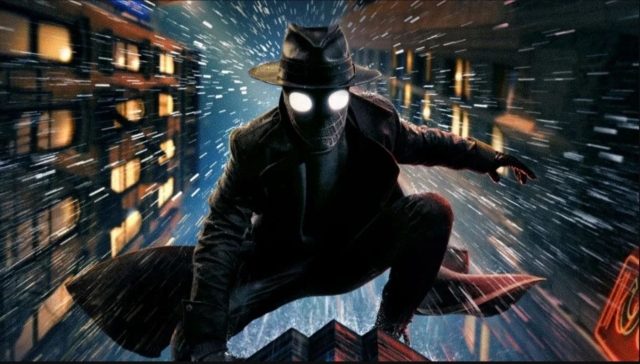
Nicolas Cage gives one of the best performances of his career
However, Cage’s portrayal of the Spider isn’t solely inspired by one actor. We can definitely see how he’s activated by the works of Edward G. Robinson and Humphrey Bogart while retaining his singular Cage-isms on multiple occasions. He has a specific sense of humor that works incredibly well with the series’ setting, especially during significant action beats when comedic timing is key (even if the spider action might not be the best we’ve ever seen and doesn’t feel very urgent).
Nicolas Cage is the main reason why the series works so well, yet one also has to mention how textured Li Jun Li, Lamorne Morris, and Brendan Gleeson’s performances are. The latter gives immense weight to a soft-spoken, but increasingly menacing, antagonist who wants to vie for power in every corner of New York’s corrupted streets, whilst Li and Morris act as compelling counterpoints to Reilly’s complex emotional journey.
It’s a shame, then, that none of the side villains are any good. Huston and Popoola do try their best with their interpretations of Sandman and Tombstone, but they (mostly) fall flat due to the quality of the respective characters’ writing. They at least try, compared to Andrew Lewis Caldwell, whose performance as Megawatt is so terrible that one wonders exactly what thought went into developing the character into who he ultimately became in the first place. There will be no spoilers in this review, but just know that one hoped Gleeson had a more significant presence as the show’s primary antagonist instead of umpteenth iterations of the villains we’ve seen countless times in other, better Spider-Man media.
Still, these are minor flaws in comparison to the overall success of Sony’s first Marvel television series. Should they want to continue the Spider-Noir story beyond an isolated season, they have a trajectory that could compellingly expand upon Reilly’s standalone journeys in this alternate timeline.

Should they continue making more television series, they would work if they focused on the characters first and foremost before springing them into mindless action. We’ll see if they have any plans beyond this season eventually, but there is one thing you need to know about Spider-Noir right from the get-go before you start watching: stick to the black-and-white and avoid the colorized episodes like the plague.
The series was clearly shot in black-and-white (as confirmed by Miller himself) and was intended to be presented in that format. The expressive lighting compositions are completely removed when one adds artificial colorization to the footage. In an era plagued by media illiteracy, offering a colorized version because audiences can’t handle black-and-white seems like a good idea, but such an edition shouldn’t exist. It compromises the look and feel of the series and likely won’t deliver the intended experience of its noir aesthetic.
Take a risk: watch White Heat, Scarlet Street, The Lady from Shanghai, and Detour, then plunge into the black-and-white world of Spider-Noir. You won’t regret it.
Also check out: Your Friendly Neighborhood Spider-Man: A Solid Reintroduction To The Wall-Crawler